In this blog I’ll be sharing the experiences of a soldier whose WW1 service left him chronically unwell and unable to return to work.
When war broke out in August 1914, William Walter Talmer — an experienced member of the British Army Reserve (Territorial Force), was one of the first men to be mobilised. But two years later, William wrote desperately to the Middlesex Appeal Tribunal to request exemption from further service, which would “mean great hardship and loss”.
William — a cousin of my great grandfather Alfred Talmer — was born on 30 April 1886 in Amersham, Buckinghamshire. His mother Clara Jane Talmer was a single woman who raised William and his brother Sidney Ayers Talmer (b. 1893) alone, until she married James Keen in 1897. At the age of 14, in 1901, William was an apprentice blacksmith, but on 4 June 1903, claiming to be 18 years old (a year older than his real age), he enlisted at Oxford as a Private in the Oxford and Bucks Light Infantry. William’s extensive service records (which have been preserved within WW1 pension claims at The National Archives) state that he was a sawyer by trade (though he cannot have had much experience as a sawyer) and that he was 5 feet 6.5 inches tall, with light brown hair and hazel eyes. After two years in England, which included extra schooling, he spent more than six years with the Colours in India and Burma.
In the 1911 census, taken just two days after William returned from India, he was recorded as a 24-year-old Private staying in the home of his uncle in The Lee, Bucks. A month later, with eight years of military service under his belt, he transferred to the Army Reserve. William then began working at the Brentford Gas Works. The company had been founded in 1821, supplying 200 customers in its first year of operation, and by 1926 it provided gas for lighting and cooking for 124,000 customers. William’s job was to paint and repair gas stoves and cast iron work, skills he might have gained in his partial apprenticeship.
On 5 Feb 1912 William married Florence Margarette Nash at St Paul’s, Brentford. They welcomed a daughter, Emily Margarette, in 1913 and a son, Sydney Walter, in 1914. But family life was turned upside down on 4 August 1914, when Britain declared war on Germany. William, as an army reservist, was called up on 14 September, reported to his unit in Portsmouth and was deployed to France on 23 November as a Private with the Ox and Bucks 2nd battalion. This return to active service could hardly have come at a more difficult time for the family: Walter and Florence’s daughter had just had her first birthday, and their son was less than two months old. Even worse, Florence was chronically ill with Bright’s disease (an inflammatory disease of the kidneys now known as chronic nephritis).
William initially served in France for six months, although in December he spent time in a convalescent camp (reason unknown). Then, in May 1915, he sprained his ankle in action (possibly at the Battle of Festubert), and was transferred to hospital in England. Soon afterwards he fell ill with ‘gastritis’ and pain in his right side. He was at Emsworth hospital when the National Registration Act was passed on 15 August 1915. Despite still being unwell, he was drafted back to France in September, and served for another eight months. When he was discharged in June 1916, having served his full ‘period of engagement’, his military service was said to be ‘exemplary’ and he was described as ‘a thoroughly steady, sober and reliable man’.
William’s return to civilian life, and to his job at Brentford Gas Works, must have been a huge relief to his wife. However, William was not the man he was before the start of the War. A medical report reveals that after being discharged he was often unwell, was still having pain in his right side, and had to take days off work now and then. William might not have known it yet, but he had contracted tuberculosis. This highly contagious disease ‘thrived in the dirty and cramped conditions of trench life’1 and 55,000 British soldiers who served in the First World War returned home with the infection.2
In January 1916, the Military Service Act had introduced conscription in the UK, which meant that all healthy men between 18-41, except those in protected occupations of national importance, were considered part of the army reserve. Although William had already served his two years as a reservist with the regular army and had returned to his civilian job, he was potentially eligible to be called upon and sent overseas once again.
William’s efforts to support his family and to remain on the home front are revealed in a very moving 23-page file among the Minutes and Papers of the Middlesex Appeal Tribunal, 1916-1919 (within National Archives series MH 47). The tribunal was set up to consider appeals of men who put forward a case for exemption from military service. More details of the history and functions of the Central and Middlesex Tribunals are provided by the National Archives. William’s file shows that as well as suffering with an increasingly debilitating and potentially fatal infectious disease, he had to deal with the relentless bureaucracy of the war machine, and the continual push to do his patriotic duty.
On 7 December 1916, William applied to the tribunal for an exemption from service. He laid out four reasons, none of which mention his own health:
“Having wife who suffers from Chronic Brights Disease“ Florence would have needed medical care, and William’s young family also depended on him not just financially, but forpractical care.
“Eldest son of widowed mother with 3 children unable to work whom I generally give assistance“ William’s mother Clara had been widowed in 1913 leaving her with four children between the ages of two and twelve. The oldest was still just 16 in 1916.
“Have served 13 years in H.M. Army 6 years 2 months in India & Burma 14 months in France. Have one brother in France one being called up in March.“ William makes the point that he has already given many years of service to his country, and that members of his family were also serving. It must have been William’s half-brother Sydney Ayers Talmer/Keen, aged 23, who was in France, possibly with the Honorary Artillery Company. His next oldest half-brother, Arthur James Keen, had recently turned 18, when he would have received his conscription draft. The absence of these young men, and their salaries, would have made their mother’s situation even harder.
“Would mean great hardship & loss if called up again as I have lately purchased my house on installment system, and my home was broken up on mobilisation, my wife having to go home on account of illness, most of my furniture being spoilt.“ William had bought his house with a loan agreement. I’m not quite sure what that has to do with his home (i.e., his family life) having been ‘broken up’, or what exactly happened to their furniture after his wife went home (presumably to her parents), but it was clearly a very difficult time for the family.
Five days later, a representative of the Military, having received a copy of William’s application, wrote to the tribunal to protest: “I OBJECT to the application and contend that no serious hardship will ensue if this man is called up for Army Service.”
Nevertheless, on 22 December the tribunal reached a verdict, and granted William an exemption until 22 April 1917, on the condition that he present himself at the Employment Exchange within 14 days to find work of ‘Essential national importance’. William had already returned to work at the gasworks, but this ruling would mean that he would have to leave his employment to find work that was considered essential to the war effort.
Once again, the Military contradicted the decision. A few days after Christmas, F J Chapman, a military representative from Drill Hall, Hounslow, wrote again to the Heston & Isleworth Tribunal to dispute the exemption. Chapman argued that William should be put to essential work immediately. “If he is exempted from Military Service I contend that his services should be immediately available for work of national importance.” This confusing communication suggests that during the four months of temporary exemption, William would have been able to continue to do non-essential work. However, Chapman pressed for him to do his bit for his country immediately. On 31 January William was called back before the Tribunal at the Guildhall, Westminster. His case would be heard at 2.30pm on Tuesday 6 February 1917.
Meanwhile, Brentford Gas Works contacted the Tribunal to make the case that William’s work was of National Importance: ‘‘He is engaged at these Works principally in carrying coke from the retort houses, and he is one of the few men left to us who is capable of such important work as coke-carrying, purifier changing, etc. Although Talmer was, on his discharge from the army last year, put to his old job in the stove-repairing and Cleaning Shops, he was some time back transferred to the Manufacturing side of the Works, where practically every man was badged by the Ministry of Munitions in 1915. We are toluol-washing and making shells on these works, and a large percentage of the gas and coke produced are consumed in Government and Munition Works in the 95 square miles of District supplied by us.”
In response to the Military’s demand for immediate patriotic work, and the Gas Works’ persuasive letter, the Tribunal amended the terms of William’s exemption: Firstly, he would have to continue in his current job (which they evidently agreed was of National Importance) or find another job of National Importance. A letter was sent to the Gas Works to advise them that if William ceased to work for them, it was their duty to report that to the tribunal promptly. Secondly, William would have to report every three months to the local military representative. However, since the Tribunal had determined ‘that it is expedient in the national interests’ for him to do work of national importance rather than be deployed again, he had won the right to remain on the Home Front.
Two days after the hearing, William saw a doctor at Hounslow Barracks, who found that William had not recovered from the effects of active service. He was categorised as C2, which meant that he was free from serious organic diseases, able to stand service in garrisons at home, could walk five miles and see and hear sufficiently3. However, a couple of weeks later, William was at work at the gasworks when he suddenly began coughing up blood, which lasted several days. After a few weeks in Hounslow and Hammersmith hospitals he was transferred to a sanatorium.
William’s gruelling job at the gasworks would have constantly exposed him to coal dust and chemicals, and the thought of him doing that work while suffering from a serious infectious disease in his lungs is very distressing. However, he had a young family to support.
On 26 June 1918, William wrote to the Tribunal from the Grosvenor Sanatorium in Kent. His letter reveals that he had been unable to appear in person (presumably at his three-month check-in with the Military Rep) due to being in an institution (i.e., TB hospital). As a result, the Tribunal was trying to remove his exemption. He assured them that he was willing to see the Medical Board (for an examination) providing he was fit to travel. I find it extremely sad that William was having to deal with such unfeeling red tape, while ill in hospital.
He wrote to the Tribunal again in about September to explain that he had been unable to do his job for six months due to pulmonary tuberculosis, and was no longer capable of doing the work he had done before the war. His doctors had advised him to find other employment. Ever polite and respectful, he asked the Tribunal to ‘vary his conditions’ again to allow him to do lighter work.
William underwent a thorough medical examination at Duke of York’s HQ in Chelsea on 22 October 1918. Although he was ‘a well developed man of good physique’, his degree of disablement was 30%. The medical officer in charge of his case wrote a detailed and very sympathetic account of William’s medical history since the start of his service in 1914, repeatedly stressing that he had carried out all his duties despite his illness. Critically, the opinion of the Medical Board was that this disability had been caused by service during this war.
In early October, the Tribunal consented to William finding lighter work of national importance. They instructed him that when he had found work, he had to submit to them for approval. Even with so many fit and healthy young men serving overseas, it can’t have been easy for William, who had limited civilian experience and education, to find a job that was considered vital and yet was not physically demanding. However, within just two weeks, William secured work at the Ministry of Munitions Aircraft Engine Instructional Works at Twickenham. He wrote again to the Tribunal for their approval. They approved — providing his employer could vouch for his hire and provide details of the work — noting on his letter, before filing it, that he was ‘tubercular’ and needed ‘lighter work than gasworks’. A copy of their decision was sent to the National Service Representative.
Exactly a fortnight later, Germany signed the armistice to end the war. William had made it through the ‘Great War’, and I hope he joined millions who celebrated in the streets across Britain and around the world. He certainly celebrated with his wife at home, because nine months later, William and Florence, despite their health problems, welcomed a third child, Vera Doreen Chester Talmer. At her christening, William gave his occupation as ‘Mechanic’.
William continued to have regular examinations with a medical officer. Although repeated laboratory tests found no TB in his sputum, in March 1919, William was granted a military pension for one year due to ‘tubercle of lung’. He still had a good colour and fresh complexion but was suffering from pain in his left side, shortness of breath, frequent coughing, poor sleep, and had experienced several bouts of haemoptysis (coughing up blood). His degree of disablement was now 50%.
Despite being seriously ill, he had been employed as a fitter’s mate on a tram car for three months. Perhaps the monthly allowance from the government meant that he could finally take some leave from work …
But I’m sorry to say that this story doesn’t have a happy ending.
William Walter Talmer died on 22 Jan 1920, aged 33, of ‘phthisis’ (TB), leaving behind his wife Florence and three children, the youngest still a newborn. His death was classified as a war death. Of the 55,000 British soldiers who came home with TB, 18,000 of them had died by 19224.
According to the Bucks Examiner, William was buried at Isleworth Cemetery ‘with full military honours’. He later received a war grave from the War Graves Commission (now CWGC).
Buckinghamshire Examiner – Friday 6 February 1920
Sadly, William and Florence’s oldest child, Edith, died later that year. She was only seven, and although I don’t have her death certificate I wonder if she had contracted TB from her father, making her another war casualty. William’s widow, Florence, moved to her parents’ home in St Albans with her two surviving children, and took on work at a silk mill. She only outlived William by seven years.
William is commemorated on Isleworth War Memorial, a large square stone clock tower topped with a wheel cross that was unveiled on 22 June 1922. Unfortunately his surname is mispelled as TALMERS W W. I was disappointed to find that he was not included on the memorial plaque for employees of Brentford Gas Works, perhaps because he had left the company for employment elsewhere before he died.
I am grateful to the Isleworth 390 Project, a community project to research the lives of 390 men and women remembered on the war memorial. A PDF about William Walter’s life shows his gravestone and his house at 25 Nottingham Road, Isleworth .
William’s brothers Sydney and Arthur survived the war, got married and lived long lives. However, two of William’s cousins, my great great uncles Harry and Charles ‘Charlie’ Talmer, were both killed in action in the summer of 1916. An ‘Honour Board’ at Lee Common School commemorates all ‘old boys from this school’ who served in the Army & Navy in WWI, including Harry, Charlie, and William Walter Talmer (mispelled ‘Talmar’).
The document images in this blog, unless otherwise stated, are from the following primary sources:
William Walter Talmer’s pension claim documents (including his service records): The National Archives, WO 364/4071; viewed digitally on pp4585-4606 of British Army WWI Pension Records 1914-1920, via ancestry.co.uk.
William Walter Talmer’s case papers (Middlesex Appeal Tribunal non-attested case papers): The National Archives, MH 47/54/51, Case Number: M2846 (digital download).
I am writing this blog hoping that it will help me with a brick wall. We all have these challenges in our family trees — points at which we can currently go no further. It might be that the documents we need haven’t survived, that the information we need was never recorded, or that we don’t even know where to look.
I’d like to find the origins of two of my ancestors, William and Mary RABY, who emigrated from England to Canada about 170 years ago. This is a common challenge for many descendants of immigrants (though in my case, my line returned to the ‘motherland’: my ancestors left England for Ontario in the 1850s but one of their descendants — my grandmother — was born in England three generations later).
Below, I’ve provided as much information as I can about their origins and their lives in North America.
————————————
My Canada connection
I’ll begin with a succinct description of the family tree that connects me to William and Mary Raby, my 3x great grandparents, who emigrated from England to Waterloo County in Ontario, Canada. Their youngest son, Charles Patrick Raby (1870-?), my 2x great grandfather, was born in Ontario. He married Mary Ann BONN, the daughter of first-generation German* immigrants, Herman Bonn and Juliana KAUFMAN. Charles and Mary Ann Raby had eight children, including Walter Emmanuel Raby (1898-1969), my great grandfather.
*They immigrated before the unification of Germany; technically, Hermann was from Bayern (Bavaria) and Juliana from Württemberg — both member states of the German Confederation.
In 1923, my great grandmother Annie Margaret MUNDAY emigrated from Buckinghamshire in England to Ontario. By 1926 she was pregnant with Walter Raby’s child — my paternal grandmother, Delia Raby Munday (1927-2012). However, Annie and Walter didn’t marry. Annie returned to England to have her baby and then came back to Canada with my infant grandmother in tow. But in 1928, little Delia made a record-breaking unaccompanied journey back to Bucks, England to be raised by her aunt and uncle. A few years later her mother, still unmarried, also returned to England. And there they both stayed. Despite my granny having no contact with her biological father or his Canadian family — all she knew was his name — DNA has proven that Walter Raby was indeed her father (and my great grandfather), and with Canadian records I’ve traced my ancestry back to William and Mary, from England, and Herman and Juliana, from Germany. But although I can go back many more generations on my German lines, my Raby roots in England remain a mystery.
William & Mary Raby — records after 1861
I have located William and Mary’s household in the Canadian censuses of 1861, 1871, 1881, 1891. The entries are summarised below:
Year
1861
1871
1881
1891
Location
Woolwich Township, Waterloo County, Ontario
Woolwich, North Waterloo, Ontario
Woolwich, Waterloo North, Ontario
Woolwich, North Waterloo, Ontario
William Raby
Age 38, b. England, farmer
Age 47, b. England, weaver
Age 57, b. England, farmer
Age 67, b. England, farmer
Mary Ann Raby
Age 34, b. England, farmer
Age 44, b. England, farmer
Age 54, b. England
Age 65, b. England
James Raby
Age 10, b. England
Age 20, b. England, at service
Elisabeth(a) Raby
Age 4, b. Canada
Age 14, b. Ontario, at service & attending school
George Raby
Age 2, b. Canada
Age 12, b. Ontario, attending school
Alice Raby
Age 10, b. Ontario, attending school
Age 20, b. Ontario
Emily/Emilia Raby
Age 8, b. Ontario, attending school
Age 17, b. Ontario
(Emilia d. 1882)
Walter Raby
Age 13, b. Ontario, attending school
Anna Raby
Age 7, b. Ontario, attending school
Herbert Raby
Age 5, b. Ontario
Age 15, b. Ontario
Thomas Raby
Age 2, b. Ontario
Charles Raby
Age 6 months (b. Nov 1870), b. Ontario
Age 10, b. Ontario, attending school
Age 21, b. Ontario, son of William
Ronald Raby
Age 3, b. Ontario
Age 13, b. Ontario, ‘son of William’ (but really, he was Wm’s grandson)
Religion
E (not an official abbreviation, but probably denotes CofE)
Church of England
Church of England
Church of England
Origins
English
English
Birthplace of mother and father for all William and Mary’s children was ‘England’
Other details
They had a one-story log cabin, and had one non-family resident (Joseph Allderidge, labourer, b. England, age 28)
Whole family, including babies, are listed as farmers; I have only included that occupation for Mary.
Walter and Charles marked as ‘deaf and dumb’ but I believe that was an error.
All could read and write.
When did they emigrate to Canada?
I have not found William, Mary or James in the 1851 Canada census, which, in Ontario, was actually collected in January 1852. The 1861 and 1871 censuses reveal that James, who appears to be their eldest son (though no relationships were recorded in Canadian censuses until 1881), was born in England in 1850-51. Their next youngest family member (presumed daughter), Elizabeth, was born in Ontario in about 1856.
Therefore, it would appear that the family arrived in Canada between about 1852 and 1856. Unfortunately, Library and Archives Canada has no comprehensive passenger lists prior to 1865.
In the 1901 Canada census, people were asked to state their year of immigration. However, only three of my Raby ancestors had immigrated to Canada: William, Mary and James. I’ve not been able to find James after 1871, and William and Mary were not in the 1901 Canadian census. That’s because in 1898, they moved to Fitzgerald, Georgia in the United States.
Clues from Fitzgerald
William Raby died at Fitzgerald, GA on 23 Feb 1905, and the following obituary appeared in the Elmira Signet. I love the thought of William and Mary spending their golden years in the sun!
Former Resident of Woolwich Township Dead
We have received communication from Fitzgerald, Georgia, requesting us to chronicle the demise of Mr. Wm. Raby, who died on Feb 23rd and whose remains were interred in the Evergreen Cemetery of that place. Deceased was born in England on June 26th 1824, emigrated to Galt, and later settled in Woolwich Township, near Elmira, where he lived until 1898, when he removed to Fitzgerald, Georgia, where he spent his last few years very happily in the sunny climate which he greatly enjoyed. He leaves two sons and two daughters who live in Palmerston, Ont, a son in Millband, Ont and two sons in Calgary, N.W.T. Deceased was ill about six weeks and had reached the age of 80 years, 8 months and 27 days.
William’s gravestone in Evergreen Cemetery, Fitzgerald also states that he was born on 26 June 1824, with the additional information that he was born in Lancashire.
These dates match William and Mary’s consistent ages in censuses.
Two other family members have gravestones in the same cemetery: their daughter ‘Minnie’ (1864-1934), the wife of H. Lambert, and their grandson Ronald Oscar Raby (1878-1974). Minnie was the nickname of Anna, who we saw in the 1871 census.
Both William and Mary were born before Civil Registration began in Britain (in 1837). However, armed with their specific birth dates and birth counties, as well as the name of a son born in England in about 1851, I expected it to be fairly easy to trace them in England. How wrong I was!
The search for James Raby
Given that Mary, the younger of the couple, was born in 1826, I would expect to find a marriage between 1844 (when she was 17-18) and 1852 (a year after James’s birth). Since William and Mary were born in different counties (and not bordering counties), it was possible that they had married anywhere in the UK. And given that their names aren’t uncommon, my starting point was to try to locate them as a family in England in the 1851 census. I would then try to find a record of their marriage and the birth of their son, James, which would also give me Mary’s maiden name. Unfortunately, I could not confidently piece together any records:
There were no families consisting of William, Mary and James Raby in the UK in 1851, or any of William and Mary that even roughly fitted the ages of my ancestors.
There was only one registered marriage of a William Raby to a Mary between 1844 and 1852 — in Great Oakley, Northants, 1844 — but his spouse was a Mary Ann and his birth year was about 1821. Moreover, a matching couple (with William b. Great Oakley) could be found in Geddington, Northants in 1861. Despite this, many online trees claim that my William and Mary Raby came from Great Oakley.
Searches of online databases did not find any baptisms for a James Raby to William/Mary in the right time period.
The births of five James Rabys were registered between 1849 and 1852. But I was able to rule all of them out.
It was possible that James was a middle name, or that the spelling of his surname was recorded differently, but before continuing the hunt, I explored other ways to find Mary’s maiden name.
Maiden name mayhem
Births in Ontario weren’t routinely registered until after 1869. Only their youngest child, Charles, was born after that date, in about 1870, and his birth doesn’t seem to have been registered. However, marriage records for many of William and Mary’s children in Ontario asked for their mother’s name. Unfortunately, it didn’t specifically ask for her maiden name, and that vagueness is reflected in the information provided. In some of their children’s records, they simply entered ‘Mary Raby’, whereas two marriage records of their children gave other surnames for Mary:
The marriage record of Alice Maud Raby in 1881 named her mother as Mary EDGE. (“Canada, Ontario Marriages, 1869-1927”, FamilySearch)
But their son Herbert’s marriage record in 1890 gave her name as Mary SAGER. (“Canada, Ontario Marriages, 1869-1927”, FamilySearch)
Further conflicting information was found in the death records for two of their daughters who emigrated with them to Georgia, USA: Anne ‘Minnie’ Lambert and Elizabeth McLeon both died in Fitzgerald, Georgia in 1934. Both death certificates record their mother’s maiden name as LEVISON (or, in Elizabeth’s, possibly LEVESON). William and Mary’s son Herbert also died in Georgia, in 1936, but his parents’ names were ‘not known’.
Mother’s maiden name in “Georgia Death Index, 1933-1998,” database, FamilySearch.
Could William have married two different women called Mary? Given that their first and fifth children both gave the name Levison, with the third giving the name Edge in between, it is unlikely that the different names signify different mothers.
Searching for combinations of Raby with the names LEVISON, EDGE and SAGER in both Canada and the UK produced a surprising and promising result: On 1 December 1856, at Trinity Anglican Church in Galt, Ontario, William Raby of Waterloo had married Mary LEEFSONE of the same place*. According to William’s obituary above, Galt was the place he had first emigrated to. And Leefsone was a soundalike for Levison.
*Witnesses were James BIGNALL, Harriott MOORE and Margaret LYNCH; I have not yet had an opportunity to trace these individuals.
So, it seems that William and Mary had in fact married in Ontario in 1856, making Elizabeth (b. c1857) their first legitimate child.
The discovery of this marriage meant that James Raby, born five years earlier, was not a legitimate child of William and Mary. Rather, he could have been:
An illegitimate child of William and Mary
An illegitimate child of Mary
A child of either William or Mary from a previous marriage
Another relationship to William Raby (e.g., younger brother)
There was a good chance, then, that James was not a Raby at birth. However, there wasn’t a viable birth registration in England for James with any of Mary’s possible birth surnames.
Was Mary born Mary LEVISON (or similar), EDGE or SAGER? Unfortunately, the 1856 marriage record in Galt does not state whether Mary was a spinster or a widow. Of the other sources mentioned above, only the death certificates specifically asked for maiden name, and Levison was entered there. However, the names Edge and Sager clearly had significance to their children as well. I note that there are similar letters in those two names, and perhaps they are variants of the same name, with one being having been misheard. Could it in fact have been a name in between, like Sage?
Their parents lived locally and presumably were present at their marriages — so would their children not have checked with their mother that they had the correct maiden name?
Birthplace confusion
Another problem arises from inconsistent information given by William and Mary’s children about their parents’ birthplaces.
Both death certificates referenced above state that both parents had been born in England. Various Canadian and US census records that include the birthplace of parents also state that they were both born in England (e.g., Herbert’s census entry in Georgia, USA, 1930 and George’s census entry in Alberta, Canada, 1921).
However, their youngest child, my 2x great grandfather Charles, seemed confused about his parents’ nationalities and his ‘racial’ identity. In 1911 (Perth, ON) he said his racial origin was Irish (as was the racial background of his children, even though his wife was German and he was living with his German mother in law). In 1921 (Barton, ON), the census began to ask where both parents had been born. Charles said that his parents were both from Ireland and that his racial origin was Irish. But in 1931 (Toronto, ON) he stated that his father came from England, his mother was from Ireland, and his racial origin was English.
Charles Raby and family, 1911 Canada census; the column on the right records ‘Racial or Tribal origin’, which for Charles and his children was ‘Irish’. “Recensement du Canada de 1911,” , FamilySearch (https://www.familysearch.org/ark:/61903/1:1:276V-S8H : 15 August 2022).
Given that the majority of census records, especially the ones for William and Mary themselves, say that they both came from England, I assume that is correct. I don’t know why Charles believed his mother was Irish. William’s obituary also reported that he was born in England. And most significantly of all, William and Mary’s headstones gave their birthplaces in particular, different English counties. That seems to me too specific to be wrong. And these pieces of information, albeit presented post mortem, were literally set in stone.
Searching for William Raby in Lancashire
There were three William Rabys of the right age range from Lancashire in the 1841 and 1851 censuses:
One in Great Eccleston, a brickmaker, was still living there in 1871.
One was a cotton pricer and cotton spinner in Chorley. He had a son called James, as well as two other younger children. However, James was a decade older than the one I was looking for. Moreover, this family still lived in Chorley in 1861.
The most promising candidate was living in Tottington Lower End, within Bury parish, In 1841 he lived with Betty, age 50, and three younger sisters, Jane, Alice and Betty. Significantly, he was a cotton weaver; this connects him to my ancestor, who gave his occupation as ‘weaver’ in 1871. In 1851, this William, now head of household, was a footman, but his sisters, who lived with him, were all power loom cotton weavers. All were born in Bury.
Frustratingly, a William Raby of the right age was a lodger in Bury in 1861 (unmarried) and 1871 (widower). He was born in Bacup and was a bricksetter/ bricklayer, so he doesn’t seem like the same man as the weaver and footman, but since I cannot find a closer match for him prior to 1861, I can’t rule out that they were one and the same person.
Furthermore, thanks to his sisters’ names, I found a baptism for William, the weaver from Bury, to George Raby and Betty, née Fairbrother — in August 1823, i.e., nearly a year before the birth date that was carved into my ancestor’s gravestone.
It’s possible that William Raby emigrated to Canada prior to 1841. However, I have not been able to find him in the 1851 census of Canada.
Searching for Mary Levison/Edge/Sager in Staffordshire
I’ve not found any Mary Levison/Levinson or other soundalike from Staffordshire.
There was a Mary Sager, born in Staffordshire, living with a farmer (she was probably a servant) in Wiggington, Tamworth in 1841. Her age, 15, is a match, but because ages in this census were rounded down, she could have been older. I have not been able to locate this young woman, with the same name, in the 1851 census, and there were no marriages of a Mary Sager in that county between 1851-61. However, nine Mary Sagers married in other counties during that decade.
There were numerous candidates for Mary Edge in 1841 and 1851.
Unfortunately, compared with William, it is harder to rule out possible candidates for Mary by finding them in later censuses, since women usually married in their twenties and took on their husbands’ surname.
As an example, in Longnor, 1841 and 1851, one Mary Edge lived with her widowed grandmother, Ann Candy, a farmer. I couldn’t find her in 1861. However, she is probably the Mary Edge who married William Horobin in Macclesfield, Cheshire in 1856 (Mary Horobin in the 1861 census matched Mary Edge’s name and birthplace of Longnor). This is a good example of a woman who married across county lines.
It would be a significant challenge and time-consuming exercise to trace a large number of female candidates forward in time, and I don’t even know my ancestor’s maiden name!
A boarder brings a clue!
It’s always worth examining the less obvious details in records, especially the names of other parties who could be part of an ancestor’s ‘FAN club’ (friends, associates and neighbours).
In 1861, William and Raby’s household included a labourer from England, Joseph ALLDERIDGE, aged 28 (b. c1832).
In the 1841 England census, there were nine Joseph Alldridges (various spellings) b. 1831-3, in seven counties. However, one of these boys stood out: Joseph Aldridge, age 10, the son of a labourer, in Tamworth, Warwickshire.
I had found a Mary Sager of the right age in Wigginton, Tamworth, Staffs in 1841. Tamworth was in fact on the border of Staffordshire and Warwickshire. The address of Joseph Aldridge in Tamworth was Gungate Street. I was able to locate Upper Gungate on a modern map, and saw that it led directly north out of Tamworth, meeting the Wigginton Road, to Wigginton village. In a nutshell, Mary Sager and Joseph Aldridge lived just a mile from each other. This was surely not a coincidence!
I believe that my ancestor’s birth name was Mary Sager, and that at the age of about 15, in 1841, she was a servant on a farm in Wigginton. Since she lived with her employer, and the 1841 census doesn’t give an exact birthplace, her birthplace and family is still unknown. It’s most likely that she came from Wigginton or Tamworth. But, extremely frustratingly, although Wigginton became an ecclesiastical parish in 1778, its parish registers only begin at 1827, the year after Mary was born.
Mary Sager in the 1841 England census at Tamworth, Staffordshire; Class: HO107; Piece: 981; Folio: 8; Page: 11. Ancestry.co.uk, 28 October 2023.
My working hypothesis
It seems plausible that Mary Sager emigrated to Canada between 1841 and 1856, where she married a man called Mr Levison. She then married a second time, to William Raby. Through a local or familial connection to Mary, Joseph Aldridge also emigrated to Ontario and became her boarder. James Raby, a relation of William’s, perhaps his younger brother, joined them there as well. If only I could find the hard evidence to cement my theory!
Could DNAhelp?
As well as traditional family history research, DNA can be a powerful tool for breaking down brick walls. William and Mary’s parents were my 4x great grandparents, and it’s possible that I could have inherited some of their autosomal DNA, and could therefore find matches to distant cousins.
I have quite a few DNA matches in Canada, and have been able to establish that some were descendants of William and Mary Raby (as well as of Herman and Juliana Bonn). There is work to do here to analyse shared matches, and see if I can zoom in on matches that connect further back, around the 5th cousin level. If William and Mary’s parents and/or siblings had remained in England, their descendants might still be in England as well.
In Ancestry, my dad and I share a match to someone with a Lancashire Raby ancestor whose father was just old enough to be William’s father. Alternatively, he could have been another close relation to William. Her tree contains no sources, and our match is small (she and my dad only share 12cM), so it needs to be approached with caution.
Across several DNA match websites, we share no matches to anyone with an English Sager in their online tree or surname interests.
It’s still early days in my DNA hunt, but I have high hopes …
If you can help me with my brick wall, please do get in touch!
I grew up hearing a romantic story about a mysterious figure in my family history — “Aunt Becky”. Becky was the second wife of my great great grandfather Alfred TALMER, and she was said to be a gypsy — as she lived in a traditional Romani caravan. I recently set out to try to find out whether she really was of gypsy heritage, and what her life had been like before marrying Alfred. My research led me to discover some highly dubious birth registrations, and fascinating links between a London workhouse and a rural village in Buckinghamshire.
Family lore: Aunt Becky
Growing up, my maternal grandmother, Joan Talmer, knew the woman she called Aunt Becky, who lived with Joan’s widowed grandfather Alfred Talmer in the same small village — The Lee, high in the Chiltern hills in Buckinghamshire. Alfred’s wife Emma had died of uterine cancer in 1928, the year before Joan was born. Alfred and Emma had been married for 45 years and had twelve children, two of whom died in childhood and two more while serving in the First World War. Alfred, a farm labourer, was 65 years old when Emma died, and their surviving children were by then all adults. In this new phase of his life he soon found comfort in the arms of the enigmatic Becky.
Buckinghamshire Examiner, 13 January 1928. Via britishnewspaperarchive.com.
Fragments of their story were passed down from my grandmother, to my mum, and to me: Becky had a traditional painted gypsy caravan, which stayed in the back garden of their home, Cherry Tree Cottage. She ‘kept house’ for Alfred, and their home was always pristine. The exact nature of their relationship was unclear, but she was known to have been his romantic partner. It was also unclear as to when she moved out of the caravan and into the house. I have never seen the caravan myself, and sadly have no photographs of Alfred or Becky. However, on a family history visit my mum made to The Lee 20 years ago, a dilapidated gypsy caravan could still be seen over the fence of Cherry Tree Cottage. I plan to go back to have a look for it myself, though it does not appear in recent estate agent photographs.
Joan always believed that Becky was a gypsy, but some years ago, my mum spoke to Joan’s youngest sister Margaret about this claim, and Margaret laughed, “noooo, she wasn’t!” In recent years, Margaret’s memories became more muddled, and she died just a few weeks ago — the last of her generation.
Becky wasn’t my ancestor, but I wanted to know more about this intriguing person in my family’s history. Where did she come from? Was she from a community of travelling people, such as Roma gypsies or Irish travellers? And what had brought her to The Lee?
Gypsy caravan on Hyde Heath Common, Great Missenden, Bucks, 1934. From Buckinghamshire Archives. In the late 19th century, these colourful wagons, called vardos, were still a familiar sight in the countryside. Inside, the wagon was often as richly decorated as the exterior, and ingeniously furnished to store everything they needed, as well as being the family’s shelter from the elements.
A legitimate marriage
It’s not uncommon for family historians to discover that a couple with the appearance of being married, were in fact living together without a legal union. But with Becky and Alfred, the opposite was the case — although Becky had appeared to hold the ambiguous positions of housekeeper and romantic companion, and was known to Alfred’s grandchildren as ‘aunt’, I discovered that Becky and Alfred were in fact legally married. Rose Rebecca FLOOD and Alfred Talmer married at Amersham Registry Office on 26 January 1929, a year after his first wife’s death. And it was certainly not a secret ceremony; the marriage was announced in the Buckinghamshire Examiner.
Buckinghamshire Examiner, 1 February 1929. Via britishnewspaperarchive.com.
The marriage certificate stated that Becky, a spinster, was the daughter of George Flood, a general labourer (deceased). Witnesses included William Flood, who I thought was perhaps a brother. Interestingly, Becky signed her name, whereas Alfred only made his mark. Bride and groom were both living at Lee Common. Becky was 44 when they married (more than 20 years younger than Alfred) and the couple would have no children of their own. However, the Talmer family was large, and many of Alfred’s children and grandchildren lived nearby.
Transcribed certified copy of the marriage of Alfred Talmer and Rose Rebecca Flood.
At the outbreak of the Second World War, Rose R Talmer (who I’ll continue to refer to as Becky, unless referring to a specific record), lived with Alfred at Cherry Tree Cottage, Lee Common. Becky gave her birthdate as 11 October 1884. Unfortunately, Alfred didn’t live to see the end of the war; he died in late 1944.
I was able to find a death record for Rose Rebecca Talmer, who died of heart failure on 16 November 1957. Becky was recorded as being 71 years old, which would put her birth in 1885-6. My mum was about six when Becky died, but she doesn’t know if she ever met her, or whether her mum had stayed in contact with her ‘aunt’ after leaving The Lee. My grandparents had no car in the 1950s, and visiting Talmer relations meant a hilly 18-mile round-trip by bicycle from Aylesbury, during limited time off work, so it was a rare occasion.
Cherry Tree Cottage today
The search for Becky’s origins begins
Once I knew Becky’s maiden name and had a range of about two years for her birth, I began to look for records of her life before marrying Alfred, starting with a broad search for her in the area of The Lee. In the 1901 census, a 14-year-old girl called Rebecca Flood was boarding in Ballinger, just one mile south of Lee Common, with a poultry breeder called Jane RATCLIFFE. Jane was also hosting another girl, Alice BUTLER, aged 10. The two girls came from Wandsworth Union and their place of birth was unknown. They had no occupation, and neither were they stated to be scholars (school children). The age and proximity to Lee Common suggested that this could be the same Rebecca Flood who married my 2x great grandfather.
OS map of The Lee, 1920s. National Library of Scotland.
However, were there other Rose or Rebecca Floods who might also be candidates? I found that between Q3 1884 and Q4 1886, four Flood girls with names like ‘Rose’ had been born in England (and none in Wales): Rose in Stoke on Trent, Rosanna Rebecca in Wandsworth, Rosina Emily in Shoreditch and Rose Emily in Chelsea. There were no births registered for a Rebecca Flood. The closest match seemed to be Rosanna Rebecca, registered in June quarter, 1885 in Wandsworth — even though the timing didn’t match Becky’s reported birthdate, she had the right middle name to be my Becky and the right birth place to be the girl boarding in Ballinger. I felt I was on the right track, and I was curious to find out what circumstances had brought her from South London to South Buckinghamshire.
Given that two girls had been placed in this rural Bucks village by a London Poor Law Union, I suspected there might be others nearby. I found that the Postmaster and Postmistress of The Lee had three EARMAN brothers boarding with them, aged 8-12 — all ‘boys from the Clapham and Wandsworth Union’. In Great Missenden, next door to The Lee, a woodsman had two boarders, CASTLE brothers aged 13 and 9, born in Wandsworth. The house next door also had two boarders, Albert ROBINSON aged 13 and Arnold TIEMAN?, 7, both born in London. Only the Earman boys were listed as attending school.
1901 England Census, Class: RG13; Piece: 1332; Folio: 64; Page: 1. The National Archives (UK). Via ancestry.co.uk.
Peter Higginbotham’s brilliant website, workhouses.org.uk, on its page about Wandsworth Workhouse, explains that ‘In the 1890s, almost six hundred children in the care of Wandsworth and Clapham Union were at the North Surrey District School at Anerly. Another hundred of the union’s children were boarded out in various parts of the country, 80 were at institutions at Margate, 18 were in a convalescent home, and 100 were at Catholic schools. The union also sent many of its parentless children away to Canada.’ Among these many ‘creative’ ways of outsourcing the care of a huge number of poor children, Becky seems to have been one of those boarded out.
While waiting for an opportunity to investigate the records of Wandsworth Union, I searched for more records of Becky/Rebecca’s life. In the 1911 census there was no sign of her near The Lee, or anywhere else in Bucks. But a Rose Rebecca Flood, 25, was employed as a domestic servant for an Irish family in Worthing, Sussex. She came from Battersea; this tallied with a birth registered in Wandsworth and a child boarded out by Wandsworth Union. In 1921, the same Rose Rebecca Flood was working as a servant for an estate agent and his wife in Hampstead.
Could I find Becky’s family in Battersea before 1901? The index to the birth registration of Rosanna Rebecca Flood in Wandsworth showed that the mother’s maiden name was SPARKS. A search of marriages found only one viable match — between Henry William Flood and Rebecca Sparks in Wandsworth district, 1873. Becky had said her father’s name was George. But I had a hunch that this was the right family, and on delving deeper, I would discover that many of the records of their lives didn’t quite ring true …
Marriage of Henry William Flood and Rebecca Sparks at Holy Trinity, Lambeth. London Metropolitan Archives, Reference Number: P85/Tri1/014. via ancestry.co.uk.
The Battersea Floods
The recent availability of instant digital downloads from the General Record Office makes it much more affordable to order birth, marriage and death records — and I was able to download the detailed part of Rosanna Rebecca’s birth certificate for less than the cost of a cappuccino. It gave her birthdate as 17 April 1885 and showed that her parents were, as expected, Henry William and Rebecca.
Next, I looked for the earliest census record I would be able to find for Rosanna Rebecca, in 1891. I found that Rebecca Snr. was a widow in Battersea working as a charwoman. She had three children, and the youngest, ‘Rose’, was four years old. This didn’t quite tally with Rosanna, as she should have been five (about to turn six). However, small variations in age aren’t uncommon in census returns (though it’s more unusual for a child).
1891 England Census, Class: RG12; Piece: 421; Folio: 80; Page: 39. The National Archives (UK). Via ancestry.co.uk.
Looking back at the 1881 census, I found Rebecca and Henry with four children. Rebecca’s age and the names and ages of the two younger children (Arthur and Ann(ie)) matched the family in 1891, so I was confident these records were for the same family.
1881 England Census, Class: RG11; Piece: 648; Folio: 32; Page: 11. The National Archives (UK). Via ancestry.co.uk.
It seemed that Henry William had died between the spring of 1886 (nine months before Rose’s birth) and April 1891, when the census was taken. However, the closest matching death record I could find was a Henry Flood who died in Wandsworth, Sep Q, 1883, aged 31. This age corresponded to Henry’s age in the 1881 census, but if this was the same man, it meant he couldn’t be Rosanna’s father. My interest piqued, I downloaded Henry’s death certificate. The address, occupation and wife’s name showed it was the right Henry, and that he had died from phthisis (TB) on 24 September 1883. It meant that Mrs Rebecca Flood had claimed her late husband was her new daughter’s father, one year and seven months after his death! She had also omitted to note in the registration that Henry was ‘deceased’.
But wait, there’s more …
Another online search for information on Rosanna produced a baptism record for Rose Flood at All Saints’, Battersea in 1887. But this Rose was born on 18 Feb 1887. Her parents were Rebecca … and Frederick Flood, who was, very intriguingly, a ‘traveller’. I was able to find this child’s birth in the GRO indexes and her mother’s maiden name was Sparks!
Baptism of Rose Flood. London Metropolitan Archives, Church of England Parish Registers; Reference Number: P70/All/001.Via ancestry,co.uk.
This younger Rose’s birth certificate confirmed that her parents were Fred and Rebecca Flood, and stated that Fred’s occupation was ‘boot repairer’, which was similar to Henry’s occupation of bootmaker/shoemaker. Although it was just possible that there had been two Rebecca Sparks marrying two different Floods, both of whom were bootmakers and had died within a few years of each other, I realised that the age of this Rose fitted perfectly with the Rose who was living with the widowed Rebecca in 1891 (and she was the only Rose Flood living in Battersea that year). But if it was the younger Rose living with her mother in 1891, what had happened to Rosanna Rebecca?
The answer was to be found in the registers of deaths: ‘Rose Hannah Rebecca Flood’ had in fact died at the age of four months. Her mother, when registering the death, stuck to the story that Henry (now admitted to be deceased) was the baby’s father.
I now had a family in Battersea whose surviving daughter, Rose, was born outside of the range for Becky, and who did not have the middle name ‘Rebecca’. The connection was far less robust but by now, I was fully invested! I was intrigued by the falsification of records and the conflicting fathers’ names, and the description of Fred Flood (supposedly Rose’s father) as a ‘traveller’ was tantalising. I knew that Rebecca must have faced financial struggles as a widow with young children, and it seemed plausible that it was this Rose who had been sent by Wandsworth Union to Buckinghamshire. Whether or not this was my ancestor’s family, I wanted to find out more about the girl who had been sent from London to The Lee at the turn of the 20th century.
Wandsworth Union Records
Records of the Wandsworth Union are held at the London Metropolitan Archives (LMA). Workhouse admission and discharge registers there only go back to 1919 but there are many other records. Before visiting, I searched thePoor Law and Board of Guardian Records, 1738-1926database in Ancestry, which supposedly indexed digitised registers of reports on boarded-out children from 1891-1902 (reference WABG/153/001 and /002) as well as annual creed registers. Creed books had been required for poor law unions since 1868, and captured inmates’ religious affiliations; these registers can be useful alternatives to admission and discharge registers. No records for Floods came up for Wandsworth, but this result was misleading, as I’ll explain shortly …
I had my fingers crossed that Rose/Rebecca Flood would be included in the register of boarded-out children from 1883-1912 (reference WABG/154). The elegant book was neatly divided into sections for towns and villages across the UK where Wandsworth children had been placed. They were not in alphabetical order, but after leafing through villages in Bucks, Beds, Oxon, Suffolk, Surrey, West Sussex and Hants (Aspley Guise, Eversholt, Banbury, Mildenhall, Maulden, Milton Bryan, Penn, Surbiton, Slinfold, Hockliffe & Chalgrove, Nuthurst, and Thornden Hall) … I suddenly came to the section for Little Missenden — a village five miles from The Lee and two miles from Great Missenden. I quickly realised that it wasn’t just a handful of children who had been boarded out there, but dozens! In fact, Little Missenden, with 44 boarders, had one of the largest numbers of children among all of the places; these children had been placed in homes in a number of surrounding villages.
Wandsworth Union register of boarded-out children; first double page for Little Missenden. London Metropolitan Archives (WABG/154). Author’s photograph.
On the first page for Little Missenden (shown above) I spied the entry for Rebecca Flood. It showed that she was an orphan, b. 1886, and had first been boarded out on 24 October 1895, when she was about nine years old. She had been placed with three other families before Jane Ratcliffe (also known as Jane Rackley):
Mr ? JAMES in Holmer Green (a village in Little Missenden parish) — there were more than 30 James’s there in 1891 (and I’m a James descendant myself); the heads of household were wood-turners and agricultural labourers.
Jane BURRAGE in Great Missenden town — Jane Burrage/Burridge was a widowed charwoman in 1891, living in a four-room house on the High St with her sister, who was a recipient of parochial relief.1 Perhaps the payment for taking a child in from Wandsworth Union meant that they themselves were no longer dependent on local charity.
Mr Samuel? PEARCE in Little Missenden village — possibly the agricultural labourer living in a 4-room cottage with five children in the hamlet of Beaumond End in 1891 (but Pearce was a very common name in the area, and features many times in my own tree).
What must it have been like for a little orphaned girl from Battersea to be moved around between four different families in less than seven years? The register describes these families as ‘Foster Parents’. Unfortunately, I have not been able to find out whether the compensation they received would have much exceeded the cost of caring for the children, so it is difficult to know whether money was a motivating factor, or whether there were other influences, such as encouragement from their church. I hope Rebecca was treated with kindness.
Part of the entry for Rebecca Flood in the boarding-out register, showing her foster parents
In July 1902, Rebecca would have been about 17 years old. The register records that a letter was received about her from Mrs Rackley (Ratcliffe). The details are unclear, but three days later, she left Little Missenden to go into domestic service in Hampstead, and then in December she went to another employer in South Hampstead.
On the final page for Little Missenden, I noticed an entry for William Flood. Most siblings were listed together, and often (though not always) boarded together, but it still seemed likely that William was either a brother or close relation. William had, in fact, had one of the same foster parents as Rebecca — Jane Burrage (his third and final placement). Had they been boarded together for a while? Like Rebecca, William was an orphan. He was born in 1892 (six years after Rebecca) and had been boarded from 1896 (five months later than Rebecca). In 1899 he was discharged to the infirmary, for observation. The notes are hard to read but seem to say he needed ‘bed support’ and that he was ‘said to be fit for imbecile asylum’. Perhaps he was having trouble sleeping, or wetting the bed. William was, after all, just seven years old.
As well as finding Rebecca and a possible sibling in the boarding-out register, I was able to find the other children I had spotted in the 1901 census, including Rebecca’s house-mate Alice Butler, the three Earman (Easeman) brothers, who had two more siblings, and the Castle brothers, whose surname was in fact KOWALSKI.
At the end of the book, after Keswick (showing that children were boarded as far away as the Lake District) and Farnham, was the section for Canada. Hundreds of children were listed there. I found it particularly sad to see that many siblings had been separated and sent to areas hundreds of miles apart. In total, across the UK, 100,000 poor children were sent to Canada, Australia, New Zealand and South Africa, most between 1870 and 1930. Known as the ‘Home Children’, many were used as nothing more than free labour, and suffered abuse and neglect. Despite this, thousands went on to make lives for themselves in their new countries; it’s been estimated that one in ten Canadians today is descended from a ‘Home Child’.
Returning to the Wandsworth Union records, I found it hard to believe that Rebecca and William would not appear in the registers of reports on boarded-out children that were supposed to be in Ancestry. After checking with the helpful experts on the LMA reception desk, they showed me how to browse to that specific record, which is listed under ‘Wandsworth’ and ‘children’. I soon realised that the reports had not been indexed. Furthermore, they had been lumped together with several other records comprising more than 1000 pages in total. (I include this detail as a reminder that Ancestry’s databases are not always as comprehensive as they purport to be!)
Once I had found the right record, the book’s index pointed me to the entries for Rebecca and William. It was well worth the effort — the pages revealed that they had both attended school, and that regular checks had shown them to be satisfactory. I was touched to see that they had been able to receive an education, and that the Wandsworth Union had monitored their progress. However, while Rebecca had continued at school until 17 (four years beyond the minimum leaving age), William had been returned to the infirmary in 1899 (aged seven) and ‘appeared to be of weak intellect’.
As well as the reports on their progress, these records confirmed that Rebecca and William were sister and brother. Rebecca had been boarded following the death of her mother, a widow, in the infirmary on 29 May 1895. At that time William had been in the infirmary as well. The record also shows that Rebecca and William had another brother, Fred, with an address in Battersea.
Rebecca’s reportWilliam’s report
Through a search for death registrations in 1895 I found that Rebecca Flood had died in Wandsworth in June quarter of that year, aged 44. Her name and age confirmed that the girl sent to the Little Missenden area was indeed the daughter of Rebecca, and therefore must have been the girl who was named ‘Rose’ at her birth and baptism. As further corroboration, her older brother Frederick had been living with Henry and Rebecca in 1881.
William was several years younger than Rebecca. So was he another son of the mysterious Fred? His birth certificate reveals that when Rebecca registered his birth she was once again very ‘economical’ with the truth; his father was stated to be ‘Henry William Flood, deceased’. It was quite a stretch to name Henry as the father eight years post mortem! Like Rose (‘Rebecca’), William was baptised at St Stephen’s, Battersea, and his father was named as William Flood, a bootmaker. I am not sure how she was able to have her late husband’s name included in the register; I can only assume that she wasn’t well known to the officiating clergyman.
Birth registration of William FloodBaptism of William Flood. London Metropolitan Archives, Reference Number: P70/Ste/002. Via ancestry.co.uk.
My final search in the records of the Wandsworth Union were the creed registers, which have also been digitised, but escaped being indexed by Ancestry. These records provided the exact dates of admission into Wandsworth workhouse — Rebecca had been admitted a month before being boarded out — and stated that the children’s religion (creed) was Church of England.
The Wandsworth-Little Missenden Connection
I hoped to learn more about why Little Missenden had been selected as a boarding out location. Minutes of the Union Board revealed that each place had its own boarding out committee, but sadly, no records of the committee have survived. I wondered if the connection between Wandsworth and Little Missenden was Arthur Lasenby Liberty, founder of the famous Liberty’s store on Regent Street. Arthur was born in Chesham, next door to Little Missenden, and his grandparents lived just outside The Lee. In 1898 he purchased the Manor estate of The Lee, becoming Lord of The Manor. He was a major employer in the village, and also a social reformer. His many improvements included new cottages, fresh water pumped from Missenden Valley and a new well. He also improved villagers’ well-being with the provision of a village green, cricket pitch and football ground for their leisure time. Liberty’s Works in London were on the River Wandle (next to what is now called Liberty Avenue). Following the river or road directly north for three miles led straight into the heart of Wandsworth, passing very close to the workhouse. Could Liberty have been involved in persuading villagers in the Little Missenden area to take in poor children from London? Another possible link is James Clark, who was the pastor of the Strict and Particular Baptist chapels at Buckland Common (three miles from the Lee) and Wandsworth. When I next go to the Buckinghamshire Archives I will see what I can find out there.
Much as I would like to prove that Rebecca, the girl who had been orphaned in Battersea just after her tenth birthday, was my Becky, there’s evidence that both supports and challenges this theory:
For:
Becky’s name was ‘Rose Rebecca’ and the girl from Battersea was known as both ‘Rose’ and ‘Rebecca’ (perhaps taking the name Rebecca from her mother and deceased infant older sister).
William Flood was a witness to Becky’s wedding in 1929, and Rebecca from Battersea had a brother called William, apparently the only sibling who had been boarded out with her (though unfortunately I have found no firm trace of William after he left The Lee as a child in 1899).
Rebecca from Battersea was trained in domestic service and had years of experience as a servant. From census records I know that her mother was probably also a domestic servant prior to marriage. This background corresponds with Becky’s work as a housekeeper for Alfred, and their immaculate home. (However, domestic service was a very common occupation for women at the turn of the century.)
I have not come across any other obvious candidate for my Becky Flood.
Against:
Becky named her father ‘George Flood’ in her marriage record. However, the identity of Rebecca’s father was unclear, and it is likely she was illegitimate. She was also orphaned at a very young age, which could have left her with patchy knowledge of her family. She may have had a close relation called George Flood; there were three George Floods in Battersea at the time of her birth, and a George John Flood was a witness to Henry Flood and Rebecca Sparks’s marriage in 1873.
In 1939, Becky gave her birth date as 11 October 1884, whereas Rebecca (Rose) from Battersea was born on 18 February 1887. However, Becky’s reported age at death places her birth between 1885-1886. The age at death could be due to error by the person who reported it, but we could also attribute differences in the birthdates to Becky’s lack of self-knowledge due to her circumstances.
Weighing up the evidence, it seems to me very likely that my ‘Aunt Becky’, was indeed Rose ‘Rebecca’ Flood, the orphan from Wandsworth who, having spent much of her childhood at The Lee (and hopefully having experienced some happiness there), wanted to return to the village as an adult.
Gypsy Rose In The Lee?
I started out with the primary question: Was Becky a gypsy? I’ve found nothing concrete to suggest that Alfred’s wife Becky or Rebecca from Battersea were gypsies or travellers. Birth, marriage and death registrations and baptism registers all included typical street addresses.
I have to bear in mind that ‘Gypsies lived in peri-urban encampments or even cheap lodging in cities over winter alongside working-class populations, making and selling goods, moving in regular circuits across the countryside in the spring and summer, picking up seasonal work, hawking and attending fairs.’2 So, a street address isn’t proof of a fixed abode. However, after Rebecca’s father’s death, her oldest brother (Henry William, known as Harry) attended school in Battersea regularly for four years, suggesting the family was settled there throughout that period.
Fred Flood, quite possibly a fake name, was said to be a ‘traveller’. However, that term was also used for commercial travellers, ie merchants or salesmen.
Wandsworth and Battersea were areas with high numbers of Romani gypsies, especially in winter months.3 Looking at the addresses of Rebecca Flood’s family, we do find some alignment with known gypsy encampments in Battersea.
In 1881, the family lived on Culvert Road, which was the long-term site of a gypsy encampment. The Romany & Traveller Family History Society’s website has a page about the Mills family, who lived there in the 1950s. Harry still lived on Culvert Rd in the 1920s. However, the 1881 census for that street includes hundreds of people, and I’ve not seen any entries among them that suggest they were gypsies or travellers.
William Flood was born on Sheepcote Lane in Battersea in 1892. The lane was omitted from Charles Booth’s ‘poverty maps’ from the same period (the road appears but with no colour code). However, a book published in 1951 included a photograph with this description: ‘Down by the railway tracks, hemmed in by streets of little houses, is this caravan encampment. Some of the dwellers in the old vans claim to be of pure Romany stock. Their ancestors came, so they say, year after year in the long ago when all around was Surrey countryside‘. Was the same road also occupied by Romani gypsies six decades earlier?
Below are some excerpts from an essay, ‘Van Dwelling London’, from Living London, published in 1902-3. The full article describes, often through prejudiced eyes, traveller families encamped in Battersea. The photographs are really atmospheric (all three volumes of Living London are available via archive.org).
Brief online searches for Rebecca’s siblings have not yielded any more evidence of a traveller family. What they do reveal are the stark effects of poverty. After Harry left school in Battersea he joined the training ship ‘Exmouth’. When he entered the ship at age 14 he was just 4’7, and when he joined the HMS Impregnable at 16, he was still only five feet tall.
Becky’s caravan
While it’s possible that Becky was from a Roma family, and obtained the caravan from the community in later life, it is also possible that she lived in a caravan in Alfred’s garden simply because it was affordable accommodation. She may even have acquired it from local gypsies; there were certainly gypsies living in the surrounding area; in the 1950s, Roald Dahl bought a cottage at Great Missenden which he named Gipsy House, after some Romani gypsies who lived in nearby woods. He purchased a gypsy caravan in 1960 and it’s still in the garden.
Gypsies at The Lee, 1935
Alternatively, Alfred may have acquired the caravan. Perhaps he offered Becky free board there in exchange for helping him to care for him and his house. The idea that someone who was not of Romani heritage could have acquired a Romani caravan might be surprising. However, by the 1930s, the heyday of these decorative wagons was over.
It’s possible that in the 1930s, Becky and Alfred rented the gypsy caravan out, or lived in it themselves while renting their house. Returning to the 1939 register, we see that they were living with another family at Cherry Tree Cottage: The GOSS family. Geoffrey Goss, aged 38, was a commercial artist, and he and his wife Patricia, who was only 19, had a two-month old daughter, Anna. According to a blog about Geoffrey Walter Goss, which shows samples of his work, he was the grandson of Sir John Goss – composer and organist of St. Paul’s Cathedral. Geoffrey was a successful children’s book illustrator in the UK from 1921 to 1946; his work included several covers for the Tarzan series. During the war the family lived in Harpenden, Herts, and Geoffrey worked at the Vauxhall factory in Luton on designs for the Churchill tanks that were manufactured there. The Goss’s later emigrated to Canada, where both Geoffrey and Patricia had careers as artists; their three children also became artists and musicians.
Although this element of the story might seem like nothing more than an interesting ‘rabbit hole’, the Goss family also provide another clue to Becky’s identity. Geoffrey Goss was born and baptised at Battersea, and in the 1920s he lived in Wandsworth. It seems to me unlikely that this was a coincidence. I have attempted to contact their son, with a hope that he might shed some light on why his parents were living at The Lee, and whether they ever mentioned Becky and her caravan. It’s possible that Geoffrey and Patricia could even have painted a picture of the house, or its owners.
Talmer and Goss families, 1939 Register. Via ancestry.co.uk.
Perhaps one day I will find a photograph or sketch of Becky. Until then, I have used an AI tool to ‘imagine’ her smiling in front of her colourful wagon. After such a difficult start in life, and after spending many years as a servant in someone else’s house, I like to think that in the caravan, and at Cherry Tree Cottage, with my great great grandfather, she finally felt at home.
Update: In July 2025 I was delighted to be contacted by someone whose father was born in The Lee in 1952 and still lives there. He (the father) has always known Cherry Tree Cottage as ‘Becky Talmer’s’! Although he doesn’t remember a caravan in that garden, his great aunt lived in one just around the corner! That would have been in the 1930s-50s. Amazingly, the family still owns the caravan, and have kindly given me permission to share pictures of it below. They hope one day to restore it to its former glory. Is it possible that several caravans were sold to villagers at the same time? Or could this even be Becky’s caravan, that she passed onto a neighbour when she no longer needed it? What’s more, another long-time resident of the village, now in his 80s, has confirmed that the Libertys did indeed have a policy of encouraging local people to take in London orphans. Great stuff!
Romani caravan in The Lee, courtesy of the Pearce family
Romani & Traveller Historical Resources
Romani (Romany) people have been in the UK since the early 16th century, and are thought to have originally come from India.
You’ve heard the sassy song from Six, “Divorced, beheaded, died … divorced, beheaded, survived!” Well, this is my slightly less catchy version, with a military spin! In this blog I look at three men in my family tree who briefly served in the British army before leaving abruptly, probably without ever seeing action. Through a variety of records, I’ve learned about the causes … and repercussions … of their change of heart, I’ve discovered colourful physical descriptions of them as young men, and I’ve even found clues to their ancestral origins.
Case 1: Richard Maultby— Deserted
Richard, my 4x great grandfather, was born in Shrewsbury, Shropshire in 1814. His parents, Thomas and Anna, had a shop next to the Abbey Church. However, by 1828, and possibly as early as 1816, they opened a bakery in Leighton Buzzard, Bedfordshire, close to Thomas’s birthplace. Richard learned the family trade, but by the time he was a young man, something motivated him to exchange his white apron and baker’s hat for a green uniform and Baker rifle.
However, the lure of the army was short-lived. On 25 January 1832 Richard Maultby, aged 18, born at ‘St Chad’s, Salop’, appeared in a War Office list among dozens of military deserters in Hue and Cry (The Police Gazette). He had deserted from the Rifle Brigade in London, on 10 November 1831.
It’s always a delight to find any physical description of an ancestor, and thanks to Richard’s desertion, I know that at the age of 18 he was 5’9, stout, with square shoulders, a round head and oval face (not sure how that works!). His nose, neck, arms and hands, legs and feet, were deemed ‘prop(ortionate)’. He had light brown eyes, brown eyebrows, and a mole over his right eye. Most surprisingly, his hair was grey (or perhaps it was simply dusted with flour?)! When he had absconded he’d not been wearing regimental clothing — he was dressed in a brown coat and grey trousers.
It wasn’t uncommon to desert the army; Findmypast’s database of ‘Army Deserters 1828-1840‘ includes 34,000 records! Most of the men were young, and deserted within the first year, often the first weeks. I suspect this was the case for Richard. The punishment when a deserter was apprehended was typically flogging or branding, though I have no record of whether this was applied in Richard’s case. I do wonder where he went when he ran away. Did he go straight home? Many deserters returned to the army, and eventually got used to the regimented way of life, continual travel, and physical danger. But Richard returned to the family home, and to baking. And he proved to be an excellent baker.
Soon after his father’s death in 1838, he married Martha Hopkins, who joined the family business. His mother Anna was still head of the household and a baker in 1841, but after her death in 1847, Richard and Martha took over the Maultby bakery. In the 1851 census Richard was stated to be a ‘Master Baker’, implying that he had completed an apprenticeship. If he was formally apprenticed, it was probably with his father, though it seems likely he had not completed his training before joining the army. I hope to review Rifle Brigade musters and pay lists at The National Archives in the future, in case they offer more information about his enlistment and service.
Trades and Professions in Leighton Buzzard, 1862 Directory of Bedfordshire & Huntingdonshire; Publisher: pr. by Thomas Danks for Cassey, via Ancestry
Richard Maultby, one-time rifleman and long-time baker, died in 1866. But the Maultby baking dynasty continued for nearly 40 years after his death: Richard and Martha’s son William was a master baker in Leighton Buzzard, and their unmarried daughter Ann ran a bakery business in the same town until after 1901.
In 1914, another Richard Maultby enlisted in the army; Richard’s grandson and namesake Richard Maultby (b. 1871), served with the CEF in WW1. Richard, like his grandfather, found military service very challenging, and he faced severe discipline on multiple occasions. However, unlike his grandfather, he also faced brutal mechanised combat, and never came home again.
Case 2: Henry Saword— Defaulted
Henry Saword, my husband’s 2x great granduncle, was born in Hornsea, Middlesex in 1869, the third youngest of 18 children (12 surviving) of Edward William Turner Saword, a merchant. His mother was Edward’s second wife, Sarah Gibson. Within this huge family, Henry managed to carve his own path, showing an early talent for rifle shooting and interest in the military.
In 1877, as a new recruit in the volunteer London Rifle Brigade, Private Saword took part in a prize-meeting of the N (Tower Ward) company at the shooting range in Rainham (now a nature reserve), and was awarded a Cup, value £2. The Lord Mayor gave a speech at the prize presentation, and the Lady Mayoress distributed the prizes. According to the London Metropolitan Archives, who hold the brigade’s records, ‘The London Rifle Brigade was founded in 1859 and was the first City of London volunteer unit formed during that year. Its members were City clerks and City “men of good position”‘.
In the National Archives Discovery catalogue I found a reference to a document relating to Henry Saword, within a sub-series of ADM 157 (Royal Marines attestation forms), which included ‘attestations for ranks who were not allocated official numbers and served only for days or months’. Henry’s papers (ADM 157/647/400) were described as ‘Henry Saword, born Middlesex. Attestation papers to serve in the Royal Marines at Portsmouth 1880 (when aged 18). Discharged 1880 as Paid £10.’
Intrigued, I ordered the papers on a visit to TNA. Without expecting anything beyond an official form or two, I was pleasantly surprised to find a small set of letters and notes, which gave me a glimpse into an eventful few weeks in Henry’s youth, 140 years ago.
On 18 June 1880, age 18 and 9 months, Henry Saword, a clerk, enlisted with the Royal Marines. He was 5’8 with a fresh complexion, grey eyes and light brown hair, and — showing him to be a natural fit for the Navy — a ‘slightly tattooed left forearm’. (I wonder what the tattoo was?) His attestation oath was taken at the Westminster Police Court, and he agreed to serve for 12 years.
However, less than a fortnight later, on 30 June, a letter was sent to Henry’s superiors from his previous employer, C. F. (Charles Frederick) Kell, whose Lithographic Drawing & Printing Offices were at 8 Castle Street Holborn. Unfortunately for Henry, Mr Kell wasn’t writing to wish him well with his military career. He complained that Henry had ‘left my employ abruptly’ and that ‘I am anxious he should complete his work.’ Charles Kell continued, ‘as I know he is seeking his release would you kindly let me know how soon he will be free’.
I don’t know if Henry was, as Kell asserted, seeking his release, but he was certainly making sure that he had received every penny owed to him. On 5 July, he wrote to A Company stating that he had only ben paid for two out of five days in London. This was investigated and found to be correct. On 16 July, Henry received the three days’ pay he was owed, and made out a receipt at the Swan & Horse shoe, Gardeners Lane, Westminster, a pub that was used as a recruiting base by the Royal Marines until it closed in 1899.
On 10 July, Henry purchased his discharge at the cost of £10. He had been in the armed forces for just 19 days. Had Henry fallen out with his employer and impulsively enlisted (possibly getting a bit of a tattoo as well), only to return to his employer just three weeks later?
Henry’s record closes with an entry in the ‘Company Defaulters’ Book’. I don’t know if he returned to Kell’s lithographic offices. In the 1881 census, Henry’s occupation was Commercial Traveller. However, in 1891, still living at home with his mother, Henry was a warehouseman — which I believe means he was a wholesaler. Unfortunately I don’t have any records for Henry after 1891. Perhaps he emigrated, or maybe, just maybe, he returned to the Marines, and was able to sharpen his shooting skills once more.
Case 3: Nicholas Ronksley — Discharged
Nicholas, my 5x great grandfather, married Elizabeth Thomas at St Leonard’s, Shoreditch in 1795. Over the next seven years they had five daughters, including my 4x great grandmother Elizabeth Ronksley, all baptised at St Olave’s, Southwark. The parish clerk, who had an elegant hand, consistently included the father’s occupation in the baptism register, showing that in 1796, new father Nicholas was a labourer, but from 1798 to 1806 he worked as a Porter, or more specifically, in 1798, a Wine Porter. Land tax records show that from 1807 until his death in 1816 he rented property at Great Maze Pond, from the governors of Guys Hospital.
Baptism of Martha Eliza Ronksley, St Olave’s, Southwark, 1798. London Metropolitan Archives; London, England; London Church of England Parish Registers; Reference Number: P71/OLA/015. Via Ancestry.
Given the location, it’s very likely that he was a hospital porter. Wine was used medicinally in 18th-century hospitals (according to a commercial website, wine was the largest single expense of Leicester Hospital in 1773!). However, newspaper advertisements for hospital porters around this time typically called for a single man who could write well, whereas Nicholas was married, and probably couldn’t write, as he only made his mark in the marriage register (in contrast to Elizabeth, whose signature was neat and clear). Desired ages varied from ‘under 30’ to ‘about 40’ or ‘middle aged’, but more importantly, the job required someone strong and healthy. Whether Nicholas was a healthy young man, I can’t say, but he did not live a long life, dying when his youngest child was only 10. Nevertheless, the role of a hospital porter also required a ‘good character for honesty and sobriety’ and perhaps that is where Nicholas excelled.
Ronksley is an uncommon name, which in this period was confined almost entirely to an area just north of Sheffield. I found no evidence for any other Nicholas Ronksley in London, and the only potential baptism I could find in online databases was in Silkstone, Yorkshire, 1776 — the son of Francis Ronksley of Thurgoland. This potentially made Nicholas my first known Yorkshire ancestor and my first ‘gateway’ ancestor, with a family tree that goes back to Medieval nobility. But how could I prove that my ancestor in London was the same man?
Since he had an uncommon name, I searched for Nicholas in the National Archives Discovery catalogue, which found a very intriguing record: In books containing descriptions of men joining the Royal Horse Artillery (WO 69/1/3117) there was an entry for ‘Nicholas RONKSLEY. Born Throughland [sic], Yorkshire. Enlisted 1794 aged 17 years. Note: Claimed as apprentice 1798.’ I now knew that the Nicholas Ronksley from Thurgoland, b. 1776, had indeed come to London, and that he had joined the army. I also knew that he hadn’t stayed in the military. However, if this was my ancestor, how had he ended up working as a labourer and porter? And how could he have been an apprentice in 1798 when he was already married and employed?
At TNA I was able to examine the RHA record first-hand. Unfortunately, no further details were offered about Nicholas’s apprenticeship, only the words in the last column, ‘Remarks’, ‘Claim’d an Apprentice’ with a date, 16 January, a very faint year (not necessarily 1798) and other unreadable characters.
However, the description revealed that Nicholas’s previous Trade or Calling was ‘Farmer’, and that he had enlisted on 7 May 1794, at what looks like Kendal (though that’s 100 miles northeast of Thurgoland). He’d been mustered on 6 December 1794 in E company so was an early recruit to the RHA, which had been formed in February 1793 to provide mobile fire support to fast-moving cavalry units after Britain declared war on revolutionary France1. His troop had been created at Woolwich on 1 November2.
He was the only farmer on the page, out of 18 men; perhaps with that background, he had significant skills in working with horses. The horses used by the RHA had to be broken and trained to work in teams, harnessed together and pulling a ton and a half of artillery across rough country, under fire.3 He was also one of only two who could read, but not write; this mismatch of skills aroused my curiosity (leading to an interesting discussion on Twitter) but it was also a small piece of evidence that matched him to my ancestor (though admittedly, many labourers would have been unable to write their name).
Although I knew that the book contained descriptions, I wasn’t sure how much physical detail would be recorded, so I was thrilled to find out that 17-year-old Nicholas was 5’6 with a fresh complexion, brown hair and grey eyes.
According to the National Army Museum, the RHA was formed in 1793 after Britain declared war on Revolutionary France: ‘Later that year, the Royal Regiment of Artillery created a mounted branch to provide mobile fire support to fast-moving cavalry units. Initially formed of two troops, this new unit was known as the Royal Horse Artillery (RHA).’2 Nicholas may have joined out of patriotism, a sense of adventure, economic reasons, or social expectations. Other researchers have found that he was among the younger of 14 children (I have not verified this). Some of Francis’s sons would have needed to find other trades or occupations, beyond the family farm. However, since the Militia Act of 1757 had created a professional army, it had also become a respectable, even desirable, occupation for a younger son who wouldn’t inherit land.
After examining this document I still could not be sure that Nicholas Ronksley, soldier and apprentice, and Nicholas Ronksley, porter, were one and the same. However, I found two key pieces of supporting evidence for the match elsewhere:
I was drawn to the PCC wills of George Ronksley, victualler of Chesham, Buckinghamshire (d. 1817) and his wife Elizabeth Ronksley (d. 1822) — because these were other Ronksleys in the south of England, contemporary to mine. Moreover, they had married in London in 1796 … ~ Bingo! Elizabeth bequeathed money to Elizabeth, the widow of her late husband George’s brother, Nicholas Ronksley, and to Nicholas and Elizabeth’s five daughters (all named). So, George and Nicholas were brothers. I then, critically, found a baptism of George Ronksley to Francis, in Silkstone, Yorkshire, 1765. Interestingly, George, more than a decade older than Nicholas, could write his name. Perhaps the family’s budget for education had run out by the time Nicholas was born.
I also have a DNA match that connects me to Francis Ronksley: Francis would be my 6x great grandfather, and the handy Ancestry Thrulines tool only goes back to 5x great grandparents. However, I was able to look at my mum’s Thrulines, which takes me back one more generation, and found that she is a DNA match to a 6th cousin, a descendant of John Ronksley, who was baptised to Francis Ronksley in Silkstone in 1759.
With a high degree of confidence that Nicholas Ronksley from Throughland is indeed my 5x great grandfather, I wondered again about the circumstances of his leaving the RHA. It’s not clear whether he had seen any action overseas, and exactly when he was ‘claimed an apprentice’. That wording perhaps implies that he had absconded — escaping from an apprenticeship in Kendal by enlisting? If his master then caught up with him, showing his commanding officer their apprenticeship bond, he might have been forced to leave his military service. Nicholas might then have secured his freedom (but not his Freedom) before carrying on with his life on his own terms.
Alternatively, did his relationship with Elizabeth necessitate him leaving either the RHA or an apprenticeship? When they married, Nicholas was only about 19, a decade younger than his bride. The baptism entries for their daughters included birth dates, which reveal that their first child, Mary Ann, was born only eight months after the marriage. Did Elizabeth realise she was pregnant, and that she needed to marry her young beau as soon as possible? In these circumstances, he would have had to find work quickly. Since Elizabeth was from Shoreditch, she may have wished to stay close to home rather than go to Yorkshire. And since there was little need for a farmer in the Metropolis, and Nicholas was not fully literate, unskilled labour might have been his only option.
In failing to complete an apprenticeship, Nicholas wasn’t unusual; in 1814, a Parliamentary committee estimated that 70% of London parish apprentices didn’t complete their terms.4 Though Nicholas probably wasn’t a parish (pauper) apprentice, the overall apprenticeship drop-out rate in 17th-century London had been 50%, and these statistics point to it being extremely commonplace.
Despite leaving the RHA, and possibly abandoning an apprenticeship, by the time Nicholas reached full age he attained a respected appointment, which he retained for many years. But sadly, Nicholas Ronksley died before he reached the age of 40, and Elizabeth was left a widow with five young children. Her life can’t have been easy — she died 20 years after her husband, in St Olave’s workhouse.
Richard, Henry and Nicholas share many common threads, but they enlisted at very different times in British history, in different divisions, and thus would have had very different experiences. During Nicholas Ronksley’s service with the Royal Horse Artillery (approx 1794-1798), Britain was at war with France. Richard Maultby deserted the Rifle Brigade in 1831, when British troops were deployed to suppress uprisings of enslaved people in Jamaica, though the Rifle Brigade (95th Regiment) was not involved in that conflict. When Henry Saword joined the Royal Marines in 1880, the British empire had greatly expanded, and its army and navy were fighting in Afghanistan, Egypt and South Africa.
By examining some records of their premature exits from the military I have formed clearer impressions of these fresh-faced young men, all just 17-18 years of age. I hope to look at further sources to learn more about them as individuals as well as the historical context that would have shaped them. Although I will probably never know what drove their decisions to enlist or to leave, there are hints that all three were frustrated by their apprenticeships or jobs, and took a youthful leap at an opportunity to do something more exciting, perhaps even to travel the world. But after enlisting, the reality of military training and service didn’t live up to their expectations, and they were eager to return to the civilian life. I’m grateful that Nicholas and Richard left the army early and started a family, or I might not be here today!
Tracing the lives of the first five Camillas whose births were registered in England and Wales reveals five diverse stories of women in Victorian England.
When I named my daughter ‘Camilla’ in 2008, my family lived in California, and the then-future Queen Consort was very far from my mind. I simply thought it was a pretty name, and rather English. I also liked the fact that it was unusual in both countries (‘Camila’, with one ‘l’, has risen to be the 11th most popular girl’s name in the U.S., but ‘Camilla’ is rare in the US and is only currently ranked about 450th for baby girls’ names in the UK). The recent coronation got me thinking about my daughter’s name afresh, and about Camillas in history.
It will be interesting to see whether the name gains in popularity with the ascendance of Queen Camilla to the throne. However, if we don’t see nursery schools filling up with Camillas three years from now, that doesn’t necessarily point to negative attitudes towards the Queen Consort; I was surprised to learn from britishbabynames.com that ‘Victoria’ was not among the 150 most commonly registered names in the UK in 1850, 1860, 1870, 1880 or 1890. But were there, I wondered, any Victorian Camillas? And who were the first?
I discovered that in the first three years of civil registration of births in England and Wales (1 July 1837 – 30 June 1840), starting just after Queen Victoria came to the throne, there were only seven babies registered with the first name Camilla. (It’s possible that some of their parents had read Fanny Burney’s novel of 1796, and admired Camilla Tyrold, the eponymous romantic heroine. In 1830, Camilla was also the name of a new ship and a thoroughbred mare!) My interest piqued, I decided to take a brief look (using only digitised records) into the lives of the first five Camillas whose births were registered, and I discovered, to my surprise, a wide range of experiences across social classes and across England (no births of a Camilla were registered in that period in Wales). I’ve shared some short biographies of the first five Camillas below …
Gore’s Liverpool General Advertiser, 28 January 1830
Camilla Hood LAITY, b. 3rd Q 1838, Redruth
Camilla was the daughter of John Laity, a butcher, and his wife Sarah, known as Sally. Camilla was born in Cornwall, at Tuckingmill, Camborne near Redruth, but she was baptised at Perranuthnoe on the South West Cornish coast. In 1841 and 1851 the family of at least eight children was living at neighbouring village Marazion and then at Perranuthnoe.
Perranthuthnoe and St Michael’s Mount
In 1857, Camilla married John Pascoe, a miller and miller’s son, at nearby St Hilary. Camilla signed the register with her mark. Within just a few weeks, their son William Thompson Laity Pascoe was born. However, he died a few months later. Three more children followed, including a son, John, in 1866. However, by 1869, Camilla was a widow, and when she baptised her legitimate son John in 1869, she was described as a ‘single woman’. An illegitimate child, Sarah Vivian Pascoe, was born to her in 1870. By 1871, Camilla, John and Sarah were in dire straits, and found themselves in Helston Union Workhouse. Camilla’s 1871 census entry, in the workhouse, stated that she was a ‘tin miner’s widow’, so it appears that her miller husband had tried his hand at mining.
However, Camilla clawed the family back from destitution, and in 1878 she married Cornish widower Francis Vingoe, a carter and labourer … in Marsden, West Yorkshire! The new blended family, living 350 miles from their birthplace, included Camilla’s legitimate and illegitimate children, Francis’s children, and several children they had together. By 1891, the Vingoe family had relocated again to Bolton in Lancashire.
Camilla Vingoe died in Bolton in 1906. She was 67.
Camilla COLTMAN, b. 4th Q 1838, Durham
Camilla was born at Back Lane, Durham, one of at least eight children of William, a wool spinner, and his wife Margaret. Margaret died when Camilla was a teenager, and William did not remarry. In 1861, aged 61, he was still working and supporting the family; by then Camilla was 22, and surprisingly she had no occupation.
Camilla married George Smith Ross in 1863 and they lived at Shincliffe, southeast of Durham and then settled at Framwellgate Moor, one of several new colliery villages that had been built to the north of the city, with Pity Me and Brasside. Murray’s Handbook for Travellers in Durham and Northumberland, 1873, would not have tempted people to visit the area: ‘A turn leads right through a hideous country, in which the lanes, in wet weather, are one quagmire of liquid coal dust, upon which other coal dust is constantly falling through the heavy blackened air, from tall chimneys around. The coal village which is passed through looks its name of “Pity Me” at every corner. The hedges are one blackened wall of smut, the trees leafless skeletons which look as if they were made of cast iron.'(1)
George sometimes gave his occupation as ‘general labourer’, but at times he had specific employment as a coke drawer and coke yard labourer. The Framwellgate Coal & Coke Co. ran two collieries, employing hundreds of men. By 1894 the daily output was 900- 1000 tons, half of which was converted to coke, using 239 coke ovens.(2) Uses for coke included locomotive engines. A coke drawer’s job was to draw the coke out of the oven using an iron rake.(3)
The website of Framwellgate Moor P.C. describes the accommodation that was developed for pit workers in early Victorian times:
‘The Colliery owners could not cut their expenditure on the pit so economised on housing for the workers they needed to attract. They built rows of tiny mostly one storey terraces, with an open drain running down the middle of each pair. From the north the original names were Dyke Row, and The Cottages, which together are now North Terrace, Newcastle Row, now Newcastle Terrace, Durham Row, now Durham Terrace, Close Row and Pump Row, both now demolished, and Smoky Row, now called Garden Avenue. Ash privies, or netties, were in groups in the middle or the end of the rows. A shared pump for water, unpaved roads, poor drainage, overcrowding, open ashpits and a constant battle against dirt and noise made life hard for all.’ See a photo of some of the village’s last remaining pit cottages.
The ancient street of Framwellgate (pictured here in the 1890s) was the route from Framwellgate Moor into the centre of Durham. Camilla Ross may well have walked down this road towards the cathedral, perhaps to a market, leaving the coal-dust behind her for a brief time.
Camilla and George had seven children, two of which were born just nine months apart. Unusually, all of the children survived childhood. Camilla must have worked relentlessly to care for the family, including waging a continual battle on the black dust on their clothing. Her husband’s income would not have been secure, and this must have been a constant worry, with so many mouths to feed. In 1892, hundreds of thousands of miners across the country went on strike (known as the ‘miners’ playtime’), including 92,000 in Durham, due to wage reductions. However, political action in the mining community wasn’t exclusive to men; miners’ wives of Durham and Northumberland organised a protest against the high prices charged by local butchers in 1872.(4) Was Camilla among them?
By 1901, only two of Camilla’s children remained at home, both adults: Elizabeth worked as a machinist and George S. Jr., like her husband, was a coke drawer. Camilla Ross died on 20 January 1907, aged 68, and was buried in St Cuthbert’s churchyard. Her widower George continued to labour at the colliery into his old age.
Camilla Sarah FARQUHAR, b. 1st Q 1839, Bethnal Green
Camilla was the daughter of George Farquhar and Frances (née Hutchinson). Sadly, she only lived for four months, and she was buried at St Matthew’s, Bethnal Green on 2 June 1839. In the 1830s, on average between one in three and one in four children under five died(5).
Even more tragically, her father George died in the fourth quarter of the same year. Widowed mother Frances, with two surviving children, worked as a charwoman, and in 1871, she and both of her teenage daughters all worked as fancy box makers, while also supporting Frances’s elderly father.
Camilla Charlotte Augusta Bradney SHAW-HELLIER, b. 4th Q 1839, Warwick
Camilla Shaw-Hellier was the youngest child of Thomas Shaw-Hellier and Alice Titterton (née Perhouse), who also had two older daughters and a son. Her father, a Gentleman and keen huntsman, had been an assistant fellow at Downing College, Cambridge before inheriting The Wodehouse in Wombourne, Staffordshire — the family seat since 1786, when Camilla’s ancestor Thomas Shaw inherited it from his childhood friend Sir Samuel Hellier. Sir Samuel was a Georgian landscape designer and musicologist and he had added to the estate a temple to the memory of Handel, a music room, a Druids’ temple, an exedra, a grotto and a hermitage! A condition of the bequest was that Thomas take on the Hellier arms and name, thus becoming Thomas Shaw-Hellier.
In 1867, Camilla married Russell Wing, a clergyman, at St Peter’s, Eaton Square, Pimlico. Her address was given as the Palace Hotel.
Marriage register entry for Camilla Charlotte Augusta Bradney Shaw-Hillier and Russell Wing, City of Westminster Archives Centre; London, England; Westminster Church of England Parish Registers; Reference: SPES/PR/2/9, via ancestry.co.uk.
In 1871, the couple were living at Denton Rectory in Dover. However, for most of his life Rev. Wing did not hold any clerical positions. In the 1881 census, at Putney, his position was unclear. In 1891 Camilla and Russell were at the home of Russell’s brother, Thomas Twining Wing (a retired solicitor and banker) and Russell was a ‘clerk in Holy Orders living on own means’. And in Wandsworth, 1901, he was simply described as a ‘Church of England clergyman’. Camilla and Russell had no children, and usually lived with two servants. When Rev. Russell Wing died in 1901 a newspaper report reveals that he had given up the living at Denton and ‘relinquished clerical duty’ due to poor health.
Surrey Advertiser – Saturday 02 November 1901, via britishnewspaperarchive,co.uk
Camilla’s brother Thomas, the heir to The Wodehouse, was Director of the Royal Military School of Music and a breeder of Jersey cattle. After a ‘disastrous’ marriage in his 60s, he spent his last years in Sicily, where his circle of friends included artists and writers. He commissioned Arts & Crafts architect Charles Robert Ashbee to build him a marble hilltop villa there. According to Ashbee’s biographer, Ashbee and Shaw-Hellier were both probably gay or bisexual. The Shaw-Hellier line ended with Thomas’s death in 1910, after which The Wodehouse passed to Thomas’s nephew, and stayed in the family until 1981.
In 1911, Camilla was a visitor at 2 Hyde Park, the home of widow Mary Berry, who had 11 servants. In 1921 she was in her own home: 11 Dorlcote Road, Wandsworth.
Camilla Augusta Bradney Wing was the longest-living of our five Camillas, and can be tracked in censuses from 1841-1921; she died on 4 December 1923 at her home, aged 84, and was buried at St John’s, Hale City in Surrey. She left an estate of nearly £33,000 (£1.6m today). Her life seems to have always been very comfortable, but it may have been been constrained by her husband’s illness. As with so many women in the past, there is little to no trace of Camilla’s individual achievements, and no insights into her thoughts and feelings. However, I was able to find a photograph of Camilla seated next to her brother Thomas, c1870, on an excellent website that documents their family history.
Camilla Wing née Shaw-Hellier in mourning clothing, seated. Published here with permission from John Morgan of morganfourman.com.
Camilla Prestwood BELLEW, b. 4th Q 1839, Crediton
Like Camilla Shaw-Hellier, Camilla Bellew was born into a wealthy family, a daughter of John Prestwood Bellew and Mary Ann Bellew (nee Hancock). John was a financially independent landed proprietor and later a Magistrate for Devon. From the 16th century to the 20th century, the Bellews’ seat was Stockleigh Court in Stockleigh English, Devon.
In 1841, baby Camilla and three older sisters benefited from a live-in governess and six servants. Whereas the girls received their education at home, Camilla’s two brothers attended boarding schools. By 1851 Camilla’s sisters were all 18 or older, and although she was only 11, there was no longer a governess in the household.
Stockleigh Court (Grade II listed), from britishlistedbuildings.co.uk
Camilla, two of her sisters and her younger brother remained unmarried into middle and older age, and lived with their mother at ‘The Cottage’, Brampford Speke after the death of their father in 1862. Then, finally, in her forties, after the death of her mother, Camilla gained her independence, living on her own means with one servant in Exeter St David’s.
Camilla’s father, and then brother, were the heirs of the Rev. John Froude II, who was ‘an extreme and notorious example of the “hunting parson”‘. He sounds absolutely dreadful!
Camilla Bellew died at The Cottage on 27 August 1891. Her executor was her sister Mary, who was buried with her in 1905.
The first five Camillas whose births were registered in England and Wales led five very different lives. While two endured poverty, hard domestic labour, and at worst the workhouse, another two lived comfortably, even luxuriously, albeit without the opportunities and independence afforded to their male relations. And one Camilla, sadly, never grew up at all.
The biographies in this article were primarily compiled from parish registers, civil registration for births, marriages and deaths, censuses and newspapers. To obtain any of my sources for this blog, please drop me a line at ckirkancestors@gmail.com.
Thank you to Sue Wilson and Dr Sophie Kay for pointing me to resources about coke drawers. And thank you to my cousin Hannah Stirling for explaining the geography of Framwellgate and Framwellgate Moor.
In 2018, my family had the chance to get up close to the incredible ceiling of the Painted Hall in the Old Royal Naval College in Greenwich during a major conservation project. Dubbed ‘Britain’s Sistine Chapel’, the hall features 40,000 square feet of paintings on the walls and ceiling. During its two-year restoration, a platform was installed just below the ceiling, and visitors could don hard hats and ascend the scaffolding to examine the paintings from just a few metres below.
The hall was designed by Sir Christopher Wren and Nicholas Hawksmoor in 1696, and was painted by Sir James Thornhill to honour King William III and Queen Mary II. It took Thornhill 19 years (1707-1726), during which time he was knighted. His vast murals celebrated Britain’s wealth, intellectual achievements and naval power, and are packed with detail and rich with symbolism — there are 200 figures, including kings and queens, scientists, Greek gods, and personifications of Britain’s major rivers. As we craned our necks, our guide pointed out ships, musical instruments, animals and much more. You can explore the paintings yourself with this high-res virtual tour.
This room made a grand statement, but it was created not for royalty or the political elite, but as the dining room for Greenwich Hospital’s hundreds of resident naval pensioners — ex-sailors. And 251 years ago, on 5 February 1772, my husband’s 5th great grandfather William Gunton Saword was appointed as the hospital’s Butler.
William, at least the third generation of his family to work for the Admiralty, had spent the previous eight years as Clerk of the Royal Yacht Augusta (within the Clerk of the Cheque). That job took him between land (offices at Greenwich Hospital), river (the busy Thames) and sea, and the Augusta’s passengers included many members of Europe’s intertwined royal families. You can read about William’s experiences as Clerk of the Augusta in Part 1.
When William took up the position as Butler of Greenwich Hospital, he was about 32 years old. It was, I believe, a prestigious appointment, even though he would now be helping to feed maimed ex-sailors, rather than escorting royalty across the channel. It may have been a change that he made for personal reasons: William had been married for more than a decade, but so far, he and his wife Frances had not had any surviving children. Perhaps they had agreed he should take a position that meant he would no longer be frequently travelling away from home. And indeed, the following year they welcomed a son, Edward William Saword. It’s possible that there was also a family connection to the hospital, as the assistant dispenser (pharmacist) there, William Wheatley, may have been William Saword’s uncle. Whatever the reasons for this ‘sea change’, as Butler of Greenwich Hospital William found his calling — it was a job that he would do for more than 34 years.
The founding of Greenwich Hospital
The ‘Royal Hospital for Seamen at Greenwich’ was established in 1692 by Queen Mary II, who had been moved to action by seeing wounded sailors returning from battle.
Her Royal Charter gave instructions for: ‘The reliefe and support of seamen serving on board the shipps or vessells belonging to the Navy Royall who by reason of Age, Wounds or other disabilities shall be uncapable of further service at sea and being unable to maintain themselves. And for the Sustentation of the Widows and the Maintenance and Education of the Children of seamen happening to be slain or disabled. Also for the further reliefe and Encouragement of seamen and Improvement of Navigation.’
Just as Chelsea Hospital cared for army pensioners, now, the Greenwich Hospital would provide a home for naval pensioners. The first pensioners arrived in 1705. In 1712, a school was opened there for orphans of seamen, in 1742, a splendid chapel was completed, and in the 1760s, an infirmary was constructed, where the pensioners were cared for by trained medical practitioners. By the time William joined the staff there were about 2000 in-pensioners who lived on site, and the hospital also paid out–pensions to retired seamen who lived elsewhere.
Greenwich Geese
Greenwich pensioners were not necessarily old by today’s standards, as most were invalided out of the Navy after sustaining life-changing, debilitating injuries at sea; the average entry age was 56, but it ranged from 12-99. All pensioners wore a dark grey uniform with a blue lining and brass buttons, and tricorne hats. In fact, they adopted a standard uniform long before the Navy. Their daily life was highly regimented. However, they were allowed to leave the hospital during their leisure hours, so could go to an alehouse or visit family (many pensioners’ wives and families lived nearby). Despite many pensioners missing limbs and eyes, the ‘Greenwich Geese’, as they were nicknamed by townspeople, were not a sedate bunch, and many locals witnessed them being rowdy and disorderly. Pensioners who broke the rules of the institution had to wear a conspicuous yellow coat known as the ‘canary’, and other forms of punishment included fines, confinement, menial chores or a bread and water diet. Learn more about the life of a Greenwich pensioner.
A Greenwich Pensioner sits with a Chelsea Pensioner, telling stories of their campaigns: each is disabled in various ways. Coloured etching by Robert Dighton, 1801. Wellcome Collection.
The Butler’s Role
William’s core job as Butler was to oversee the provision of food and drink to the in-pensioners. Their diet was bland and unvarying, but included protein every day: ‘The standard diet was bread accompanied by beef three days a week, mutton twice and pease soup and cheese on the other two days.’ Additionally, ‘Each pensioner had an allowance of four pints of ‘small’ (weak) beer a day, brewed on the Hospital premises – a much safer alternative to water which was often contaminated.’(1) The butler managed these provisions through two lists: The Butler’s List was for daily provisions, including beer, and the Chalk-Off List was for the weekly rations of beef, mutton and cheese — the Butler could mark certain tables with chalk, indicating that those men would receive money rather than meat. By 1806, the Butler was victualling six ‘classes’ of pensioners (1,352 of whom could dine in the Halls) as well as nurses, each with distinct schedules and rules for provisions.
The Butler was supported by two ‘Butler’s Mates’, though one of them primarily worked as a clerk, helping the Butler only when required. William was assisted by just four different mates over three decades.
It’s difficult to know where in the Hospital William spent most time. Although the Painted Hall had been originally built as the pensioners’ dining room, it was not used for that purpose after being painted. One of two halls that were used instead was located underneath the Painted Hall; it has recently been renovated and reopened as the Undercroft Café.
There’s some evidence that William’s responsibilities weren’t confined to feeding pensioners: In a 1786 letter by Sir Richard Bickerton, a previous commander of the Augusta, Bickerton stated that he had ordered ‘a Mr Seaward’ (a common variant of Saword) to help prepare his new ship Jupiter, on which he would take up the position of Commander-in-Chief at the Leewards Islands.
The Court & City Register — a who’s who guide to London — reported in 1776 that William Saword, Butler at Greenwich Hospital, earned £25 per year. This was a decent wage at the time, though the hospital’s organist was making £60 a year! By reviewing annual listings in the Royal Kalendar (the 1774 edition is shown here) I learned that although the Butler’s Mates’ salaries increased from £5/year to £15/year, William’s salary did not increase at all in 30 years!
However, the Butler’s salary was only a small piece of his income; some classes of pensioners had the option to accept money instead of provisions, and because the amount they were offered was less than the cost of the provisions, this saved the hospital a substantial amount of money. The Butler was entitled to a 1/12 portion of the savings, and in 1805, he received £572.9.5. (about £40k today), though he shared a portion of this with his Mates. It is also probable that for some of his tenure, William and his family received free accommodation at the hospital — which would explain why William and Frances’s daughter Ann was baptised in the hospital’s chapel in 1776. And Frances also brought wealth to the family, when, in 1777, she inherited a share of her father’s estate, along with several valuable items, including a coat of arms, books and silver.
Accusations of Corruption
During William’s career, Greenwich Hospital’s practices came under scrutiny in two major enquiries. The records of these investigations give fascinating insights into William’s responsibilities and challenges.
The first of these enquiries was opened in response to a scandal in 1778, when the lieutenant-governor of the hospital, a naval officer called Thomas Baillie, published accusations of corruption in the management of the hospital. The title, though not very catchy, summarised his chief complaints:
The Case of the Royal Hospital for Seamen at Greenwich, containing a comprehensive view of the internal government, in which are stated the several abuses that have been introduced into that great national establishment, wherein landsmen have been appointed to offices contrary to charter; the ample revenues wasted in useless works, and money obtained by petition to parliament to make good deficiencies; the wards torn down and converted into elegant apartments for clerks and their deputies; the pensioners fed with bull-beef and sour small-beer mixed with water, and the contractors, after having been convicted of the most enormous frauds, suffered to compound their penalties and renew their contract.
Worse was to come:In January 1779, a major fire destroyed the interior of the chapel of Greenwich Hospital and caused extensive damage. Five hundred pensioners had to be temporarily rehoused. (this must have been a frightening experience for William and his young family).
In response to these problems, the House of Lords convened a hearing. They summarised Baillie’s key allegations, including claims that there were abuses in the clothing and laundry, and that directors were paying themselves £1000 to clean the paintings in the Painted Hall! The institution’s charter had also been violated with the appointment of men who were not sea-faring (or women who were not the wives or widows of seamen); some had been promoted to officer positions ‘to govern seamen, of whose disposition, temper, and manners, they were wholly ignorant.’ These men were also being given apartments in the hospital at the expense of pensioners. Added to these complaints was the concern that the fire had been caused by neglect and lack of regulation.
However, the grievances most pertinent to the Butler were:
That money, instead of provisions, is given by the directors to above 1,000 pensioners, which encourages drunkenness and disorder in the Hospital. [and that, moreover, they were not being given the full value of the provisions, and the savings were being passed on to civil officers]
That the provisions have been frequently presented by the Council to the board of directors to be bad …
That the beer in particular has been found so bad, as to oblige the council at one time to start 4,000 gallons, as unfit for use, to prevent its being served to the men, without any punishment being inflicted on the brewer, or any of the civil officers, whose duty it was to superintend the brewery.
In the ensuing enquiry, the sailing experience of individual staff was examined. Although one butler’s mate had no experience and the other very little, William was said to be an experienced seaman:
Go on to the next? —They are the butlers; the present one is William Saward [sic], who has been at sea.
When was he appointed?—On the 25th of February, 1772.
Had he been at sea before his appointment, or afterwards?—Before his appointment, he was clerk of one of the yachts, and had been many voyages, I believe.
In 1779, a rebuttal to Baillie was published: the ‘State of Facts Relative to Greenwich Hospital’. This acknowledged the criticisms of weakened beer but affirmed that the butler did NOT do it! Apparently, beer was designed to flow through subterraneous pipes from the hospital’s brewhouse to the dining hall, but for a while the flow was frequently interrupted and the beer watered down. ‘The Butler sent his Assistant to the brewhouse, to know the Cause of their sending Water instead of Beer’ and the foreman answered ‘with an ‘insolent sneer’, “Don’t you know?” “No.” “Then you never shall.” The best explanation he and his servants could later come up with was ‘a strange improbable tale of a leakage in a water pipe that was sometimes used to cleanse the beer pipes’. Presumably, after this discovery, the foreman lost his job.
Clearly, with this delivery system, William had his work cut out to maintain quality control. (But, I do like the idea of installing beer pipes from my husband’s brewing shed directly to the house!)
When it came to the claim that pensioners were receiving money instead of food, which they would spend on alcohol, the State of Facts argued that although in earlier decades the poor quality of food and desire to drink had led to inmates choosing money instead, the institution now ensured, via the Butler, that a suitable portion of each man’s allowance would always go towards food, not drinking money. William’s role was evidently pivotal to maintaining the good health of the pensioners and the good reputation of the Hospital.
Personal tragedy
Just a few months after the ‘Baillie case’, Frances Saword, ‘the wife of William Saword, Butler of Greenwich Hospital’ died. She was about 42 years old. Their children Edward and Ann would have only been about six and three. Somehow, William managed as a single parent for more than four years (perhaps with help from the hospital’s nurses), until he married Ann Hall in 1783. William and Ann had no children of their own, but were married for 20 years.
Burial record for Frances Saword, 17 June 1779, St Nicholas, Deptford. London Metropolitan Archives; London, England; Reference Number: P78/NIC/005 (via Ancestry.co.uk).Marriage register entry for William Saword and Ann Hall, 15 November 1783, St Paul’s, Deptford. London Metropolitan Archives; London, England; London Church of England Parish Registers; Reference Number: P75/PAU/038 (via Ancestry.co.uk).
Royal Visits
With his experience as clerk of the Augusta, which was moored at the hospital, he would no doubt have kept an interest in the royal yachts … and their prestigious passengers’ comings and goings. In 1778, King George III came to Greenwich Hospital on at least two occasions to board the PrincessAugusta (as she had been named since 1773), which took him, and on one journey Queen Charlotte, to inspect the fleet at the Nore on the Medway and at Spithead. In 1781, the King and the Prince of Wales were received at Greenwich Hospital by the Earl of Sandwich, First Lord of the Admiralty, the Governor, and principal officers of the hospital. (Did William provide the group with a welcome drink and bite to eat?) King George then immediately boarded a barge, which was accompanied by the Princess Augusta.
An infamous visit took place on 5 April 1795, when Princess Caroline of Brunswick (future Queen Consort) travelled on the Princess Augusta to Greenwich Hospital on her way to marry her cousin, the future King George IV. ‘Met by massed ranks of Greenwich Pensioners it was on this occasion that she was overheard to remark (in French), “Are all Englishmen missing an arm or a leg?”’(2)
And in 1797, King George III, along with his Generals, Admirals, and the Controller of the Navy, arrived at Greenwich Hospital ready to embark on the Royal Yacht Charlotte, ‘which, with the Augusta and Mary yachts, were moored off the hospital for their reception …The admiralty flag was displayed on the Princess Augusta yacht. … His majesty never looked better, or appeared in better spirits. A profusion of strong beer was ordered for the Pensioners at Greenwich on the occasion.’
There were numerous other notable visitors to Greenwich Hospital, many of whom came to see the fabulous art and architecture. One guest was Phillis Wheatley, a ‘negro’ poet and former enslaved woman from Boston, who had been received by eminent members of London society. Intriguingly, Phillis had been the ‘servant’ of prominent Bostonian John Wheatley (1703-1778), who may (based on name and dates) have been William Saword’s uncle (a thread I hope to investigate in the future).
Frontispiece to Phillis Wheatley’s Poems on Various Subjects, attribited to Scipio Moorhead; public domain.
Like father, like son
William’s son, Edward William, known as William, followed in his father’s footsteps, becoming one of two Steward’s Clerks at Greenwich Hospital. The Royal Kalendar of 1801 shows that William Jr., who was about 27 years old, was earning £50/year — twice as much (on paper) as his father!
When William’s second wife, Ann, died in November 1803, she left South Sea Annuities to her step-children in her will, further boosting William Jr’s fortunes and enabling Ann to live independently.
Burial entry for Ann Saword, 27 November 1803, St Nicholas, Deptford. London Metropolitan Archives; London, England; Reference Number: P78/NIC/008 (via Ancestry.co.uk)
Nelson’s Lying In State
The remains of Lord Viscount Horatio Nelson lying in state in Greenwich. Coloured aquatint with engraving by M. Merigot after A.C. Pugin, 1806. Wellcome Collection. Public Domain Mark
On Christmas Eve, 1805, the body of Lord Nelson, hero of the Battle of Trafalgar, was brought to Greenwich Hospital by yacht, surrounded by a mass of ships. His body, in a lead coffin and wooden sarcophagus, rested in what’s now known as the Nelson Room for 11 days, and then lay in state in the Painted Hall from 5-7 January 1806, before the state funeral at St Paul’s Cathedral. Following a private visit by the royal family, thousands of mourners came to pay their respects at the lying-in, and to watch the funeral procession as Nelson’s body was conveyed along the Thames by barge.
‘Of all the pageantry that Greenwich has witnessed since it became a town,’ writes Charles Mackay, in his Thames and its Tributaries, ‘this was, if not the most magnificent, the most grand and impressive. The body, after lying in state for three days in the hospital, during which it was visited by immense multitudes, was conveyed, on the 8th of January, 1806, up the river to Whitehall, followed in procession by the City Companies in their state barges. The flags of all the vessels in the river were lowered half-mast high, in token of mourning, and solemn minute guns were fired during the whole time of the procession. The body lay all that night at the Admiralty, and on the following morning was removed on a magnificent car, surmounted by plumes of feathers and decorated with heraldic insignia, to its final resting-place in St. Paul’s Cathedral. From the Admiralty to St. Paul’s the streets were all lined with the military. The procession was headed by detachments of the Dragoon Guards, the Scots Greys, and the 92nd Highlanders, with the Duke of York and his staff, the band playing that sublime funeral strain, the ‘Dead March in Saul.’ Then followed the pensioners of Greenwich Hospital and the seamen of Lord Nelson’s ship, the Victory, a deputation from the Common Council of London, and a long train of mourning coaches, including those of the royal family, the chief officers of state, and all the principal nobility of the kingdom.’
William’s participation in this historic event is unknown, but I feel certain he would have paid his respects to Nelson’s remains, and perhaps he also marched alongside the pensioners in the funeral procession.
Another Enquiry
By 1806, William had been the Butler at Greenwich Hospital for more than three decades when he was called to give evidence once again about the issuing of provisions at the Hospital. This time he was interviewed in detail, under oath, by the Commissioners of Naval Inquiry. The dialogue was published over three pages in The Fourteenth Report of the Commissioners of Naval Enquiry. Royal Hospital at Greenwich. Most excitingly this time, we hear William’s own words …
Excerpt from William Saword’s examination, published in The Fourteenth Report of the Commissioners of Naval Enquiry. Royal Hospital at Greenwich.
William seems to have answered the questions frankly and honestly. He explained in detail the different types of provisions that were offered. When asked if the men liked to receive money rather than provisions, William answered “Very much so.” He admitted that he relied on the Steward and Clerk of the Cheque to track much of the money exchanged through provisions. William was also asked if he received any provisions, or had any income outside of his salary and allowances. He answered (with pride? indignace? resentment?) “Never a farthing in my life-time.”
The committee was very concerned that the Butler was leaving himself ‘exposed to the effects of fraud as well as error’. They didn’t feel they could put a stop to the practise of allowing pensioners to choose money instead of provisions, as it was so entrenched. But they made numerous recommendations to improve accountability and prevent irregularities.
Read a detailed report about the enquiry, including descriptions of all six victualling classes, in the London Chronicle, 28 August 1806. (public domain).
Remarriage and Retirement
In 1806, four years after Ann’s death, ‘William Gunton Saword, Esquire, of Greenwich’ married for the third time, to Jane Hodgkin, daughter of the Rector of Elmswell in Suffolk, where the couple were married by licence. William was 63, and Jane was about 40. Elmswell was about 90 miles from Greenwich, but I believe that art may have brought the couple together. Jane was a miniaturist, and as ‘Mrs Saword’ she exhibited a ‘Portrait of a Lady’ at the Royal Academy Annual Exhibition in 1811 and showed a miniature of Shakespeare at the British Institute. Could Jane have travelled to Greenwich Hospital to see the famous Painted Hall and art collection, and fallen in love with the Butler? Sadly, Jane’s own artwork has vanished into the mists of time.
At first, William and Jane lived at 8 Cold Bath Row in Greenwich, about a mile from the Hospital. However, after William finally retired from his job as Butler and began to enjoy his superannuated naval pension, he and Jane moved to Bury St Edmunds in Suffolk.
William Saword’s entry in Greenwich Hospital pensioners 1704-1869 General Entry Book of Officers and Pensioners (The National Archives, ADM 73/038).
William Saword died on 10 April 1812. He was buried at St John’s, Elmswell. In his last will and testament he left several hundred pounds, as well as bank stock, to his widow Jane, son (his executor), unmarried daughter and other relatives. Jane remarried less than a year later.
Excerpt from the death duty register entry for William Saword of Greenwich Hospital Gent. (FindMyPast).
William Saword’s legacy
William worked at Greenwich Hospital for more than 40 years, first as a clerk and then as the Butler. He played an essential role in the running of this important institution, and was a fly on the wall at numerous historic events in British and European history.
William’s only son was at least the fourth generation of the Saword family to work for the Admiralty, but he eventually left his position at Greenwich Hospital to become a merchant. Edward William Saword died suddenly in 1815, just three years after his father, when his only child was just four years old. He was buried at the Devon coast, far from home, and may have died at sea. Despite his commercial work, when the death of his widow Sarah was registered 57 years later, the certificate stated that she was the ‘Widow of Edward Saword Clerk in Greenwich Hosp.’ Clearly, the family remained very proud of their history with Greenwich Hospital. Yet, over time, this history was forgotten. It’s been wonderful to rediscover the story and bring it back to life.
The Chapel of the Old Royal Naval College (formerly Greenwich Hospital Chapel), rebuilt after the fire of 1779. Photo by David Iliff. License: CC BY-SA 3.0.
Image of The Painted Hall in section one by Robin Sones (Creative Commons)
Main blog image: The Greenwich Pensioner, Robert Sayer, 22 March 1791; Wellcome Collection 31286i (public domain)
Recently, thanks to a Google search by my mum, I discovered that two WW1 medals and a bronze memorial plaque for our ancestor Richard Maultby were sold at auction in Cornwall in 2015. At the age of 44 he was the oldest of my ancestors (as far as I know) to lose his life while serving his country. However, Richard’s service record shows that he did not fully fit the mould of the obedient, patriotic Tommy that is so often portrayed. I particularly want to explore some uncomfortable truths about his time in the trenches, and investigate his mysterious death, but I’d like to begin by telling the story of his life.
A difficult start
Richard William Maultby was born on 10 November 1871 in Newport Pagnall, Buckinghamshire, the fourth of nine children (seven surviving) of my 3x great grandparents Thomas and Eliza Maultby. Thomas Maultby was an ambitious railway station manager whose career took him from Newport Pagnell to Leighton Buzzard, Bedfordshire and then to Liverpool, as Assistant Superintendent of the Northern Division of the London and NW Railway Company. By 1881, Thomas was trying his hand at being a coal merchant, but met with financial difficulties. In spite of heart problems, and the death in autumn 1881 of his baby daughter, Thomas left his family in England for a new railway job in Toronto, but he died there in February 1882. Richard was just ten years old.
Just seven months later, Richard was badly injured in an accident. He was one of four boys who were playing in a pit in Leighton Buzzard when a heavy load of earth fell on them. Richard sustained a broken collar bone and hip injury, two others also had broken/fractured bones, and one was crushed so severely that it was feared he wouldn’t survive. Thankfully, they all recovered, though it was ‘almost miraculous that all four boys were not killed upon the spot’.
Bucks Herald – Saturday 16 September 1882, via British Newspaper Archive
It must have been a terrible time for the Maultby family, but they were supported, and perhaps saved from destitution, by Theodore Harris, a kindly banker and Quaker, who had himself been twice widowed. Eliza had worked as a housemaid for Theodore prior to her marriage, and the families had a close and decades-long relationship (which deserves its own story). After losing her husband, Eliza became a housekeeper to Theodore’s son, who opened his home to at least one of her children as well. Eliza sadly had to place her two youngest children into an orphanage, but Theodore Harris acted as guarantor for payment. The Harris’s also helped some of Eliza’s children find suitable employment.
A young mariner
The teenage Maultby children soon entered the world of work. The eldest, my 2x great grandmother (also called Eliza), became a Post Office Sorting Clerk and Telegraphist, while another became a domestic servant. And Richard Maultby went to sea. He may well have been given a leg-up by Theodore Harris’s brother Frederick Harris, a prominent ship-owner. In 1887, the British Steamship Investment Trust was formed, and Frederick Harris was one of the company’s two Managing Directors. In 1891, Richard, aged 19, was boarding at 81, Chestnut Grove in Bootle, Lancashire, close to docks on the River Mersey. His occupation was given as ‘Mariner’. Broadly, he was a merchant seaman, since he worked on commercial ships. Specifically, he worked on passenger ships, as a Waiter and then Steward.
A world traveller
Thanks to crew lists, I can place Richard on a number of ships spanning 14 years. In 1889, after ending a contract on theUmbria, Richard, aged 17, was engaged as one of over 30 waiters on the Pavonia. The following year he began work as a waiter on theGallia. Although he signed most monthly musters ‘Richard Maultby’, in September 1890 he gave his name as ‘Dick Maultby’, my only evidence that he had a nickname. In 1897, after another stint on the Umbria, Richard, still living on Chestnut Gr., Bootle, was a waiter on theCampania.
All of these ships were new ocean liners operated by Cunard. These massive express steamships were designed to transport passengers, post and cargo across the Atlantic (from Liverpool to New York or Boston) in about a week. They were built with cutting-edge engineering, designed to be record-breaking … Just before Richard worked on the Umbria, she had made the fastest Atlantic crossing on record, and when the Campania was launched, she was the largest and fastest passenger liner afloat. (To give you an idea of the ships’ capacity: S.S. Gallia had 300 first class two-berth cabins and space for 1,200 steerage (third class) passengers and 2000 tons of cargo. (However, she only had two baths!))
As well as being very fast and very big, these ships were very luxurious (at least for the wealthiest passengers); maritime Basil Greenhill, in his book Merchant Steamships, declared that the interiors of Campania and her sister ship Lucania ‘represented Victorian opulence at its peak — an expression of a highly confident and prosperous age that would never be quite repeated on any other ship.’1
Richard ‘Dick’ Maultby’s signature on an 1890 crew list of the Gallia, with a stamp showing he was a waiter (Liverpool, England, Crew Lists 1861-1919, Ancestry.co.uk)
In 1898, after more time on the Gallia, Richard spent a year a little closer to home, as a Steward on theFenella. She was operated by the Isle of Man Steam Packet Company and made regular round trips between Douglas on the Isle of Man, Glasgow and Liverpool. A steward usually helped to manage the dining room, but the term does not seem to have been applied consistently. Then, in 1899, he joined the crew of the newOmrah, built in Glasgow for the Orient Line, and travelled from London to Sydney.
Richard was probably at sea when the 1901 census was taken, as I haven’t found a record for him. Around this time he was employed on theJohannesburg, a cargo steamer operating between the UK and South and East Africa. In 1903, he signed an agreement in London to join the crew of the brand new White Star ocean liner,Ionic, which travelled between the UK and New Zealand. His home address had changed to 176 Victoria Dock Rd (probably in East London) and he was still a steward. However, there were 40 stewards on board (in addition to private stewards and two stewardesses), so I assume that in those large numbers, they were waiting tables.
Richard Maultby’s signature on a 1903 crew list of the Ionic, recording that he was a Steward who had most recently worked on the Johannesburg (Liverpool, England, Crew Lists 1861-1919, Ancestry.co.uk)SS Ionic
Ship Name
Type of vessel(launch date)
Route
RM in crew
R.M.S. Umbria
Cunard Line ocean liner (1884); fastest Atlantic crossing in 1887
Liverpool to New York
c1889, c1897
S.S. or R.M.S. Pavonia
Cunard Line ocean liner (1882)
Liverpool to Boston
1889
S.S. Gallia
Cunard Line ocean liner (1879)
Liverpool to New York & Boston
1890, c1898
R.M.S. Campania
Cunard Line ocean liner (1893); largest and fastest passenger liner when launched
Liverpool to New York
1897
S.S. (R.M.S.) Fenella
Steamer operated by the Isle of Man Steam Packet Company (1881)
Richard Maultby’s known employment, 1889-1903; Many of these ships were requisitioned in WW1, with several of them being sunk by enemy action.
Life on board
Richard would have spent much of his time below deck in the ships’ dining rooms, though records do not show which class of passenger he served. The Campania carried 600 first-class, 400 second-class and 1000 third-class passengers.2 Its first-class dining saloon was over 10 ft (3.05 m) high, 98 ft (30 m) long and 63 ft (19.2 m) wide. ‘Over the central part of this room was a well that rose through three decks to a skylight. It was done in a style described as “modified Italian style”, with a coffered ceiling in white and gold, supported by ionic pillars. The paneled walls were done in Spanish mahogany, inlaid with ivory and richly carved with pilasters and decorations.’1 However, the second- and third-class dining rooms that served the vast majority of passengers were much plainer, and the work presumably more demanding. Richard’s own quarters must also have been in stark contrast to these grand ships’ public spaces.
First class saloon, Campania (GG Archives)Second class dining room, Campania (GG Archives)
Breakfast menu on the Campania (class unknown), 10 Sep 1898; GG Archives
Passengers on the international ships included business travellers, tourists, and many emigrants from the UK and Europe, seeking better quality of life in the New World. They must have had fascinating stories to tell, if Richard had the opportunity to listen.
Although Richard worked on ships built with the latest engineering know-how and equipped with the latest technologies, such as wireless communication, journeys were not without their dangers. The histories of the individual ships in this time period include incidents of collisions, rescues and passengers overboard!
From seaman to soldier
I have no records for Richard between 1903 and 1914. But in late 1914, Richard was either living or passing through Canada — because on 2 November 1914 he volunteered for military service at Montreal. From his CEF service records, I learned that Richard, whose trade or occupation was ‘seaman’ and ‘steward’, was a week shy of 43 years old, but gave a birth date of 10 Dec 1874 — i.e. claiming to be 40. As I have no photograph of Richard, his medical history at attestation helps me to picture him: He was almost 5’7 tall, 150 lb, with blue eyes, black hair, and a fair complexion. (I found it interesting that he had black hair; his cousin’s daughter, Mabel Annie Maultby, also had black hair — sadly that information came from a description that was made after she was killed in the Guard’s Chapel bombing, 1944). It was especially delightful to learn that Richard had a tattoo on his right arm, and a ‘hairy chest and abdomen’!
Some details from Richard Maultby’s medical history, Library and Archives Canada (RG 150, Accession 1992-93/166, Box 6055 – 37); all subsequent images of his service records in this article come from this source.
Private Richard Maultby (service number 63623) joined the 23rd Reserve Battalion of the Canadian Expeditionary Force (CEF) and on 23 Feb 1915, his unit sailed for England on the S.S. Missanabie. The 23rd bn. was based in England but reinforced Canadian infantry troops in France, and in May 1915 Richard was transferred to the 3rd bn. (the ‘Toronto Regiment’) and sent to Rouen.
Perhaps it was at that point that Richard wrote his will, on the back of a list of pay rates. Though he had named his mother as his next of kin, he stated that in the event of his death, all of his money was to go to his sister, Mrs [Martha] Cotton.
Disciplinein the Field
Richard’s service record reveals that within a few weeks of arriving in France, there were serious problems with his conduct. On 23 August, he was found to be drunk while on active service, and two days later was sentenced to ’14 days of F.P. No. 1′.
According to the Imperial War Museums website, Field Punishment No. 1 ‘was introduced in 1881 following the abolition of flogging, and was a common punishment during World War I. A commanding officer could award field punishment for up to 28 days, while a court martial could award it for up to 90 days. F.P. No.1 consisted of the convicted man being placed in restraints and attached to a fixed object, such as a gun wheel or a fence post, for up to two hours per day. This was applied for up to three days out of four. It was usually carried out in field punishment camps set up for this purpose a few miles behind the front line, but when the unit was on the move it would be carried out by the unit itself. During World War I, F. P. No1 was issued by the British Army on 60,210 occasions.’
In earlier years, men’s arms were spread wide apart, earning it the gruesome nickname ‘The Crucifixion’. When Richard was sentenced, the punishment would have looked like this contemporary illustration:
It would have been physically uncomfortable, but perhaps the greater hardship was the humiliation of having to go back into restraints, day after day. In addition to the restraint, Richard would have had to do hard labour, and even though he also continued in active service, he was penalised with a cut to his pay, as shown in the salary statement below. Through the lens of 2022, regardless of his behaviour I can’t help feeling angry that he was subjected to this harsh indignity.
Statement of payments showing that Richard was fined for being drunk on active duty.
In January 1916 Richard was granted nine days’ leave. I have no insight into why, or how he spent that time. As Andy Wade (Men of Worth Project) has pointed out, allowing for two days’ travel to and from the UK, Richard could have spent five days with family.
However, a few weeks later, Richard was in trouble again for ‘insolence to a superior officer’ while on active service. On 2 June he was sentenced to 28 days of F.P. No. 1, the maximum sentence that could be issued by a commanding officer (presumably, the same CO he had offended).
Part of Richard’s service record, showing his two sentences of Field Punishment No. 1
These documents do not record what Richard said to the officer. Given that Richard was repeatedly re-hired to work on some of the world’s most luxurious ships for more than a decade, he must have been a reliable employee, and used to taking orders and working under pressure. Is it possible that in the years leading up to the war, his life had come off the rails? One clue to that possibility is the will of his aunt, Ann Maultby (d. Oct 1915), who left legacies to all of Richard’s siblings, but excluded him. Or, was it the acute stress of conditions in the trenches that caused him to drink heavily and provoke his superiors? My mum has suggested that it would have been intensely frustrating for Richard, a working-class mature man with extensive life experience, if he had to take orders from a much younger, less experienced officer. Whether or not that was the case, we know that the trenches took their toll on many men’s mental health. Richard’s actions, seen then as military crimes, might today be recognised as symptoms of stress, anxiety, or PTSD.
Missing, Presumed Dead
The final events of Richard’s life are opaque, and the details many pages of surviving records are complex. The official report of his disciplinary sentence was entered into his record on 14 June. However, by then, Richard was (probably) already dead.
On 13 June 1916, less than two weeks into his 28-day sentence, Richard went missing in action. The battalion diaries of the 3rd Bn. have been fully transcribed by the The Queen’s Own Rifles of Canada Regimental Museum and Archive, and show that on 13 June the battalion was deployed in the Battle of Mount Sorrel, at Ypres in Belgium. The strategic importance of the location is explained in The Long, Long Trail.
The lengthy diary entry for that day (the final day of the battle) details intense fighting, starting just after midnight. Operation Order A436 (password SORRELL) was wired to the trenches, instructing artillery to begin bombardment at 12.45 am. Three companies then rushed to the German trenches under a smoke screen, taking the Germans by surprise — many were bayoneted in the trenches, and hundreds taken prisoner. Fighting continued into the afternoon and evening. By 11 pm, when they were relieved by the 8th Bn., the 3rd Bn.’s casualties were reported as follows: 3 officers killed, 1 officer died of wounds, 1 officer missing, 11 officers wounded. 40 O.R. Killed, 92 O.R. Missing, 207 O.R. wounded. Per WW1 researcher Andy Wade , CWGC records report that 83 men in Richard’s battalion died that day.
However, the day was seen as a victory: ‘The Germans had been pushed off the Mount Sorrel and Tor Top ridge, and the Canadians had most successfully executed their first deliberately planned attack on the Western Front.’3 On the anniversary of the battle, 13 June 1917, a Toronto lady sent the battalion a box of wood sorrel, which they wore in their caps to celebrate the re-capture of Mount Sorrel a year before. A memorial to the Canadians’ actions defending the region from April to August 1916 is located on Torr Top.
Canadian Hill 62 Memorial in Ypres, Belgium (CC BY 4.0, Benoit Brummer)
Richard was one of those initially reported missing. It was all too common for there to be confusion about what had happened to soldiers, especially in other ranks. Missing soldiers might have been taken POW, been wounded — perhaps taken to a hospital, or killed. My husband’s ancestor, also a Private in the CEF, was reported missing in April 1915, but wasn’t officially ‘presumed dead’ until November 1916. Richard Maultby’s family had to wait nine months for news, until in March 1917 he was, for official purposes, ‘presumed to have died on or since 13th June 1916’, when his unit was in an ‘ATTACK SOUTH OF ZILLEBEKE’. He was 44 years old.
Circumstances of Death, Library and Archives Canada
Back in England, I can only begin to imagine the fear, and then the distress, that Richard’s mother Eliza must have felt. Her youngest son John was also serving overseas (as a Sapper with the Royal Engineers), as were her grandsons, Harold and Harry. Eliza had endured the sudden loss of her husband and the financial hardship that followed, but now she was nearly 80 years old, and the shock of her son’s death may have been too great; five months after his death was entered in his service record, she died of a brain hemorrhage.
Remembrance
Despite Richard’s questionable service record, his was not an ignominous death — he was treated in the same way as any soldier killed in action. Since his body was never found, he has no gravestone, but is remembered at Menin Gate, Ypres. He was also eligible for service medals, and his family was eligible for a memorial medallion. Eliza died before she could receive them, but someone in the family, probably Richard’s sister Martha, did receive them. Over a hundred years later, the discovery of the medals (even though they are in someone else’s possession) has prompted me to investigate Richard’s adventurous life and his death more fully.
Richard Maultby was far from home for most of his life, but eager to defend his country, and he quickly volunteered to serve, even though he was over-age. He had to suffer the humiliation of physical discipline in front of his fellow soldiers, but he fought alongside them in the battle that ended his life. I hope that Richard’s family never learned about his punishment, and that in their eyes, he deserved all the honour and respect given to the memory of the fallen of the Great War.
With thanks to genealogist Kelly Cornwell for sourcing additional crewlists, genealogist and merchant navy expert Lucy Browne, and in particular Andy Wade of The Men of Worth Project for his interest in Richard’s story, and helping me to make sense of the sequence of events in Richard’s service records.
In honour of Remembrance Day 2022, I’d like to tell the WW1 stories of two of my husband’s great uncles, brothers Algernon and Sidney Saword. Their experiences couldn’t be more different from each other: Born in England, they were recent immigrants to Canada when war broke out; Algernon (‘Algy’) was quick to sign up with the Canadian Expeditionary Force (CEF) and soon found himself back in Britain and on the battlefields of Europe, while Sidney, whose religious beliefs made him a non-combatant, served with the CEF in Canada on the railways.
Growing up in Southend
Sidney James Saword (b. 1894) and Algernon Leslie Saword (b. 1895) were the two oldest surviving sons of James Saword, a builder’s clerk/agent/merchant, and Jennie Saword (née Read). Their first baby boy had died in 1892. James and Jennie’s oldest child was Daisy, and their younger children were Edith (‘Edie’), Edward (‘Ted’), and Alfred — my husband’s grandfather.
Daisy, Sidney and Algy were born in Thornton Heath near Croydon, but the family moved to Prittlewell, Southend-on-Sea in about 1897. From 1901 until 1912, James, though not trained as an architect, designed several local buildings, eventually taking an office in Council Chambers. By 1904 the family had moved into a brand new home that James Saword had designed himself. He named 53 Bournemouth Park Road ‘Saxted Villa’. Next door were Jennie’s parents, retired detective inspector George Read and his wife Mary Ann, in an identical house called ‘Alpha Villa’.
In 1908, Sidney and Algy (aged 14 and 12) were in court charged with letting off fireworks in the streets! They were cautioned and discharged. By 1911 the boys had become young men, and embarked on careers: Sidney, 17, was working as a clerk and Algy, 15, was an Architect’s Pupil.
Algy had artistic flair from a young age. Alfredrecalled that when the family moved into Bournemouth Park Rd (before Alfred was born), Algy ‘persuaded my parents to let him paint a frieze all around the front living room, between picture rail and ceiling. They agreed on condition that he restricted it to rural scenes, with no soldiers or battles.’ Two of Algy’s cartoons, which were pasted into family photograph albums, are treasured possessions.
Emigration
It seems that life in Southend was good for the Saword family. However, in 1912, they decided to up sticks and emigrate to Canada!
James left first, followed by Algy (who traveled from Southampton to Quebec, in July, on the Cunard SS Ascania). Finally, the rest of the family followed. According to one account, Jennie sold their furniture to pay for their passage, but Sidney paid for his own ticket. The Sawords settled in Winnipeg, the capital of Manitoba. They owned a house at 953 Banning Street, which still exists today (the photo below is from Google Maps). A photograph from c1914-16 shows James sitting on the porch step; above him are other family members, a dog and two Union Jack flags.
One possible reason for their emigration was religion. James and Jennie were stated to be Baptists in 1916, and may also have been associated with the Plymouth Brethren, which Sidney had embraced in his youth. I would like to research that aspect of their lives, to find out if there was a mission movement within their church community that might have led them overseas. Alternatively, they might have moved for economic opportunities. Jim Blanchard, author of ‘Winnipeg 1912’, describes a boom period in the city:
At the beginning of the last century, no city on the continent was growing faster or was more aggressive than Winnipeg. No year in the city’s history epitomized this energy more than 1912, when Winnipeg was on the crest of a period of unprecedented prosperity. In just forty years, it had grown from a village on the banks of the Red River to become the third largest city in Canada. In the previous decade alone, its population had tripled to nearly 170,000 and it now dominated the economy and society of western Canada. As Canada’s most cosmopolitan and ethnically diverse centre, with most of its population under the age of forty, it was also the country’s liveliest city, full of bustle and optimism.
Sidney soon found work with the railways, and Algy pursued his ambition to become an architect,working for Icelandic architect Paul Clemens. Clemens designed numerous structures in the Winnipeg building boom from 1908-1914. In 2019 I was contacted by Christian Cassidy, a blogger of historical Winnipeg who has researched Clemens’ work and architectural legacy (which he describes as ‘strong, middle class buildings’) and also researched Algy’s life as part of a series on Manitobans in WW1. He lives just a block from Algy’s former home, and told me that Algy would have worked at the Argyle Building, designed by Clemens, which is a landmark historic building in Winnipeg.
The Saword family photograph album shows them enjoying summer picnics and a winter tobogganing party in Winnipeg. However, they apparently found the winters very hard; on average, January days in Winnipeg don’t get above -10 celsius.
I believe Sidney and Algernon are on the far left of this family picture.
Canada at War
When Britain declared war on Germany, Canada, then a British dominion, was automatically at war with Germany as well. Sidney and Algy were both old enough to enlist. However, as Alf tells us, although just 19 months apart in age, his big brothers were ‘very different. Sid became religious when in his teens, and joined the Plymouth Brethren. Algy liked the outdoor life, first in the Scouts, then the Canadian Territorials, and finally volunteered for war at the age of 18.’ The brothers who had once set off fireworks together in the street now embarked on very different journeys with very different outcomes.
Algernon Saword*Sidney Saword*
*I believe I have identified them correctly but all four Saword brothers looked so alike that in family photo albums it is hard to be certain who is who!
Algy’s War
Digitised service records for Canadians who served in WW1 are available to download for free from Library and Archives Canada. Algy’s service record comprises 32 pages, beginning with his Attestation Paper when he enlisted at Valcartier, Quebec on 23 Sept 1914. Valcartier was the primary training base for the first Canadian contingent. His medical exam reveals that at 18 years and 8 months old he stood 5 feet 7 inches tall, with light brown hair and grey eyes, and smallpox scars on one arm.
As Alfred had said, prior to the war Algy had been volunteering with the territorials. He joined the 90th Winnipeg Regiment (founded in 1883) in 1913, and took part in regimental sports days, including a boxing match and 200-yard footrace.
Christian Cassidy told me that Algy ‘likely would have taken the streetcar [from home] down to the Osborne Barracks which is long gone. Camp Hughes is just a field now, but I think there are tours of it and some virtual mapping is being done.’ According to the Canada Parks website, Camp Hughes ‘contains the most intact First World War battlefield terrain created for training purposes in Canada.’
When war broke out, Private Algernon Saword was assigned with many other volunteers from the 90th Regt. to the 8th Battalion (also known as the 8th Canadian Infantry Battalion). They were nicknamed the ‘Little Black Devils of Canada’ because of their distinctive dark rifle green uniforms, which looked almost black. Their cap badges featured the Devil holding a cup. Algy was in E Company; reflecting emigration to Canada in that period, a list of soldiers in E Company revealed that many of them had been born in England, as well as in other British and Commonwealth countries.
Altogether, 30,000 Canadian volunteers sailed for Canada in October 1914. Algy’s company left Quebec on 1 October on the Franconia and arrived in England on 14 October. They trained for combat on Salisbury Plain, where they practiced bayonetting with sacks of straw. At Christmas, Algy sent a portrait of himself in uniform as a postcard to Sidney with a note: ‘have spent a proper good time in London and Southend – I could not get leave for xmas. Best love – Algy’. In January 1915, the 8th Bn. had a church service and parade at Stonehenge. It must have seemed quite an adventure.
8th Battalion – Winnipeg Rifles on Salisbury Plain – Bayonet practise with bags of straw, Canadian War Museum
90th Rifles of Winnipeg, 8th Battalion on a parade at Stonehenge, Salisbury Plains, England printed on a postcard, Dalhousie University Archive
The 8th Bn. were shipped to France in February 1915 and from there travelled to Belgium, where they remained, literally entrenched, until the Armistice. The Canadian Expeditionary Force Research Group 1914-1919 (CEFRG) has published details of the 8th battalion’s movements on their website. I found it particularly moving to see photographs of groups of ordinary soldiers sitting by their tents and playing cards. There are even photographs of the battalion’s ‘trench hound and regimental mascot’, the latter being a small monkey. A slideshow of photographs set to soldiers’ songs, ‘8th Battalion, 90th Winnipeg Rifles in the Great War‘ can also be viewed on YouTube.
Algy, no. 900, was a Signaller. Signallers were close to frontline troops, providing communications back to the Company and Battalion HQ. They sometimes used wired telephones, and at other times sent messages by morse code or using lights. ‘Signallers were also used in forward positions to assist the artillery and provide information on their enemy targets. In these positions, often isolated, the signaller became vulnerable to enemy shelling and attack, and many signallers lost their lives.’1
In May 1915 Winnipeg newspapers reported that Algy had been wounded. That report was followed by others in July that he was missing, and then a POW.
Winnipeg Tribune, 18 May 1915 (Algy is on the far left)
Winnipeg Tribune, July 22, 1915 — Algernon’s first and last names are incorrect (with thanks to Christian Cassidy)
Algy’s service records show that there was indeed considerable confusion over his status. He was ‘unofficially reported to be a prisoner of war’ and although he did have a POW record, which stated that he was ‘Blessé et fait prisonnier avril 1915 combat d’Ypres.’ (wounded and taken prisoner April 1915 while fighting at Ypres), later records show that he could not be found: ‘Originally reported missing and subsequently unofficially P of W. Every effort has been made to locate as P of W, but without success’. Finally, records stated that ‘for official purposes [Algy was] presumed to have died on or since 24-4-15’.
In other words, by the time news reports appeared in Winnipeg listing him among the wounded/POWs, he had already been deceased for three months.
Part of Algernon Saword’s service record, Library and Archives Canada
Canadian Unit war diaries have been digitised and are available to download for free from Library and Archives Canada. The CEF 8th Battalion’s war diary is very faint and difficult to read, but records that in late April they were fighting at Gravenstafel. Their actions were part of what would later be known as the 2nd Battle of Ypres.
War diaries – 8th Canadian Infantry Battalion, April 1915 p. 6, RG9-III-D-3, Volume number: 4918, Microfilm reel number: T-10710–T-10711, File number: 369, File part: 1=1914/10/18-1915/12/31;2=1916/01/01-1916/06/30, Library and Archives Canada.
There, on the 22nd April, the Germans employed gas (chlorine) as a weapon on a large scale for the first time in the war (learn more about this terrible milestone at the Canadian War Museum’s website). The battalion diary states that evening that ‘Reports reached Headquarters that trench on left of [3rd brigade?] had returned from the trenches overcome by gas’.
On the morning of 24 April, 1915 [Battle of St. Julien], the Germans released another cloud of chlorine gas, this time directly towards the re-formed Canadian lines just west of the village of St. Julien. The diary states that they saw a ‘bluish cloud’. On seeing the approach of the gas cloud, word was passed among the Canadian troops to urinate on their handkerchiefs and place these over their noses and mouths. The unit’s popular commander, Lt. Col. Lipsett, earned credit for quickly suggesting this primitive form of protection, though it has also been attributed to the Head of the CEF’s Field Laboratory. Either way, it was insufficient; ‘after the Germans had retired most of our men collapsed from the effects of the gas’. Overnight, another attack filled the trenches with gas and as you can see in the diary excerpt below, ‘all the men in the trenches except the reserves were dead from fumes.’2
The CEFRG website describes the terrible impact of the attacks on 24 April: ‘in a few moments the 8th had its first experience of this ghastly new weapon of modern warfare. The effect was paralyzing. Half the Little Black Devils succumbed to the poisonous fumes.’ Chlorine gas destroyed the mucus membrane and caused soldiers to cough and spit blood. After death they immediately turned black. A soldier arriving at Ypres on the 22nd was haunted by seeing the aftermath of a gas attack: ‘When we got to Ypres we found a lot of Canadians lying there dead from gas the day before, poor devils, and it was quite a horrible sight for us young men. I was only twenty so it was quite traumatic and I’ve never forgotten nor ever will forget it.’
Although Algy had died on (probably) 24 April 1915, his family continued to receive monthly salary payments for him until 1916 and it was not until November 1916 that his official status was changed to ‘presumed dead’. The family’s hope of his survival must explain the very poignant census record taken on 1 June 1916. Algy was listed with his other family members at his home address in Winnipeg. The ‘O’ next to his name indicates that he was serving Overseas. However, in fact he had died more than a year before.
Census of the Prairie Provinces, 1916, Image No.: 31228_4363961-01016, Library and Archives Canada
Registers were made of death and initial burial information for CEF soldiers who were killed in action in WW1 and WW2. These have been digitised and are available for free from Library and Archives Canada or via Ancestry.ca. Algy’s entry in this ‘Circumstances of Death’ Register provides scant details, with no burial information.
Later in life, Alfred knew that his brother had died of gas poisoning, so somehow this fact must have been reported to his family. Perhaps, as was often the case, a surviving officer wrote to Algy’s mother. I hope that this insight gave the family some closure, though it cannot have brought them much comfort.
When Algy was killed in such a terrible way, he was only 19, a creative young man with a promising career ahead of him. Returning to Christian Cassidy, he wrote: ‘Had the war not taken place, I think Algy would have received a decent education in the “bread and butter” projects a working architect or draftsman would need to do to earn a living. Clemens seemed to stay connected with the architecture community through his involvement with the architecture association and I think the University of Manitoba’s School of Architecture was in operation by that time, so that would have bode well for him completing a formal education in the field.’ Perhaps, without the war, there would be Saword-designed buildings in Winnipeg today.
Algy has no known grave and is commemorated at the Ypres (Menin Gate) memorial, Belgium and on the Canadian Virtual War Memorial.
He was eligible for the 1914-15 Star, which was sent to his parents in England (they returned there in 1916), along with a memorial cross, and a plaque and scroll — which were not despatched until December 1925.
Algernon Leslie Saword (1895-1915)
Sidney’s War
Due to his religious beliefs, Sidney didn’t volunteer for military service, and halfway through the war, in the 1916 census, his occupation was a stenographer for CPR (Canadian Pacific Railway).
In October 1916, the Saword family sold their house in Winnipeg, and all of them except for Sidney left Canada, traveling third class on the Andania from New York to Plymouth. The passenger list stated that their future intended residence was in ‘British possessions’ (ie Canada), but in fact, they lived in England for the rest of their lives.
Although I don’t know for sure why they returned to England, I feel it’s likely that they wanted to find out what had happened to their missing son. Canadian Military HQ and hospitals were in the UK. In England they would also be in a more familiar setting, with wider family on hand for support.
They could not immediately move back into their home in Southend (wartime rules prohibited renters from being evicted) but in 1917 James Saword was awarded government contracts building aerodromes in Dymchurch, Hythe, and Folkestone, so the family lived for a while in Kent.
James Saword (right) at Dymchurch aerodrome, c1917
I assume that Sidney stayed on in Canada alone because conscription had been introduced in Britain in January 1916, but hadn’t yet come to Canada. It is also possible that Sidney stayed for work. However, I do wonder if his refusal to fight due to religious principles, in the light of his brother’s service and death, made family relationships deeply strained. Having lost one son, were James and Jennie relieved, resentful, or ashamed of their other older son’s unwillingness to sign up? Was it easier for everyone at that time to put an ocean between them? Or, conversely, did he offer to stay in Canada in case any news was sent there?
Plymouth Brethren, like many other non-conformist denominations in Canada, had hoped for exemption from conscription, but above all that conscription would not be implemented at all. This was not only due to a pacifistic stance but also an unwillingness to accept government authority versus divine authority. My knowledge of Brethren doctrine is minimal, but I was struck by the letter that two Plymouth Brethren in Canada wrote to the country’s Prime Minister in 1916. The writers reminded the PM that conscientious objection had been permitted in Britain, and asked for the same ‘liberty of individual conscience’ to be protected in Canada. At the same time they emphasised their patriotism.
3
Despite their efforts, conscription did arrive in Canada in August 1917 and Plymouth Brethren were not exempt. Sidney, then 23, was not in good health — he had taken time off work due to anemia — but he was declared fit for service and was drafted in October 1917. The attestation paper states that he was a rate clerk, 5’7.5”, 126 pounds, with brown hair and grey eyes — almost identical to Algy.
When Sidney refused the draft, he was taken to court. However, ‘The Brethren took the ground of being recognized as non–combatants as distinct from conscientious objectors.’ Sidney therefore joined the Canadian Expeditionary Force like Algy, but rather than fight the enemy directly, he would help with the war’s administration.
Nevertheless, when Sidney wrote about his stance decades later in his autobiography, he thought of himself as a conscientious objector:
‘When World War I broke out and conscription was put into force, a number of us young Christians had prayer together to determine what the mind of the Lord was and most of us applied for exemption as conscientious objectors. Proving God in those trying times was a great help to me spiritually and many opportunities of witnessing for Christ were presented.’
In March 1918 Private Sidney Saword was assigned to the 1st Depot Battalion Manitoba (DBM) Regiment, working as a railroad employee. Despite his non-combatant role, Sidney’s digitised service record still contains 26 pages. Unfortunately, it reveals nothing of the nature of his work, or where he was posted. However, it does reveal that throughout Sidney’s short service he suffered from some nasty skin problems, diagnosed as impetigo, scabies over acne, and furunculosis (boils). He received medical attention until he was ‘much improved’. Within three weeks of the end of the war in November 1918, Sidney was discharged.
Part of Sidney Saword’s service record, Library and Archives Canada
After the War
Sidney Saword stayed in Winnipeg, working for the CPR, until 1920. In March 1919, he placed an ad with the Winnipeg Tribune; he was‘anxious to get information’ about the fate of his brother Algy, who ‘was considered killed in action’. It suggests that he still hoped that Algy might have survived. Algy’s regiment was welcomed back to Winnipeg on 6 May 1919. The men left behind them 1,633 fallen comrades. Perhaps it was Sidney who was finally able to find out some details of his brother’s death from those who returned, and could put his family’s minds at rest.
Winnipeg Tribune, March 4, 1919 (with thanks to Christian Cassidy)
From about 1920, Sidney felt a calling to become a missionary. ‘After Armistice, I was reinstated in my former office and although I was being prospered materially, I had great exercise about discerning the Lord’s will for my future.’ He had been interested in ‘outdoor work’ (mission work) since learning about it in Sunday School. However, I wonder if the untimely death of his brother also spurred him to leave his commercial day job in Canada and take on this spiritual quest.
Sidney travelled back to England in 1921 to operate a Gospel tent in Essex (Sidney is pictured left next to a large tent, place and date unknown). He considered mission work in Japan, before deciding to go to Venezuela. He arrived in Puerto Cabello a week before Christmas, 1922. Four years later he married Eleanor Christine Scott in Canada and the couple became missionaries together in Venezuela. They welcomed five children by 1936.
Sidney’s autobiography, Fifty Years with the Gospel in Venezuela (1975), recounts his life as a missionary. Many of his descendants still live in South America and Canada. Sidney Saword died in 1988, aged 94.
Sidney Saword and family, c1938
Ted Saword
Very sadly, Algy was not the only Saword brother to die fighting for his country. Algy and Sidney’s younger brother Edward, known as Ted, died at sea serving with the RASC near Greece in WW2. Ted’s official date of death was 26 April 1941 — exactly 26 years and 2 days after the death of his brother. Like Algy, he was missing for a long period before being presumed dead, which created a period of financial hardship for his widow and children.
Edward Saword, 1905-1941
Just as Algy and Sidney were close in age and shared a strong brotherly bond, Ted was very close to Alfred, (‘Alf’), who was just 14 months his junior. And in another parallel, while Ted was deployed on active service, Alf didn’t see combat due to his protected work as a Sanitary Inspector. Instead, he volunteered on the home front as an APR Warden. Had Alf not returned to England in 1916, and had he been called up in WW2, my husband might not be here today.
On this Remembrance Sunday, I think especially about the bravery and sacrifice of Algy and Ted Saword, while also reflecting on the courage of Sidney’s convictions.
I’d like to end this post with a poem. Lieutenant-Colonel John McCrae was a Canadian physician who volunteered for service at the age of 41. He treated the wounded in the Second Battle of Ypres, during which his friend was killed, about a week after Algy. The day after burying his friend in a makeshift grave with a wooden cross, McCrae sat on the back of a field ambulance, looking out at a field of crosses, among which poppies were blooming, and he wrote the poem that would forever link WW1 remembrance with the poppy. In 1918, while commanding the Canadian Field Hospital near Boulogne, McCrae died of pneumonia.
In Flanders Fields
In Flanders Fields, the poppies blow Between the crosses, row on row, That mark our place; and in the sky The larks, still bravely singing, fly Scarce heard amid the guns below.
We are the dead, short days ago We lived, felt dawn, saw sunset glow, Loved and were loved, and now we lie In Flanders fields.
Take up our quarrel with the foe: To you from failing hands we throw The torch; be yours to hold it high. If ye break faith with us who die We shall not sleep, though poppies grow In Flanders fields.
On 21 June 1764, William Gunton Saword, 24 years old, boarded the Royal Yacht Augusta, where he was to fulfil the duties of clerk. From her Greenwich mooring, close to the Royal Navy Dockyards of Deptford and Woolwich, the Augusta sailed up-river to the City of London or down-river to the mouth of the North Sea, frequently making the crossing to the Continent.
Royal yachts provided private, convenient and comfortable transport for members of the royal family on personal trips and to political appointments. They also had a diplomatic role, providing stylish transportation for British and European nobility, ambassadors and other dignitaries, along with their numerous servants. Yet another task of the yachts was to help mark important royal events and anniversaries with glitz and firepower.
In 1764, the House of Hanover included the royal family of Great Britain and Ireland and the monarchies of many other European states, and inter-marriage was the norm. Indeed, just a few months earlier, HMY Augusta had transported the Hereditary Prince of Brunswick and his attendants to England for his marriage to Princess Augusta, sister of King George III. William was to be right in the midst of these important international alliances.
One of five views of Royal dockyards by Richard Paton, painted for George III c1770-1775. This view of Deptford Dockyard looks down the river towards the church of St. Alphege and Greenwich Hospital; a royal yacht is firing a salute and a barge, flying the Royal Standard, is apparently returning to it. Royal Collection Trust
The crew of forty was mustered every other month, sometimes on land and sometimes at sea, and taking the muster roll would have been one of William’s responsibilities. On his second day as clerk the roll recorded that the ship had her full complement of 40 men. Muster rolls and paybooks show that while many of the crew came from the local area — William himself had been born in Deptford in 1739 — others came from further afield — like James Sutton from Normskirk in Lancashire, Thomas Garman from Pembrokeshire and Thomas Kindred, the Gunner’s Mate, who hailed from Dublin.
As you’ll see in the paybook below, when William distributed wages to the crew, he also included a ‘Widow’s man’ — a fictitious crew member whose salary and rations were saved up and given to the widows and families of deceased seamen.
Ship’s paybook for the Augusta showing William Saword and some other crew, including the ‘Widows Man’. The National Archives, ADM 33/628: Augusta paybooks 1763-9.
William, my husband’s 5x great grandfather, almost certainly had his sea legs before this appointment, and the world of the Royal Dockyards would have been second nature to him. His father and grandfather, both also called William Saword, had worked at Woolwich and then Deptford in different aspects of shipbuilding for the Navy. They were skilled craftsmen and masters of their trades, but they were also literate and business-savvy, carefully negotiating their relationship with the Admiralty, on whom they relied for steady work.
In 1667, William’s grandfather (b. 1640), a blacksmith, sent a ‘humble petition’ to the commissioners of the Navy at Deptford. He had delivered reeds to His Majesty’s yard at Woolwich and trunnel wedges to Deptford, and these goods ‘were all used since his Majesties blessed Restoration’ but he hadn’t been paid. Moreover, 10,000 spiles had been requested from him by Mr Pett the builder (the ‘Pett Dynasty’ was a famous family of naval shipwrights). William made it clear that although he could make the items cheaply and well, he was unwilling to deliver more goods without at least a warrant showing that the previous goods had been received. He reminded them that he was ‘a poore man, and more a Cripple.’ Additional pieces of naval correspondence indicate that by 1700, he was in a more administrative position, responsible for contracting others to produce supplies. In spite of being disabled as a young man (and possibly from birth), he had his son and heir, William, at the age of nearly 60, and lived to the age of 78. William Gunton’s grandfather died before he was born, but it was his skill and determination that enabled the Saword family to flourish in the royal dockyards.
Petition of William Saward, for a warrant for goods he has delivered to Woolwich yard, and to serve stores into the yards. (1667). The National Archives, SP 46/136/472.
William’s father (b. 1700) started out as a shipwright, but by his mid thirties, he was a Clerk in the Store Office, King’s yard. (The Great Storehouse at Deptford, built in 1513, was a two-story building with an attic that stood 35 feet high. It survived until the 1950s.) By 1739, when William Gunton was baptised, his father was a ‘gentleman’.
Now, three decades later, William was following in his father’s footsteps. But his father hadn’t been his only mentor. At the age of about 15 he had started a seven-year apprenticeship with Charles Carne, his father paying Carne a premium of £21. Charles Carne, gentleman of Paddington, was a master draper and at one point the joint owner of the linen-drapers Carne and Ellison. He was later a Master of the Drapers’ Company. While linen might seem far removed from shipping, Carne’s merchant business required the ownership of sea-faring vessels such as the Grantham. It could well be that William learned the art of a ship’s clerk from him.1
However, William didn’t complete his apprenticeship; on 4 November 1761, two years before his apprenticeship was due to end, he married Frances Raggett, signing the marriage allegation at St Holy Trinity Minories with a flourish. Frances, who signed her own name in the parish marriage register too, was the daughter of Edward Raggett, a master joiner in Deptford dockyard (by 1765, her father retired on a pension after serving there for 63 years). There’s no sign that William took up the Freedom of the Drapers’ Company or of the City of London. Perhaps his father secured him the position on the Augusta before his term ended, or perhaps his desire to marry was so strong that he was willing to break his indenture. Either way, the newly-weds settled in Greenwich, and William embarked (ha!) on his new career.
William Saword’s signature, marriage allegation, 4 November 1671
As clerk of the Augusta, William had one foot on land and one at sea. The position was based at the Clerk of the Cheque’s office in the Royal Naval Hospital in Greenwich (now known as the Old Royal Naval College), which was not a hospital in our modern sense, but rather a retirement home for hundreds of naval pensioners. William’s boss, the Clerk of the Cheque himself, was a scotsman, John Maule.
The Clerk of the Cheque was responsible for mustering and paying workers and managing expenses, such as maintenance and food (victualling).
A document from 1772 lists items that William had purchased for the Augusta — knives and sieves for the cook, a large white stone teapot and a large tin coffee pot, sheets for the state bed, towels, six decanters, two dozen plates and five dozen ‘dorlies’ (doileys (with various spellings) were fashionable ornamental dessert napkins).
(John Cross. Account of timber for which William Saword has been paid for the Augusta yacht and asks for it to be received at Deptford and a bill to be made out. 1772 Oct 14. The National Archives, ADM 106/1208/272).
However, the Augusta was also moored at the hospital when she wasn’t in service — Greenwich Hospital was ‘the London base for the royal yachts from the 17th century to the end of the age of sail.’2 — and William was frequently on board the yacht, whether on a local journey on the Thames, or en route to and from Europe. On water, William’s commander was the ship’s captain, Charles Wray. Earlier in his naval career, Wray had been deployed to America, where in 1748 he captured Spanish and French privateers and took them to Charlestown. In the 1750s he served in the Mediterranean and by 1761 he was in command of the Augusta. Although Capt. Wray was twenty-five years Saword’s senior and an experienced naval officer, he later appointed William Saword as his executor, suggesting a relationship of mutual respect and even close camaraderie.
The Augusta was one of several royal yachts; a list of the entire naval fleet with every vessel’s commander was published every year in the Royal Kalendar.
Muster rolls indicate that William also spent time on the Royal Charlotte. He was ‘presst’ from there in 1765. At other times, he was pressed from Paybooks. I rather think he would have been glad to get out of the office.
The muster roll entry for William Saword, April-May 1765. The National Archives, ADM 36/7109: Royal Navy Ships’ Musters, Augusta muster book 1764-6.
HMY Augusta, which weighed 184 tons and was armed with eight four-pounder guns, was rebuilt from the Charlotte and renamed the Augusta in 1761 (possibly when the engagement was announced between Princess Augusta and the Duke of Brunswick). At the same time, HMY Caroline was renamed HMY Royal Charlotte. The sumptuous refurbishment and new names were in honour of Charlotte of Mecklenburg-Strelitz, bride of George III. The Royal Charlotte conveyed her from Kiel (in present-day Germany) to Harwich, accompanied by warships as well as royal yachts Augusta, Mary, Katherine, and the oddly named Fubbs. Although the Augusta had been renamed before William’s tenure, he was still listed as clerk of the Queen Charlotte in some muster rolls, whether due to habit or confusion!
In 1771, the Augusta was again rebuilt at Deptford. This painting of her launch, purportedly (but quite unbelievably) painted by the 8-year-old son of the king, was not an accurate portrayal.
Sources of information on who travelled on the Augusta include the muster rolls, ship’s logs and publications such as the Gentleman’s Magazine.
In musters, anyone on board who was not a member of the crew was referred to as a ‘supernumerary’. A list of the supernumeraries on 24 August 1765 included a group of 15 men who worked for the ‘Board of Green Cloth‘ (officials of the Royal Household). They comprised an entire team of kitchen staff, including cooks, pastry chef, baker, poulter, butler and butler’s mate, and several scullery men. Other local passengers recorded in the muster books included Customs & Excise men, and pilots, one of whom was travelling from Trinity House. That institution licensed the pilots who helped navigate shipping in and out of ports and along waterways safely. (To this day it is also the official authority for lighthouses in England, Wales, Channel Islands and Gibraltar.)
More pilots were on board the Augusta on 4-5 September, including Cornelius de Boo and Arey Pleuyer, who seem to have travelled between Helvoet Road and ‘Helvoet Sluyce’. Then, on 6 September 1765, at Helvoet Sluyce (Helvoetsluis), a royal party came on board, consisting of ‘His Serene Highness the Hereditary Prince of Brunswick’ and numerous attendants, valets, pages and others.
Muster roll showing the supernumeraries on board the Augusta (along with William Saword), 5-6 September 1765.
The master’s and captain’s logs of the Augusta are held at the National Archives. They give a flavour of both the mundane and thrilling activities on board. Thanks to mudlarker Nicola White, who I recently met at an exhibition in Watermen’s Hall, I know that the logs were initially taken on chalk slate boards, and then copied neatly into books later.
Log slate of the HMS Merlin found by mudlarker Nicola White (my own photograph)Cover page of the Captain’s log for HMY Augusta, 1761-2 The National Archives, ADM 51/3776.
Weather was reported obsessively (they were very fond of the word ‘squaly’!) and each day began with an obligatory reading of the ‘Articles of War’. As the muster rolls had shown, many trips were extremely short and mundane, simply delivering people from the dry dock to a moored ship, or between venues along the Thames, but the Augusta also went on longer voyages and was involved in significant events.
On 3 October 1766, the Augusta picked up the newly-wed Queen of Denmark and her entourage at Harwich, where she received a 21-gun salute from the whole fleet. The queen was a British princess, Caroline Mathilda. The prior year she had been engaged to her first cousin, Christian, Crown Prince of Denmark, when Christian was 15 and Caroline just 13. In January 1766, wedding preparations were in full swing when Christian’s father, the king, died suddenly. Christian, a teenager, was now King Christian VII of Denmark. On 1 October, the marriage of Christian and Caroline was held by proxy in London (with Caroline weeping violently). Two days later the 15-year-old queen boarded a royal yacht (possibly Mary), which was to take her across the sea to her husband and her throne.
Sadly, although Caroline gave birth to the future Frederick VI of Denmark, the marriage was a desperately unhappy one that ended in divorce, imprisonment, execution of her lover, and banishment, before her death of scarlet fever, aged just 23. She became known as the ‘Queen of Tears’.
(Portrait of Caroline by Catherine Read, 1767 (Public Domain).)
In 1767, the Augusta transported the body of Edward, Duke of York and Albany (younger brother of the king, who had died at sea near Monaco) to Greenwich Hospital, where each royal yacht fired 20 minute guns3. Although it was peacetime, William would have often heard the sound of gunfire — in salutes for royal passengers and also to mark important dates, such as the King’s birthday (on 4 June), the anniversary of the King’s ascension to the throne (25 March), and on the 5 November, the ‘papist conspiracy’ (i.e., the gunpowder plot).
Log book for the Augusta, 3 November 1767, describing the transport of the Duke of York’s body to Greenwich Hospital. The National Archives, ADM 51/3776.
The King and Queen (George III and Charlotte) travelled on the Augusta several times. The ship’s log records one occasion on 26 September 1771:
At anchor off Deptford Yard at 7am. Lieutenant Perry came on board … At 10 Capt Wray went on shore, received instructions and Signals…….At 2 o’clock His Majesty accompanied with the Queen and Duke of Cumberland came into the stage, manned the yacht and gave 3 cheers, saluted and immediately displayed our Colours which made a magnificent appearance.
It must have been exciting for William to travel to cities in Europe collecting princes and princesses, queens and dukes. I like to think that his responsible position meant that he was able to interact with the yacht’s prestigious passengers, or at least with their entourage. Even if he was not permitted to engage with the royal family, he would have been able to observe members of the nobility at close quarters. I imagine he was immensely proud of his position.
During William’s time on the Augusta, he and his wife Frances were also trying to start a family. Sadly, their first child, Frances, was buried in 1765, and a son, William Henry, was buried in 1771.4 Soon after his son’s death, William Gunton made a significant change to his life that would have enabled him to spend much more time on land; on 5 Feb 1772 he was appointed Butler of Greenwich Hospital. There was more good fortune to come … Just over a week later, he finally inherited his maternal grandmother (Eleanor Wheatley)’s property in Deptford, 16 years after her death. And in 1773, William and Frances had a healthy son, Edward William Saword, who would carry the family’s naval tradition forward another generation.
At around the same time, the Augusta was renamed the Princess Augusta to mark the occasion of the King reviewing the fleet at Portsmouth. I wonder if the name change was also in honour of Princess Augusta, mother of George III, who had died the previous year. George had also named his second daughter, b. 1768, after her: Princess Augusta Sophia.
On 25 June 1773, King George III boarded the Princess Augusta to review his fleet at Spithead, an event captured in a painting by Francis Holman.
Richard Holman, The Royal Yacht Princess Augusta with His Majesty King George III on board, reviewing his fleet at Spithead on 25 June, 1773, dated 1774. Mutual Art.
On 24 October 1773, William and Frances Saword baptised their son Edward, probably in the beautiful chapel of Greenwich Hospital. Just a week later, on the last day of October, Charles Wray, Captain of the PrincessAugusta, died. William Saword, ‘Chief Butler of his Majesty’s Royal Hospital at Greenwich’, was an executor of his will, a task for which he received £20.
William worked as the Butler at the Greenwich Hospital for more than 32 years. He was there when a major fire destroyed the chapel in 1779, witnessed the lying-in-state of Nelson in the Painted Hall in 1805 and gave testimony in two enquiries into alleged corruption at the institution. He also married two more times. You’ll find a link to the next part of William’s story below.
Meanwhile, the Princess Augusta continued to play a significant role in British history. In 1795, Princess Caroline of Brunswick (daughter of the Duke of Brunswick and Princess Augusta) travelled on the PrincessAugusta to Greenwich Hospital on her way to marry her cousin, the Prince of Wales and future George IV. The marriage would be a disaster. But the optimism and pomp of her arrival was captured in this dynamic engraving by Isaac Pocock, which appeared in the Naval Chronicle. It was fully titled ‘View of the River Thames, with Greenwich Hospital in [the] distance and the ‘Augusta’ Yacht as she appeared on the Fifth of April 1795, with Her Serene Highness the Princess Caroline of Brunswick on board….’ A print of this picture has pride of place above my fireplace.
Isaac Pocock, Greenwich Hospital in the distance and the ‘Augusta’ royal yacht , 5 April 1795. Royal Museums Greenwich
In 2021, Prime Minister Boris Johnson announced plans to build a new royal yacht to replace the famous royal yacht Britannia. The lavish project was heavily criticised, but following the death of Queen Elizabeth II just three days ago, will HMY Elizabeth now be built and launched in Her late Majesty’s honour?
The information I have on William’s apprenticeship bond, published on LondonRoll.org, is derived from ‘Boyd’s Roll’, 1934 and does not state what art he was to learn; I don’t know if any original sources have survived. Charles Carne was listed as an owner of the Grantham in London Merchant 1695-1774: A London Merchant, by Lucy Stuart Sutherland.
‘ATTRIBUTES REFLECTING NATIONAL, REGIONAL AND LOCAL VALUES’, Maritime Greenwich
All of the references I have found to ’20 minute guns’ are from interments (on land or at sea). I’m not sure exactly what form this salute took.
Frances and William Henry’s father was William Saword, ‘joiner of Greenwich’; although the timing and place match, the occupation does not, so this may have been another William Saword; research is ongoing.
Please note: I have endeavoured to decode the naval records of the Augusta to my best ability. Useful sources included the Captain Cook Society’s webpage on Musters. However, it is possible that some details have been misinterpreted. I will continue to update this blog as I increase my understanding.
Updated on 16 October 2022 to add information about the Widow’s Man and details of supernumeraries.
Thanks to the power of blogging, a 120-year-old family mystery was finally cracked.
Family lore asserted that a mysterious relation called Harriet had a lovechild with Edward VII, and that their daughter, Violet, became a silent movie star. In 2020 I told their remarkable true story, but the identity of Violet’s father remained a mystery. Then, in 2021, I received a startling message from someone who could finally reveal his true identity …
Back to the beginning
Letters from my husband’s grandfather told the story of two mysterious relations — sisters Emma and Harriet. Tantalising tales about Harriet claimed that she had been a nurse to Sir Frederick Treves and had cared for King Edward VII during his famous appendectomy. Afterwards she had stayed with the royal family, but had become pregnant, perhaps by the king himself, and had moved to America, where her daughter, Violet, had become a silent movie star called Violet Vale.
But who exactly was Harriet, and was anything about this unbelievable story really true?
For years, her relationship to my husband and any evidence of her life eluded me. Then, in 2020, I smashed a long-standing brick wall and finally found Harriet’s place in the family tree — she was a first cousin of my husband’s great grandmother. Born ‘Harriet Knights’ to a single mother, she used her step-father’s surname, Horlock, all of her adult life. With that knowledge I was also able to piece together much of her life story. And it turned out that many of the rumours were rooted in truth; Harriet was indeed a nurse, and she was the mother of not just one illegitimate child, but three (a boy and two girls)! She and her two daughters, Violet and Dolly, had indeed emigrated to America, where Dolly and Violet performed not as silent movie stars, but featured dancers on Broadway.
However, many questions remained unanswered. In particular, I had no proof that Harriet had nursed the king, and certainly no evidence to suggest that he was Violet’s father … though Harriet had worked as a masseuse not far from royal residences. Sadly, she has no living descendants, so DNA analysis is impossible. My research also brought up several new mysteries. For example, why could I find no record of Dolly’s birth, why did both of Harriet’s daughters call themselves Violet, and why had Violet’s young widower travelled to London in 1931 and donated a letter from President Roosevelt to the British Library in her memory?
Despite there being many threads left untied, I shared Harriet’s story here on my website in a two-part blog with a belief that I had found as much as it was possible to know without a time machine. But I was in for a HUGE surprise …
An exciting message
On Easter Day 2021, I received an intriguing message via my website from Christian Moxon; he had found my blog posts about Harriet and Violet, and had some information about them to share. I replied immediately, and within hours, I received some astonishing news: Violet was (most likely) the daughter of a baron!
Christian believed Violet’s father to be his ancestor William Henry Fellowes, the second Baron De Ramsey. He put me in touch with his uncle, the Hon. Andrew Fellowes (brother of the current, fourth, Baron De Ramsey), who was able to tell me their family’s side of the story …
Introducing Lord De Ramsey
William Henry Fellowes was born in 1848, the eldest son and heir of the first Baron De Ramsey. He was MP for Huntingdonshire and then for Ramsey, and entered the House of Lords in 1887 when he inherited the barony on his father’s death.
William Henry Fellowes, second Baron De Ramsey (photo from Fellowes family collection)
Lord De Ramsey, whose seat was Ramsey Abbey in Huntingdonshire (now Cambs), had been a Captain of the Lifeguards prior to his marriage in 1877 to Rosamond Spencer-Churchill, daughter of the Duke of Marlborough. Rosamond, Lady De Ramsey was a sister of Lord Randolph Churchill, making Winston Churchill Lord De Ramsey’s nephew.
Lord and Lady De Ramsey in their youth (newspaper clipping from Fellowes family collection)
From 1891-2, Lord De Ramsey served as Lord-In-Waiting to Queen Victoria. But by the turn of the century, he began to lose his eyesight due to a detached retina. Andrew Fellowes suggested that Harriet might have been his private nurse during this difficult time. … Her daughter Violet was born in a discreet residence on the south coast in September 1900.
Globe – Monday 23 December 1901 via britishnewspaperarchive.co.uk. Accessed 4 June 2022.
Lord De Ramsey’s family, and most of their staff, divided their year between Ramsey Abbey in the summer, Haveringland Hall, Norfolk, in winter (pronounced and often spelled ‘Haverland’; now sadly demolished), and 3 Belgrave Square, London for the social season. Harriet’s Kensington residence, from about 1905, would have been a pleasant two miles’ walk away from the Fellowes’ London address, via Hyde Park.
In 1915, Harriet and Violet travelled to New York to start a new chapter in their lives. Meanwhile, Lord De Ramsey was a civilian POW in Germany. He had travelled there for eye treatment in May 1914 and was detained in a sanatorium when war was declared. During his detention he ‘became quite blind’. He returned to England in October 1915 after fifteen months in captivity; tragically, exactly one week earlier, his son and heir, the Hon. Coulson Churchill Fellowes, who had been a military POW, had died in London from war-related illness.
By now you might be wondering how the Fellowes family knew about Harriet and Violet. How exactly do our family stories come together? About thirty years ago, they received a mysterious packet of letters from their solicitor’s vault …
Letters from America
After the death in September 1924 of Lord De Ramsey’s brother, Lord Ailwyn (who had served in Arthur Balfour’s cabinet), Ailwyn’s son and heir Ronald Fellowes, the second Baron Ailwyn, began to receive letters from New York. The writer, Harriet Horlock, claimed that Lord Ailwyn had been paying her a twice-yearly allowance on behalf of his brother and had promised Harriet that she ‘could always depend upon receiving this money’. Her last payment had been in June 1924.
This and all letters and reports below are published with permission from the Fellowes family.
Violet also penned a letter on her mother’s behalf. She wrote:
[My mother] tells me that Lord De Ramsay [sic] agreed to pay £100 yearly to her for life. Such a sum I think you will realize is not sufficient to support one’s self and also rear a child with. Any education which I have had has been paid for by my mother with money she earned from her duties as a nurse.
Now that she is past the days of active work, and also in very poor health, it seems very unfair that her only means of support should suddenly cease.
I, of course, do my best to help her, but my means of earning a living – I am a dancer – is not conducive of a steady income.
Lord De Ramsay, although responsible for my being in this world, has done nothing at all to aid me in living a happy life, which I think is most unfair and now for my mother to be so treated seems too much. Perhaps if you would discuss this with him, he would be willing to do something – if not for me, at least to protect my mother from want in her declining years.
I hope you will be so kind as to give me an early reply, as it is causing my mother much unhappiness.
Lord De Ramsey knew the truth, of course, but he may not have been well enough to discuss it with his nephew; he passed away in May 1925. The news of his death soon reached Harriet, who wrote that this was a ‘very serious matter’ to her. Harriet evidently became increasingly frustrated by the silence from the Fellowes family, and in July she intimated that if they didn’t act soon, she was willing to go to the press: “I hope you will be able to arrange this matter for me as I don’t wish to make it public for my daughter’s sake and also for Lord de Ramsey’s family. If I do not receive a satisfactory reply from you, my friends are willing to assist me to return with my daughter to England and have this matter settled fairly.”
A private investigator on the case
Meanwhile, back in Britain, the Fellowes family was understandably suspicious of what was, at that time, a common scam. Their lawyers, Messrs. Trower, Still & Keeling of Lincoln’s Inn, contacted counterparts in New York, Laughlin, Gerard, Bowers & Halpin, who hired a private investigator. The detective was instructed to ‘follow Miss [Violet] Horlock for some time to see with whom she associates away from home.
On 1 April 1925 the investigator, H. C. Craig (HCC), sent his first brief report. He had confirmed that Harriet and Violet lived at 302 West 73rd Street, Manhattan, where they had resided for six months. Violet, a dancer known on stage as ‘Vale’, was single and Harriet was a widow, who was hard of hearing. Violet had finished an engagement with the Ed Wynn company at the Globe Theatre on 25 March and was seeking another engagement. Prior to this address they had rented a furnished apartment at 72 Riverside Drive, Manhattan and the janitress there called them ‘very nice people’.
The detective’s next report of 10 April 1925, along with the lawyers’ accompanying letter, show that rather than seeking evidence for the credibility of Harriet and Violet’s claims (which was probably impossible), the women’s moral characters were under scrutiny. Violet’s prior theatre company was ‘favourably known for the clean type of its stage productions’ with ‘nothing of a suggestive character ever being permitted in the lines or the performances.’ Violet was said by unknown sources at the Globe Theatre to be ‘very well thought of’ and a ‘very good girl while she played in the Grab Bag Company’. She ‘did not have any man call on her at the Theatre after the show.’ Their former landlady confirmed that the women ‘did not have any parties or men call’ and she ‘considered them respectable persons.’ Violet was also said to have ‘made good money while working’ and ‘paid the rent very promptly’.
In spite of these complimentary testimonials, HCC concluded that ‘There remains only one thing left to do and that is to have her shadowed in order to further support the information obtained.’ However, the packet of letters does not include any further communications from the private investigator or American law firm.
Violet’s Broadway career
As well as shedding light on the Fellowes’ investigation of Harriet and Violet, the investigators’ reports confirmed my prior research about Violet’s work as a dancer on Broadway. She was indeed the Violet Vale whose entry on the IBDB database listed credits in five productions from 1921-25, the last of which was The Grab Bag, which ran for about six months until March 1925. According to the investigator, in that show Violet had ‘played in a special act with two other girls, and … her pay was above that of the regular chorus girls.’ The show had then gone on the road to Boston but Violet had not gone with the company as she did not want to leave her mother.
While in The Grab Bag, the only person who called on Violet after the show was another performer, Catherine Earl, who ‘was playing with Elsie Janis at the Fulton Theatre’. (Elsie Janis was starring in her own revue, Puzzles of 1925, in which she was attempting to popularise the tuxedo for women). No further credits are listed in IBDB for Violet Vale after The Grab Bag, probably because she married in 1927. (I wrote about Violet’s marriage in Part 2 but it’s worth mentioning again here that her marriage record stated that her father’s name was William — ).
The De Ramseys had received reassurance that Harriet and Violet were ‘respectable’, but unfortunately, the surviving communications do not reveal whether Harriet’s allowance was ever reinstated. Tragically, Violet died of TB in 1929 two years after the death of her only child, an infant son. However, after Harriet returned to England she lived comfortably in Paddington until her death in 1945, which suggests that someone was still supporting her.
Meanwhile, the potentially scandalous papers (six letters and the detective reports) were placed into a vault by Lord De Ramsey’s solicitors, where they stayed for several decades in a sealed envelope, until they were rediscovered in the 1980s. The Fellowes family had been searching for information on Harriet and Violet for many years before Christian stumbled across my blogs. It is marvellous to realise that if I hadn’t posted about this story on my website, I would never have heard from them.
Looking for evidence
Now that I knew that Violet’s father was likely to be William Henry Fellowes, Baron De Ramsey, could I find any more evidence to place Harriet in his household in around 1899-1900? Unfortunately, Andrew informed me that the De Ramsey archive at Huntingtonshire Archives offered no further clues. However, since the last place I could pinpoint for Harriet’s employment was Islington Union (workhouse) Infirmary in 1892, one potential source of evidence was employment records of the Poor Law Unions.
Harriet had worked as a nurse in workhouse infirmaries since at least 1881, when she was enumerated in the census at Poplar & Bow Sick Asylum. When she registered the birth of her first child, John, the following year, she gave her occupation as Workhouse Nurse. The 1891 census showed that she was employed at Islington workhouse, and in July 1892, newspapers reported that she requested a testimonial from the Guardians of Islington Union. Did she leave Islington workhouse infirmary at that time for employment with the De Ramseys? It might sound unlikely that a workhouse nurse could find employment with such a prestigious family. However, in the 1901 census, Harriet, then the head of a household, stated she was a private nurse. Could she have worked as a private nurse for Lord De Ramsey, helping him as his eyesight deteriorated?
I headed to the National Archives to pore over the Poor Law Union correspondence books in series MH 12 as I knew that they often recorded employment details of staff. As well as looking at Harriet’s departure from Islington in 1892, I hoped to learn more about her entire nursing career. For anyone whose ancestors were employed by a Poor Law Union, I highly recommend dipping into this resource.
When Harriet began working for Islington Union two days before Christmas Day, 1890, her application showed that she was to start on a salary of £20 per annum, and would receive rations, lodging, washing and a uniform.
The National Archives MH 12/7392 (Correspondence with Poor Law Unions): Islington 271 (my own photograph)
Harriet’s employment record revealed all of her experience as a nurse thus far. I discovered that she had joined Poplar Union as an assistant nurse just two days before the 1881 census. Over the next decade she had worked at the union hospitals of Holborn, Chelsea and Camberwell, and also been engaged twice as a private nurse.
The National Archives MH 12/7392 (Correspondence with Poor Law Unions): Islington 271 (my own photograph)
Each time she had changed jobs, the reason given was ‘voluntary resignation’. Although better opportunities might have fuelled some of the transitions, Harriet’s pregnancies also made it necessary for her to leave her positions. A gap in her employment record from 1882-3 aligns with most of her pregnancy and the first four months after the birth of her first child, John, while her first period of ‘private nursing’ from 1884-5 very possibly coincided with her pregnancy with Dolly, and indeed may have been a cover for that ‘indiscretion’. However, the second private nursing engagement, from 1886-7, was stated to be for William Robinson of 2 Cornwall Rd, Notting Hill, whose testimonial secured her next position at Camberwell in 1887. (It may have been a very short-term post, as in July 1887 Harriet applied for a nursing position at Bethnal Green, though her application was unsuccessful — see clipping below). Unfortunately I have been unable to trace Mr Robinson to gain insights into his social status. Charles Booth’s London poverty maps of the 1880s-90s show that Cornwall Road (now Westbourne Park Rd) was primarily ‘Middle Class, well-to-do’, but fringed with pockets of extreme poverty.
In the Correspondence book for Islington Union, June-December 1892, I saw that Harriet had offered her voluntary resignation from her post as a Day Nurse on 4 July, and that she had been replaced by one Emily Smith. However, no information was provided about who would receive the requested testimonial. My next hope was that information about where Harriet went next might be found in the Islington Union Minute Books for 1892, held at the London Metropolitan Archives, but unfortunately they gave no further insights. Nonetheless, it was satisfying to see Harriet’s resignation and request for a testimonial recorded in the Minutes.
St Mary Islington’s Guardians’ Minute Book (ISBG/028), London Metropolitan Archives (photos by Kelly Cornwell)
If Harriet was in the baron’s service, she must have worked for him between 1892 and 1899. However, I still have no proof that she was ever his nurse. Neither do I have definitive proof that Violet was Lord De Ramsey’s daughter, but in my opinion, the letters are very compelling.
Royal employee?
So, the mystery of Violet’s paternity appeared to be solved. But what about the claims by my husband’s grandfather that Harriet had worked in the royal household? Was that simply a part of her story that had become confused over time? After all, a baron was considered a member of the aristocracy.
Amazingly, only four days after I received the first message from Christian Moxon, I was alerted to another comment on my blog, which led to exciting new clues suggesting that she did indeed provide services to the royal family.
The message came from a third cousin of my husband, who was also looking into Harriet’s story. Firstly, I was delighted that she was able to provide me with my very first photograph of Harriet. I believe that it shows Harriet standing in front of her home in Paddington — I visited her 1939 address recently and took a picture of the doorway (numbering may have changed since then but it is a row of nearly identical houses). I know from a passenger list that Harriet was 5’3, so the next time I’m on the street I’m tempted to measure the height of those railings!
Harriet Horlock
The cousin also provided me with a new photograph of Harriet’s oldest daughter Dolly with her husband, Orville. You can learn more about Dolly in Part 2.
I was also thrilled to learn that some royal heirlooms, believed to be Harriet’s, had been passed down that branch of the family. This beautiful brooch was a piece of royal presentation jewellery, which I discovered was given to staff by Princess Mary of Teck (later Queen Mary) between 1901-1910.
The family had also once owned what they knew as “Queen Mary’s umbrella”. And they had a postcard, sent by Harriet at New Year 1904 to Mary Ann and George Read (her aunt and uncle and my husband’s 2x great grandparents) from Sandringham — the winter residence of the royal household!
FindMyPast has a database of Royal Household Staff up to 1924. It’s interesting that a Harriet does appear in lists in 1901, but there’s no surname, and the context and salary suggest that the Harriet recorded there was doing a much more menial job than private nursing. However, perhaps Harriet provided nursing care at Sandringham unofficially while visiting as nurse to Lord De Ramsey. The De Ramseys’ summer home, Haveringland, was only 30 miles from Sandringham, and the royal family and De Ramseys were well acquainted. As well as Lord De Ramsey’s role as Lord-in-Waiting to Queen Victoria, Queen Alexandra was a godmother to Lord and Lady De Ramsey’s eldest daughter, also named Alexandra, and the queen attended her wedding in 1904 and signed the register. Alexandra Fellowes’ autograph book is packed with signatures of royals, and even some of their famous mistresses!
Marriage of the Hon. Alexandra Fellowes (possibly Violet’s half-sister) witnessed by ‘Alexandra’, Queen of the United Kingdom. City of Westminster Archives Centre; London, England; Westminster Church of England Parish Registers; Reference: CCB/PR/2/1. Digital image via ancestry.co.uk, accessed 4 June 2022.
Picturing Violet
Andrew Fellowes asked me if I had any photos of Violet, who might have been his grandfather’s half sister. I was sad to say that I did not have a single one. However, it made me more determined to mine any theatre archives for any surviving images.
The New York Public Library has a huge archive of photographs from Broadway and I was able to find several images from one of her shows, Poppy. However, there was no individual photo with Violet’s name attached.
But finally, in the New York Evening Post, via nyshistoricnewspapers.org, I found what I was looking for. Violet is named in a photograph of four bloomer-clad dancers in Poppy (1924). I assume from the list of names that she is the woman furthest on the left. Although her features are indistinct, I was absolutely over the moon to see her face for the first time.
Conclusion
Thanks to messages from the Fellowes family, I now know that my husband’s second cousin twice removed was probably the daughter of a baron and a step cousin of Sir Winston Churchill! It’s been absolutely fascinating to learn about the De Ramseys and to hear their side of the story; I really felt like I had found the other part of a two-piece puzzle. I was equally delighted to find out more about Harriet and Violet as individuals. Harriet had raised Violet (and her first daughter Dolly?) with the funds from her nursing career, and both daughters had enjoyed careers on Broadway. They were strong, independent women who weren’t afraid to fight for what they believed was owed to them. It’s amazing to think that Harriet, an illegitimately born single mother of three, once an East End workhouse nurse, might have worked for a baron, stayed in the royal household and received a thank you gift from the future queen. And I suspect that despite her daughter’s premature death, she ultimately secured the financial support that she politely demanded, enabling her to finally live out her retirement comfortably until her death in 1945.
The End. ?
Bonus Story: The Mystery of William Henry Fiveash
Since writing my blogs about Harriet I’ve also heard about another royal rumour in the family!
Harriet had three close relations all called Emma Horlock. One of them was her step-sister, the oldest child of her step-father William Horlock, whose name Harriet adopted. Emma was just a few months older than Harriet.
As a young woman in 1891 she was working as a housemaid at Byron House School in Ealing, and in 1893, she married a valet, Henry Fiveash. Just one month later, she gave birth to a boy, William Henry Fiveash. But within a year, Henry Fiveash died at Mount Vernon Consumption Hospital in Northwood, leaving Emma a widow with a baby.
In 1900, Emma remarried to James Erasmus Woollard and they had two daughters. In the census the next year, teenage William Henry Fiveash was living with his grandfather, William Horlock. William had also raised Harriet’s illegitimate son, John, so he was clearly a very generous family man.
William Henry Fiveash married and had a family, and his granddaughter Judi contacted me last year after reading my blog. She had always been told that Henry Fiveash was not William’s real father, and moreover, that his biological father was in fact a member of the royal family! I wondered if this could have been a version of Harriet’s story attached to the wrong person, but Judi has discovered that she does not share any DNA with descendants of Henry Fiveash’s siblings. So who was his father? There’s no sign of Henry in the 1891 census, and no clue as to who he was a valet for. Could his employer have been an aristocrat? And is it possible that he could have arranged a marriage of convenience between a heavily-pregnant Emma, and Henry, who must have already been very ill with TB?
In the 1940s, Emma and her husband and daughters emigrated to South Africa, where Emma lived until her death in 1948. Emma’s descendants in South Africa knew nothing about her first child William Henry Fiveash until her great grandson Gary researched her family history. Gary also found me through my Harriet blogs!
William Henry Fiveash (1894-1956)
So, the family legend continues to evolve. What more is yet to be discovered?! I have a feeling that any day now, another exciting message about Harriet or her relations will appear on my website. And if it does, I’ll let you know!
Thank you very much to the Fellowes family for their generous permission to share family photographs and records, to brilliant genealogist Kelly Cornwell for consulting the Islington Union Minute Books at the LMA, to a cousin (who wishes to remain anonymous) for the photos of Harriet, the brooch and postcard, and to cousins Gary and Judi for sharing the story of their great grandmother Emma and the mystery of William Henry Fiveash’s origins.
A version of Harriet’s story was published as ‘In Search of a Legend’ in Family Tree Magazine, November 2021. For movie rights, please contact me. 😉
Updated on 21 Oct 2022 with newspaper cutting about Bethnal Green Board of Guardians.


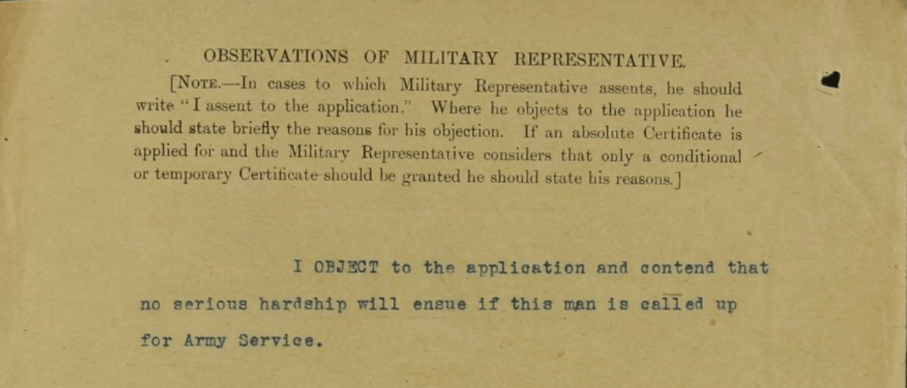


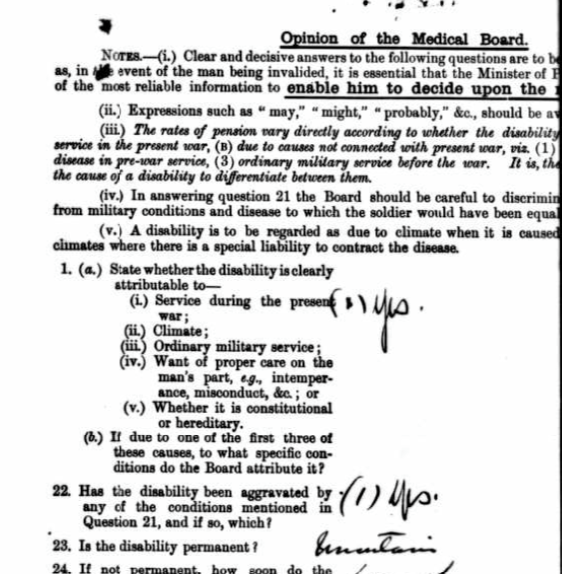


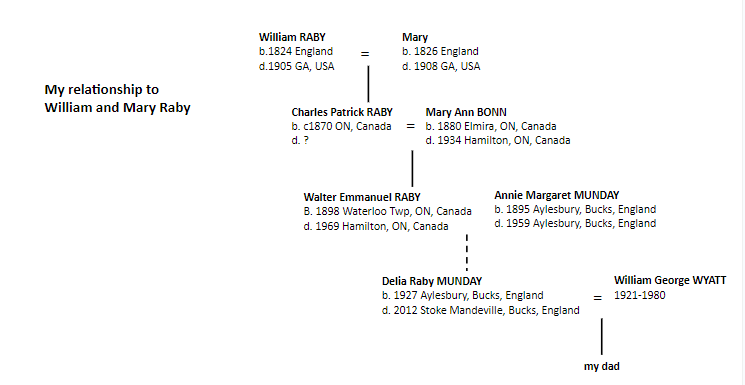


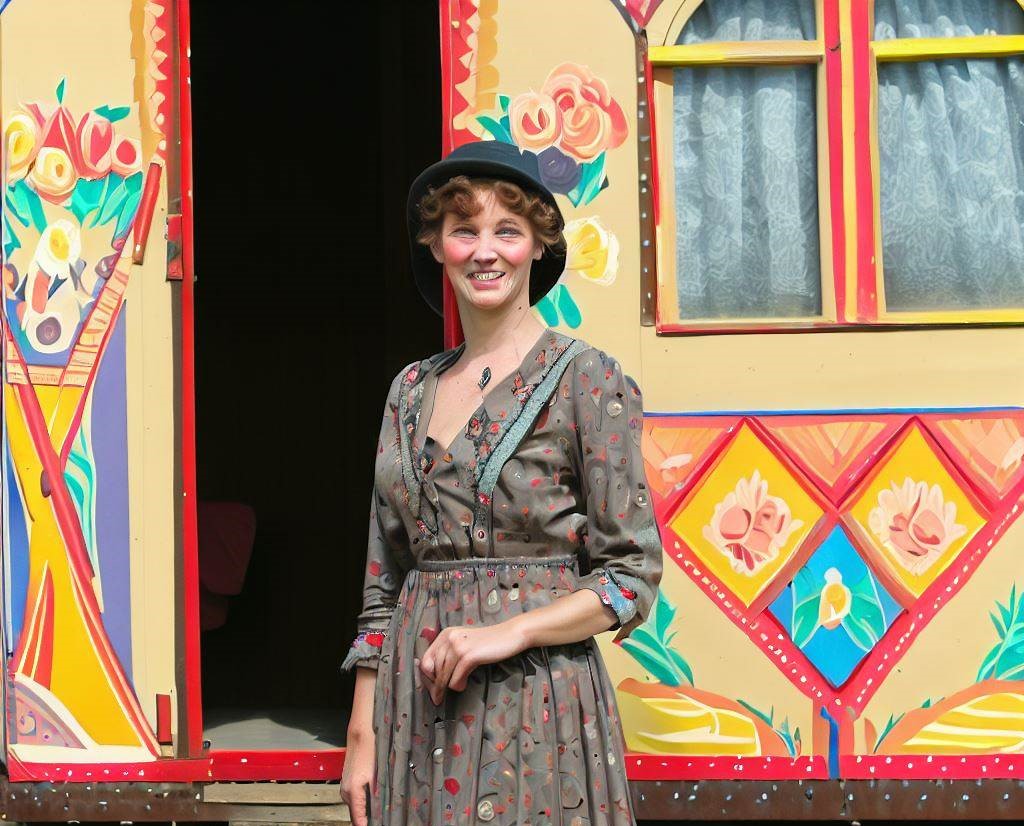


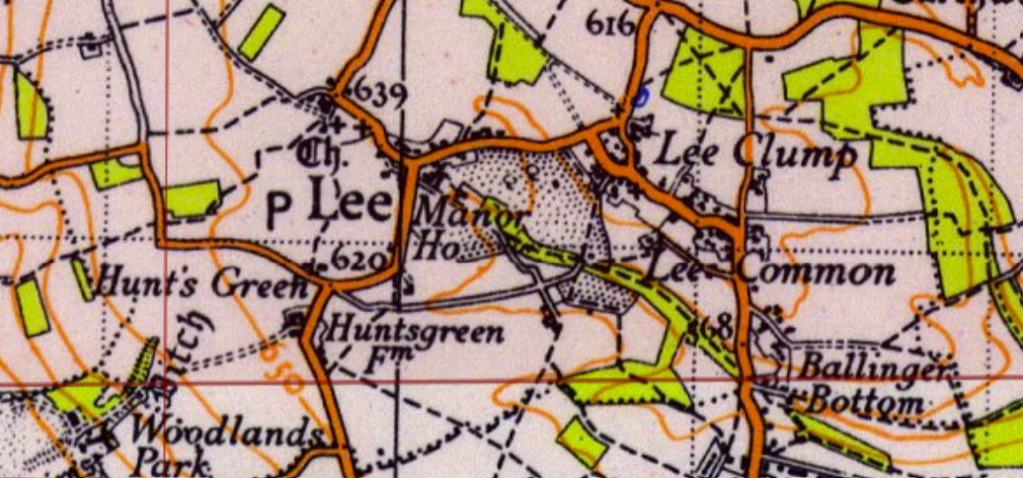


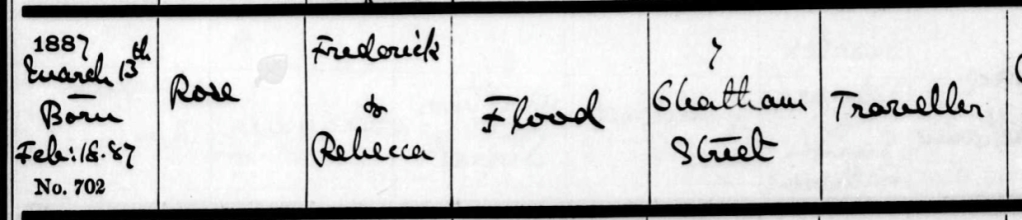


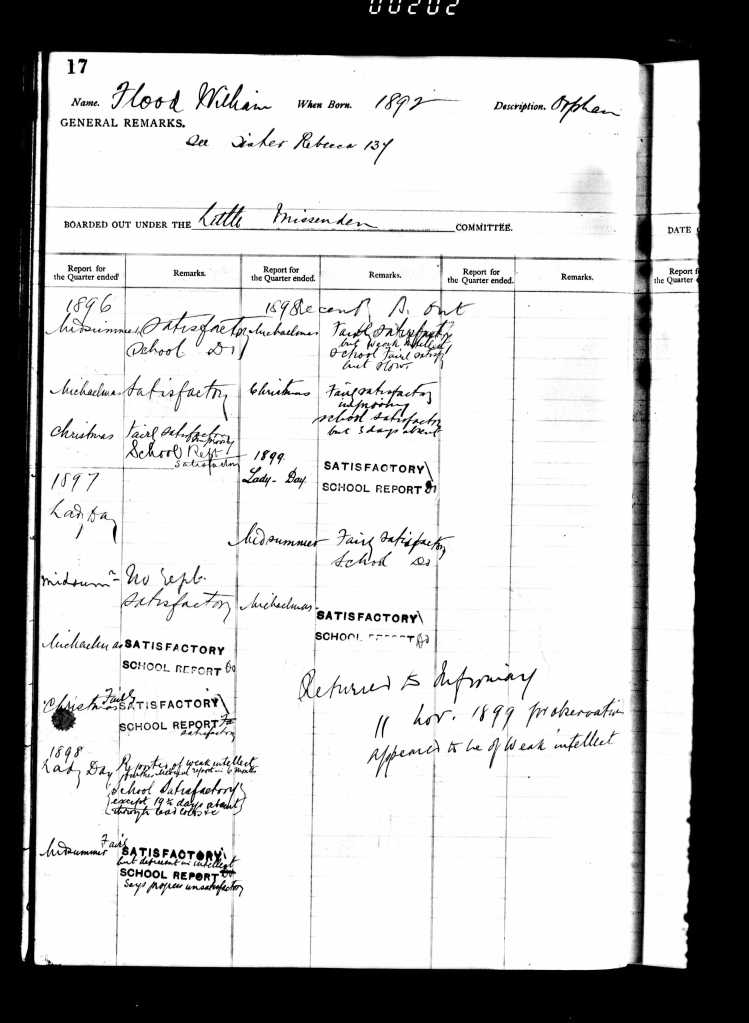








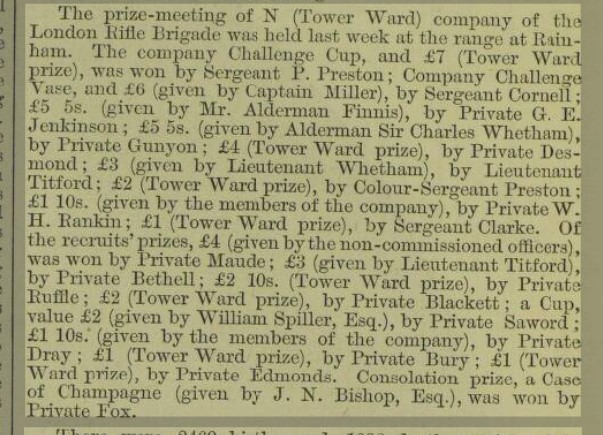

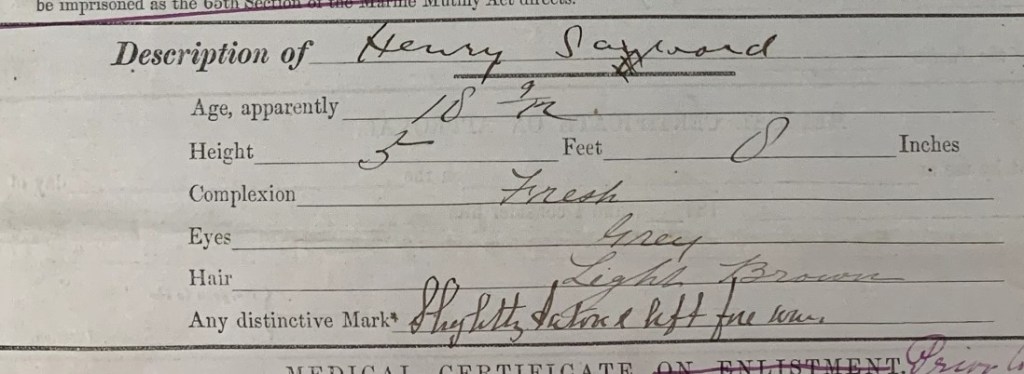


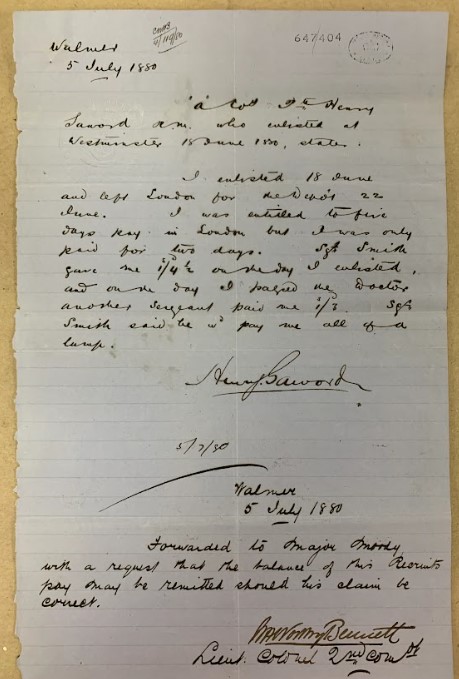


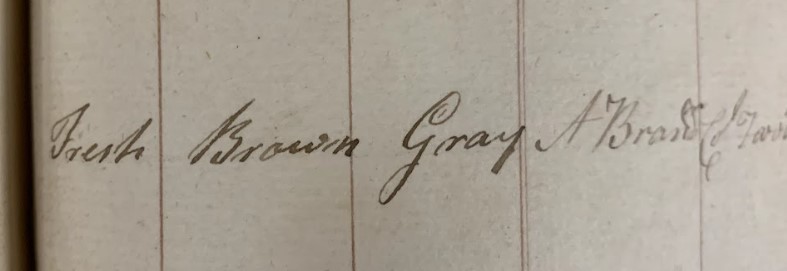
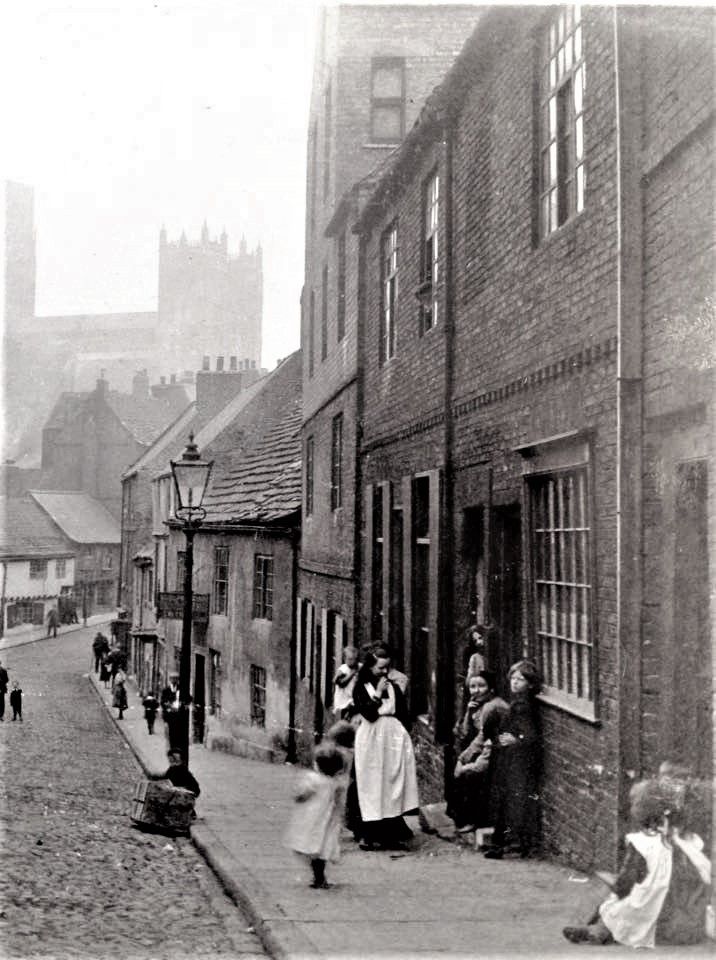


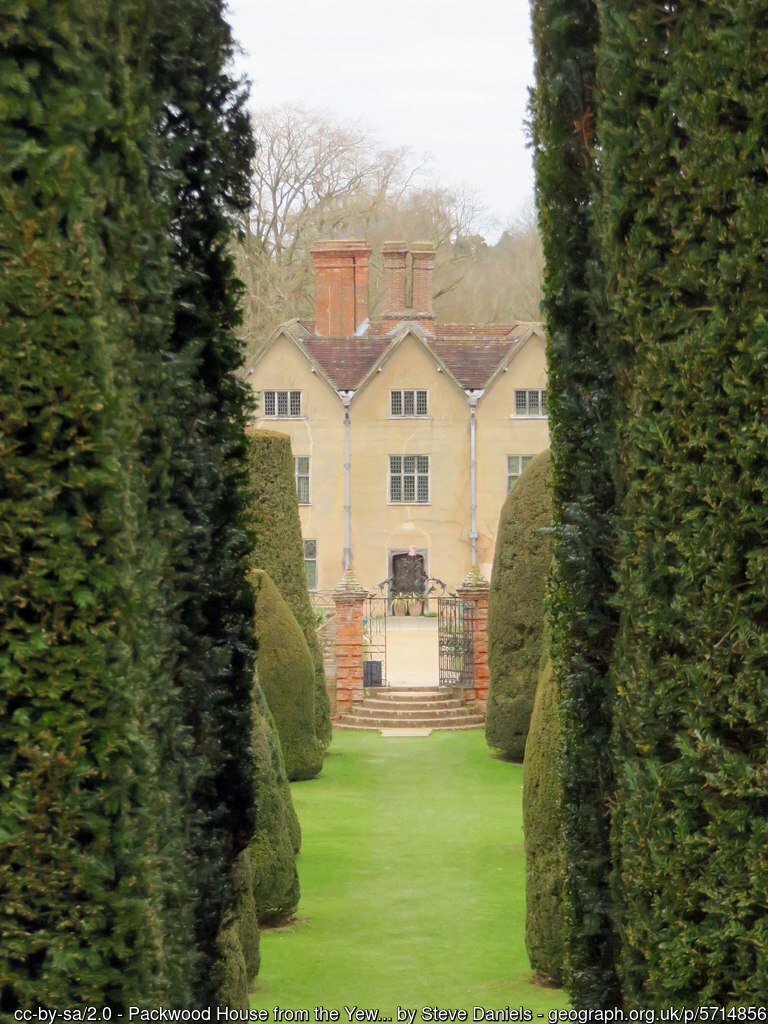


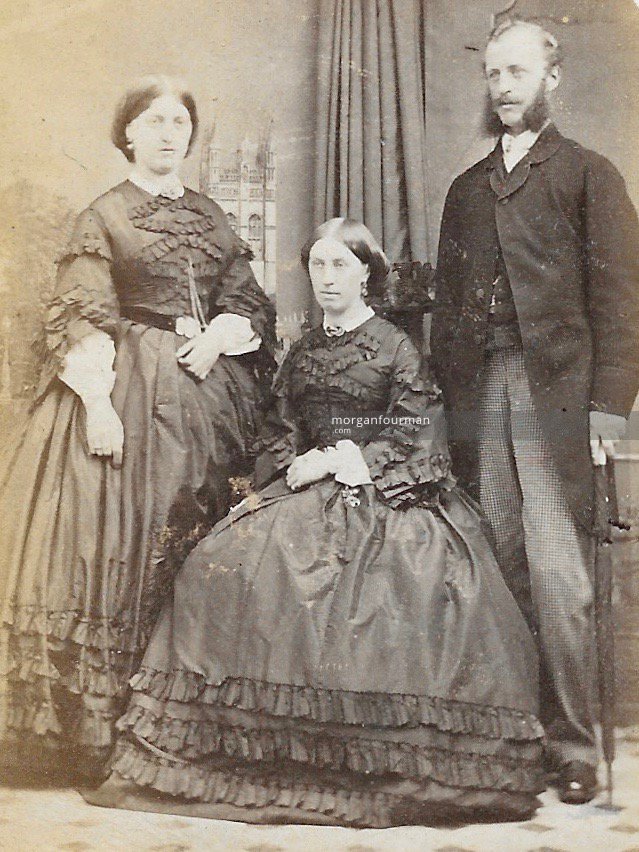
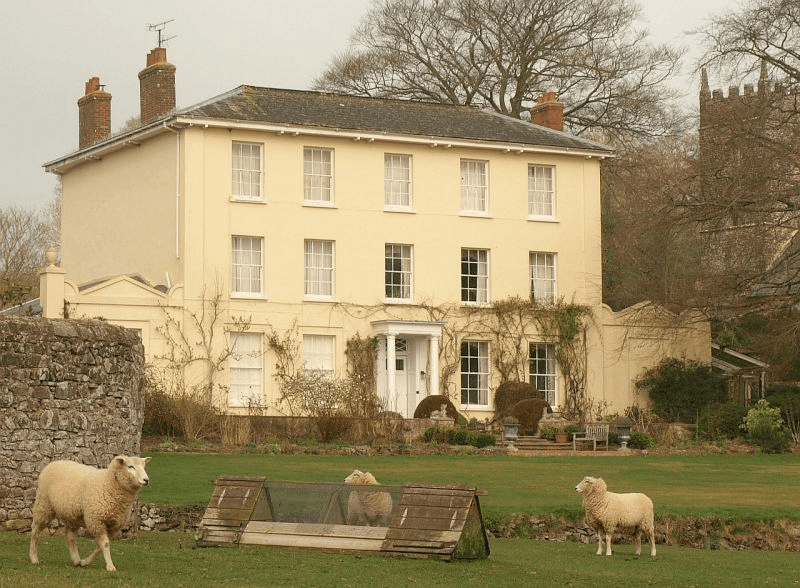


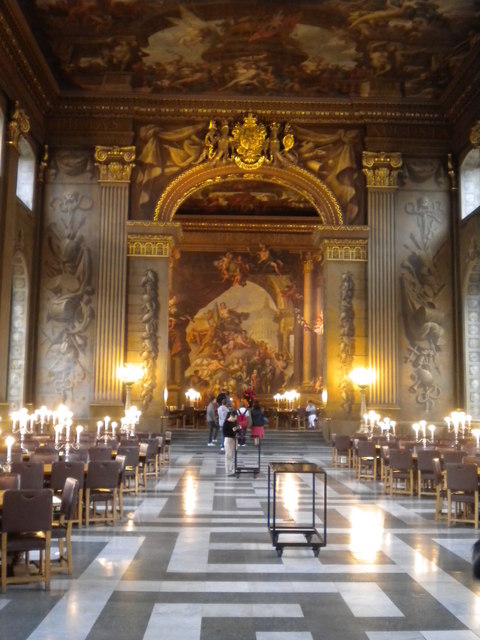
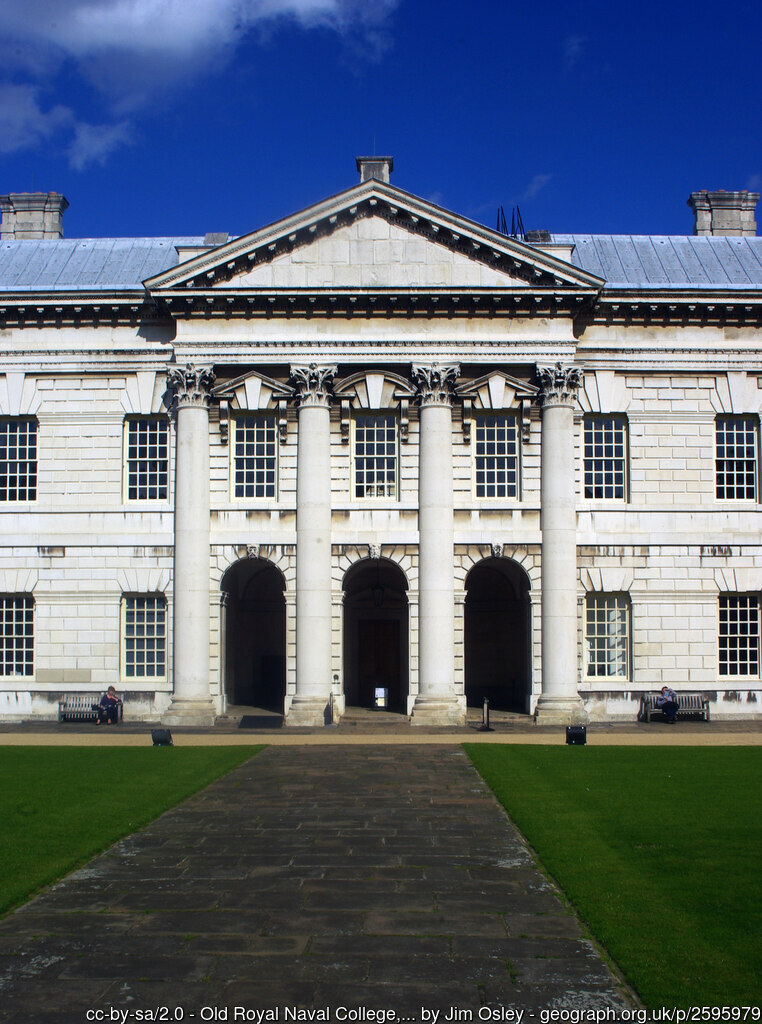
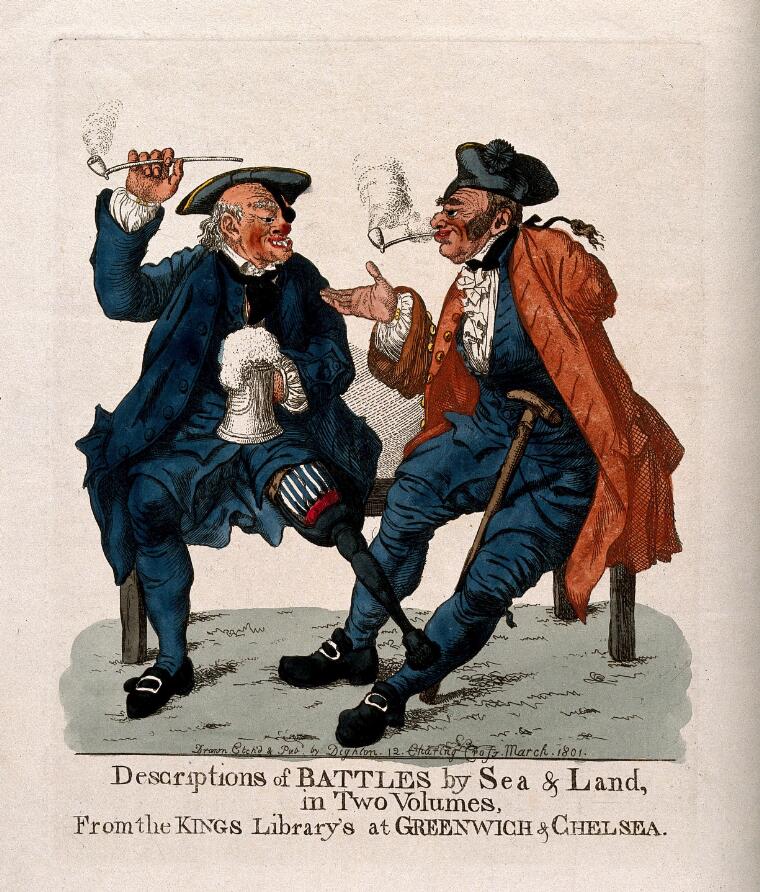
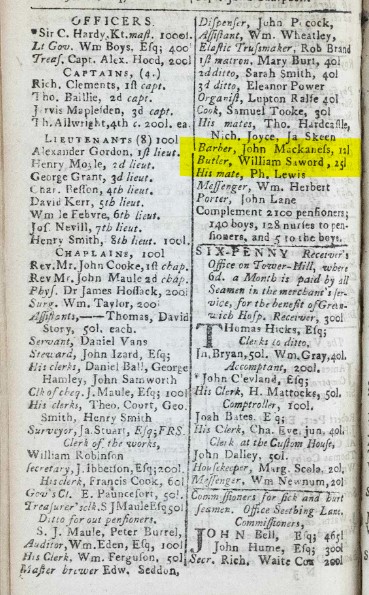

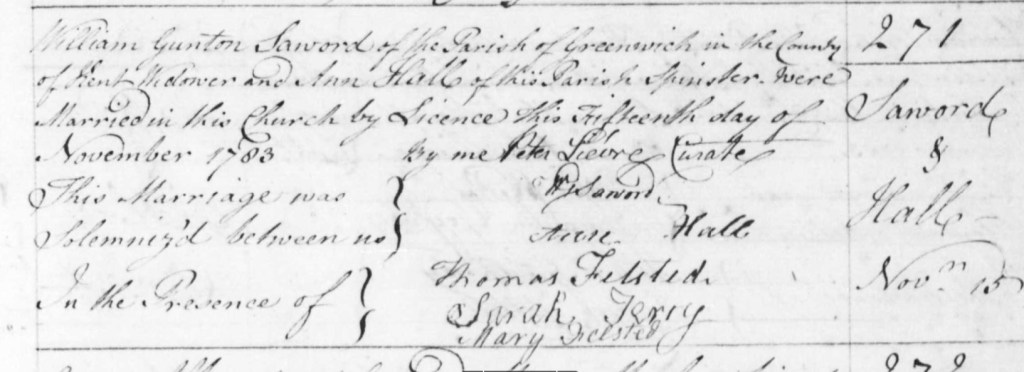
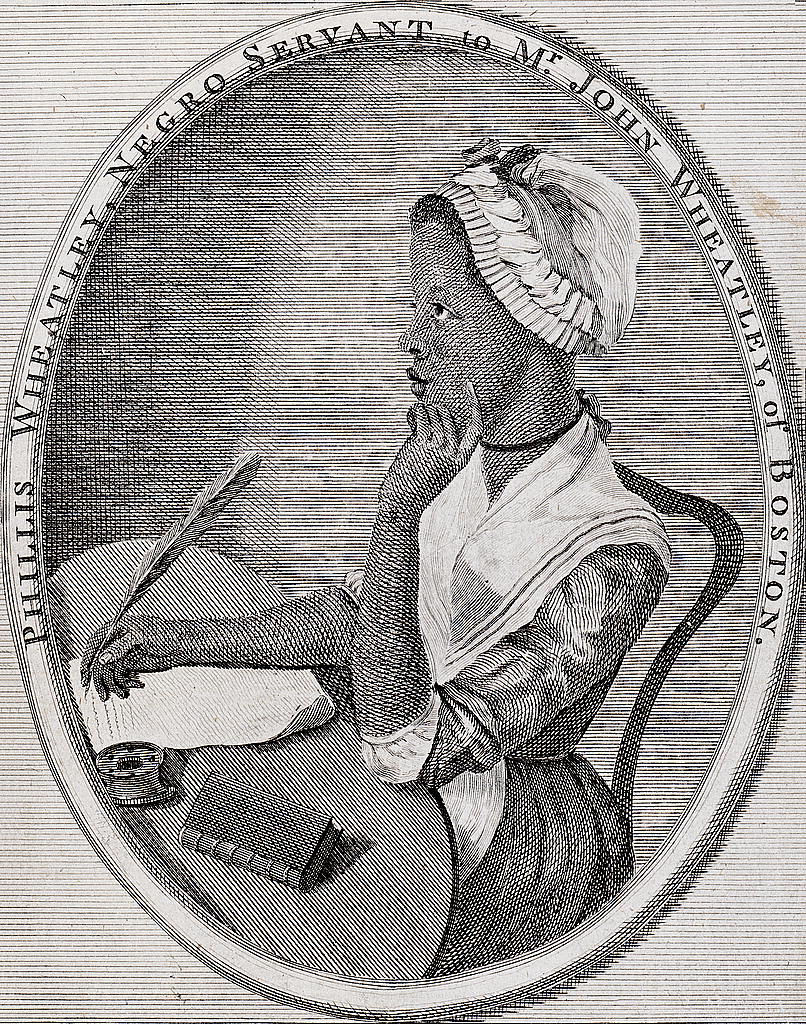


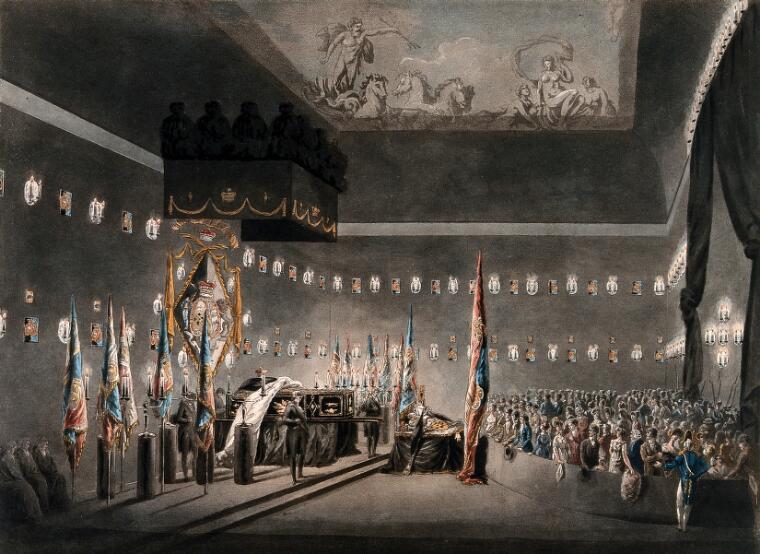
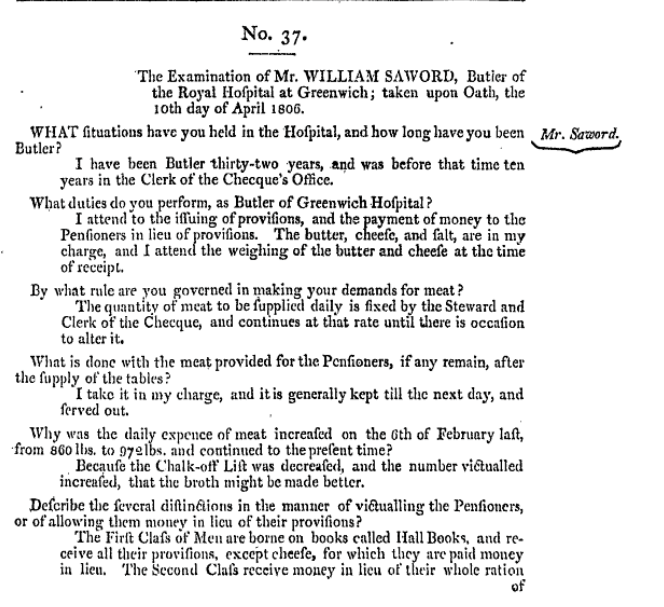

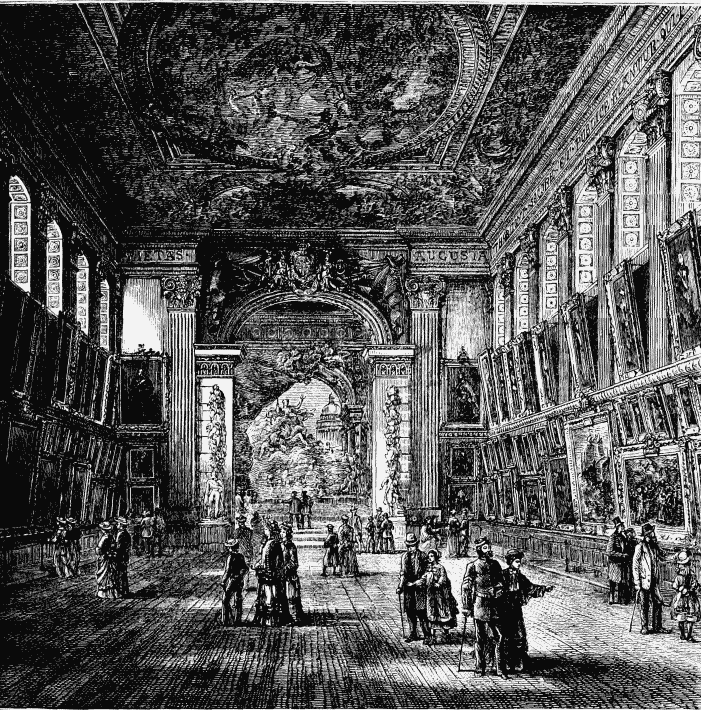



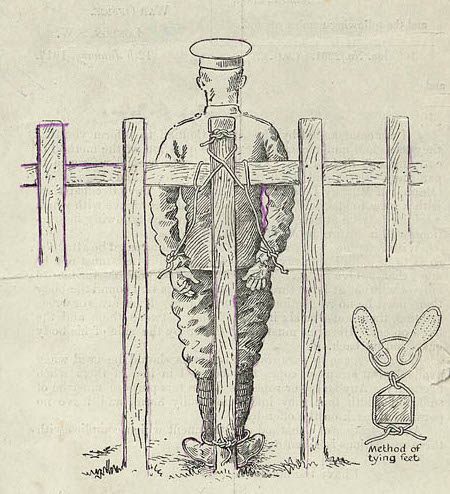
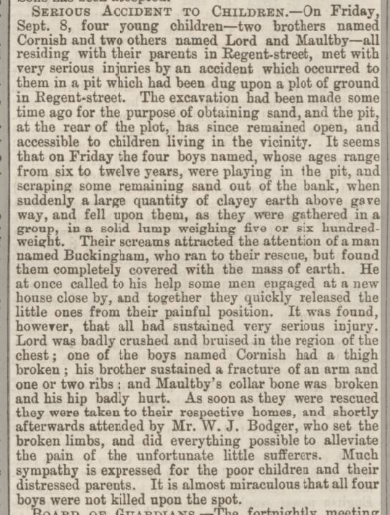

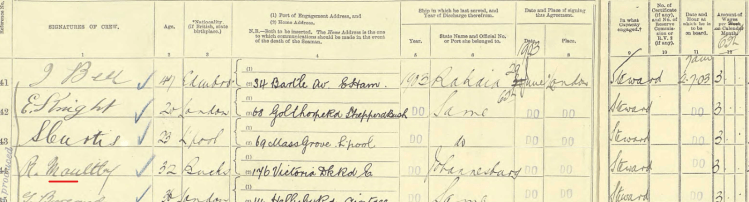
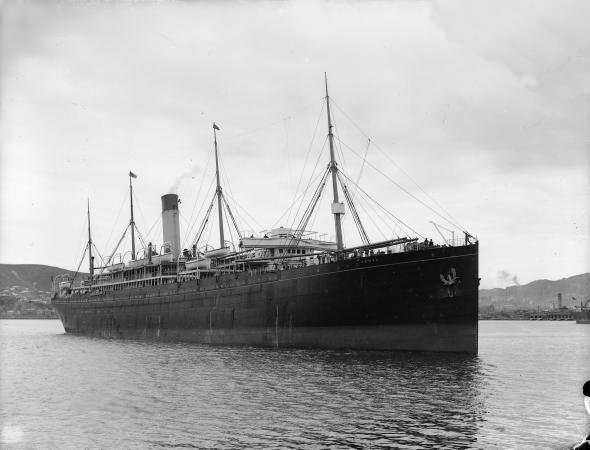
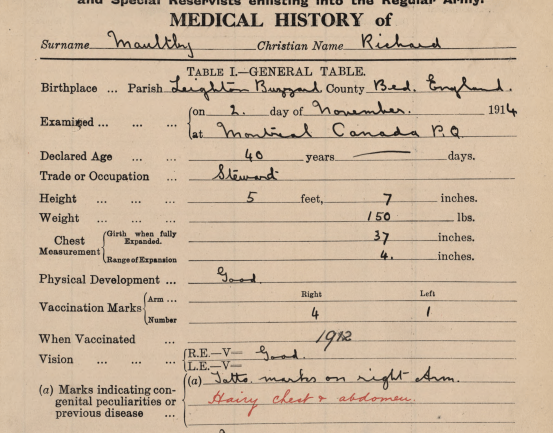
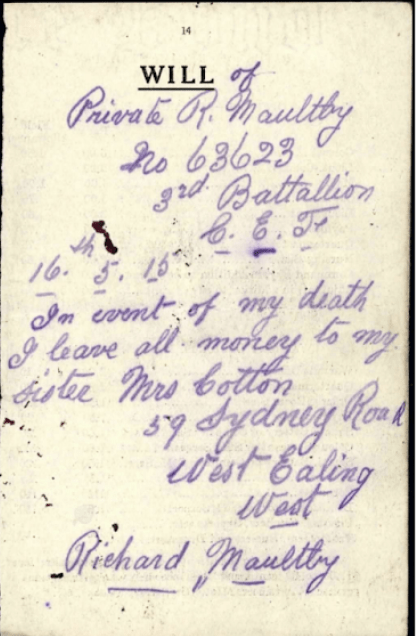
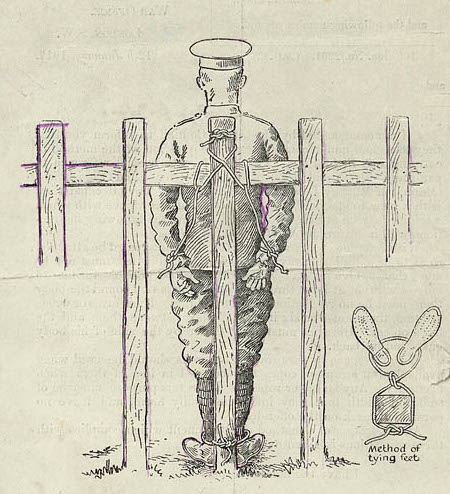
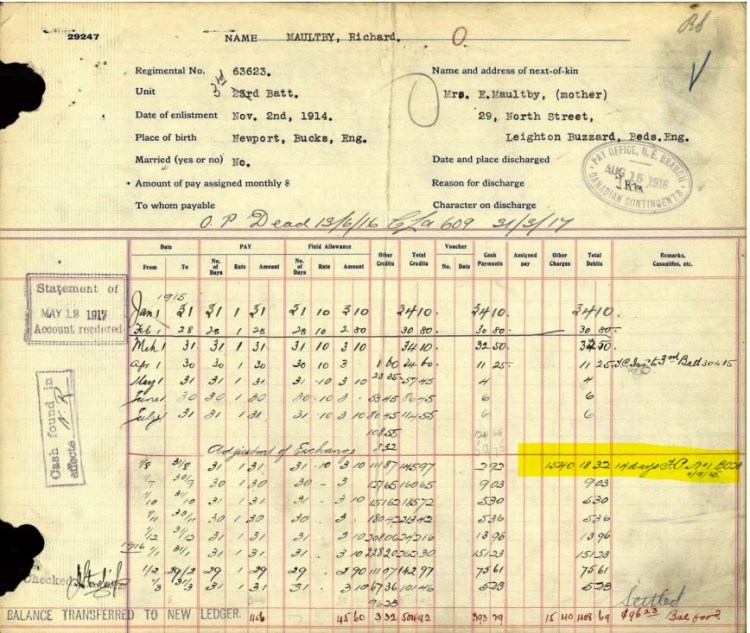
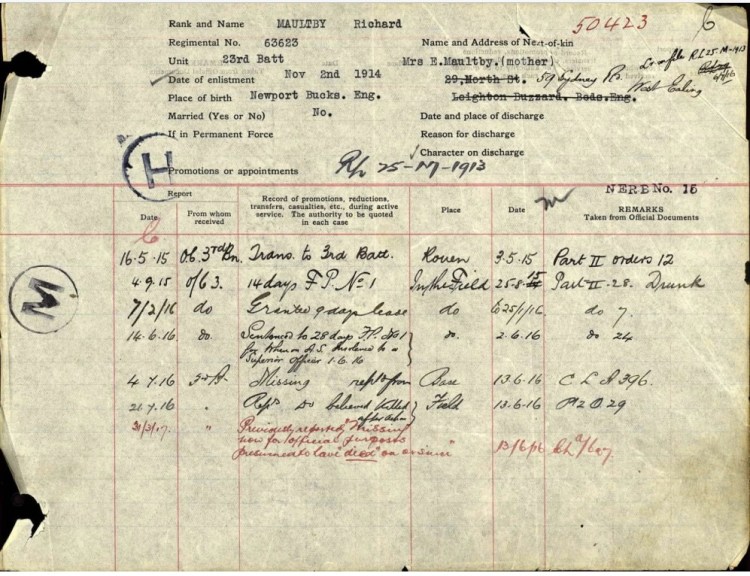
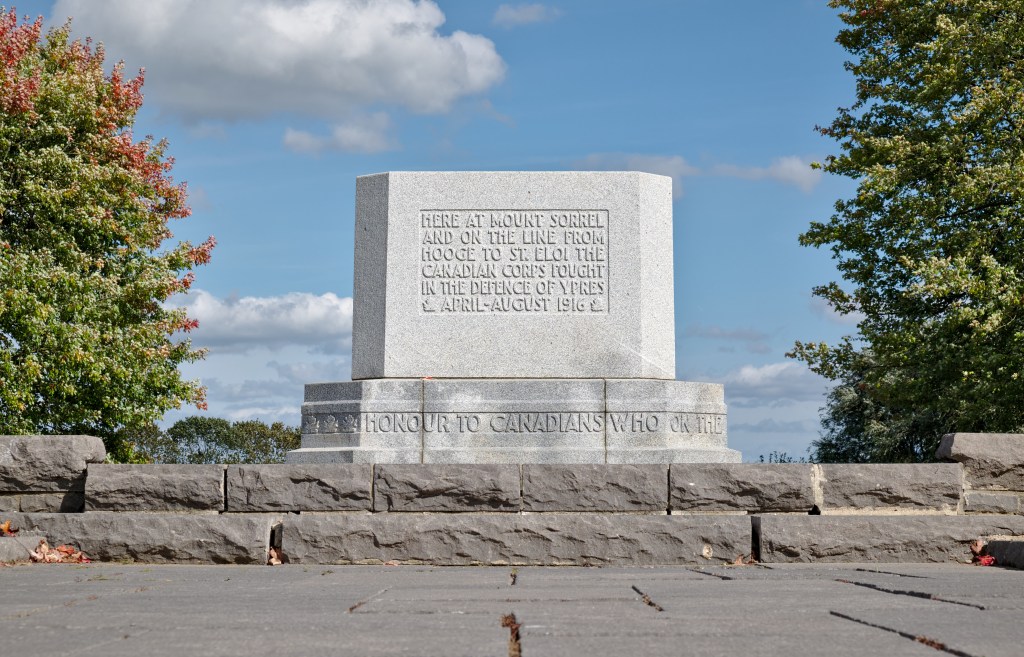
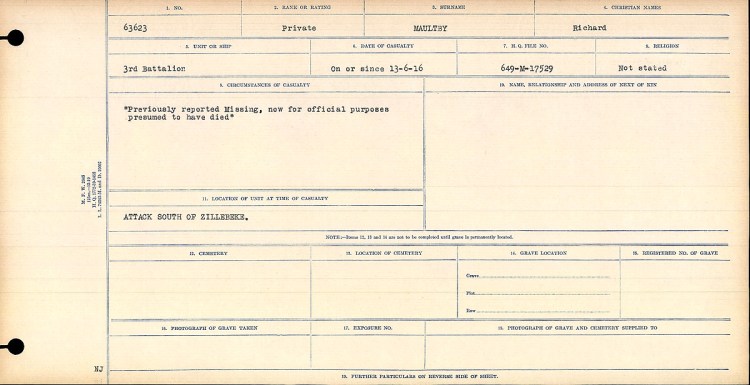

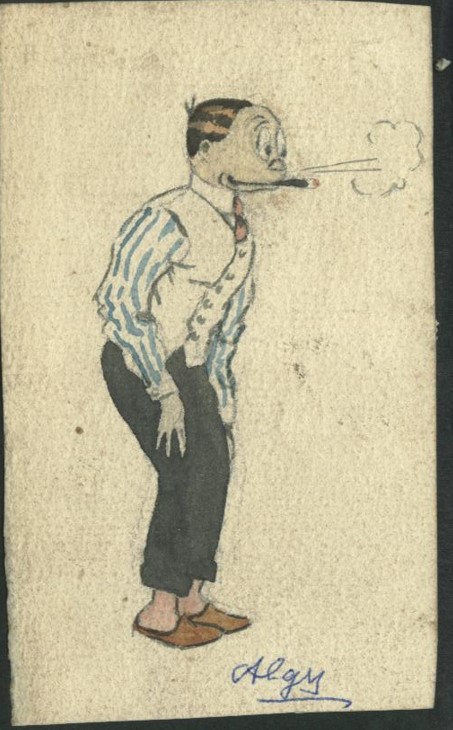

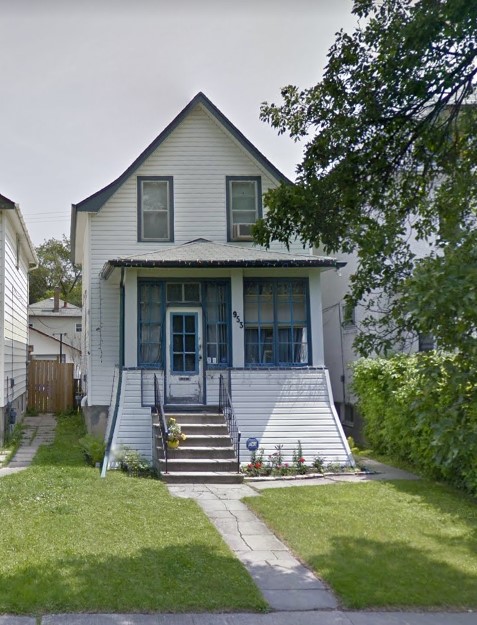


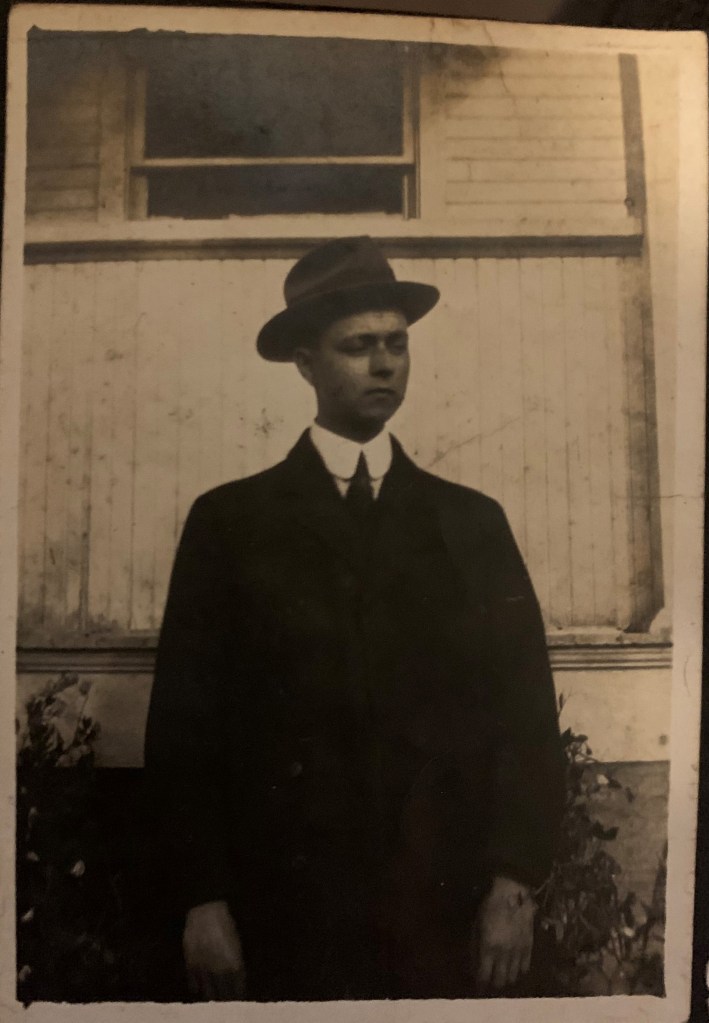


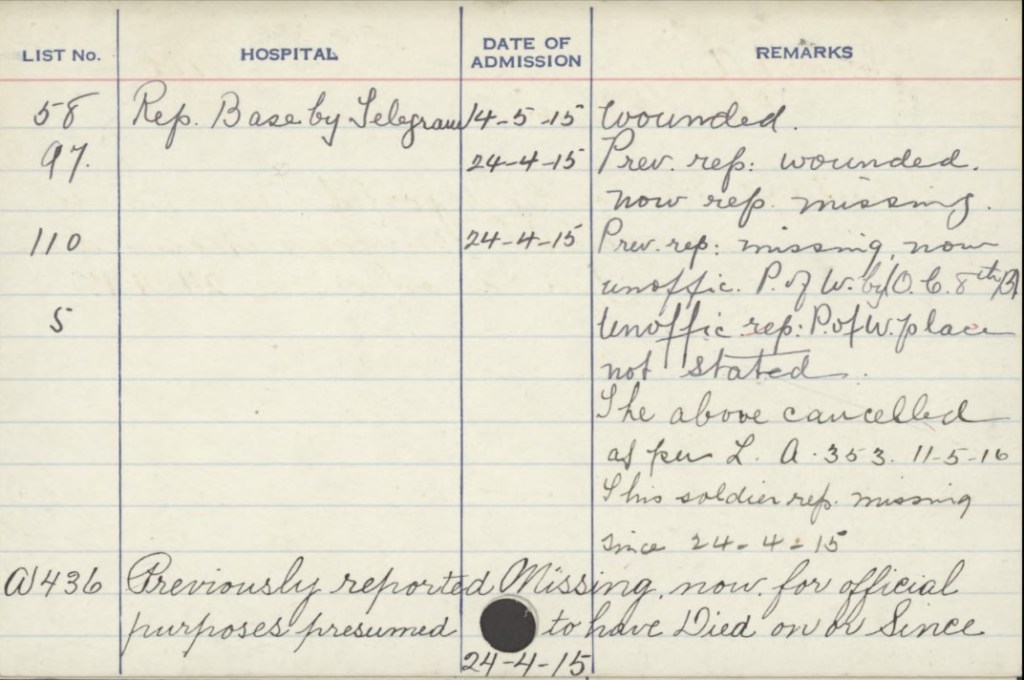




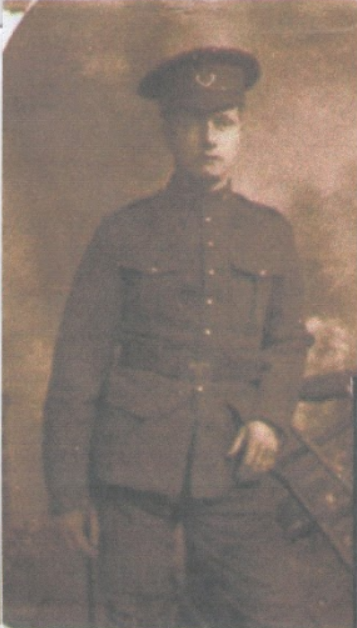


 3
3

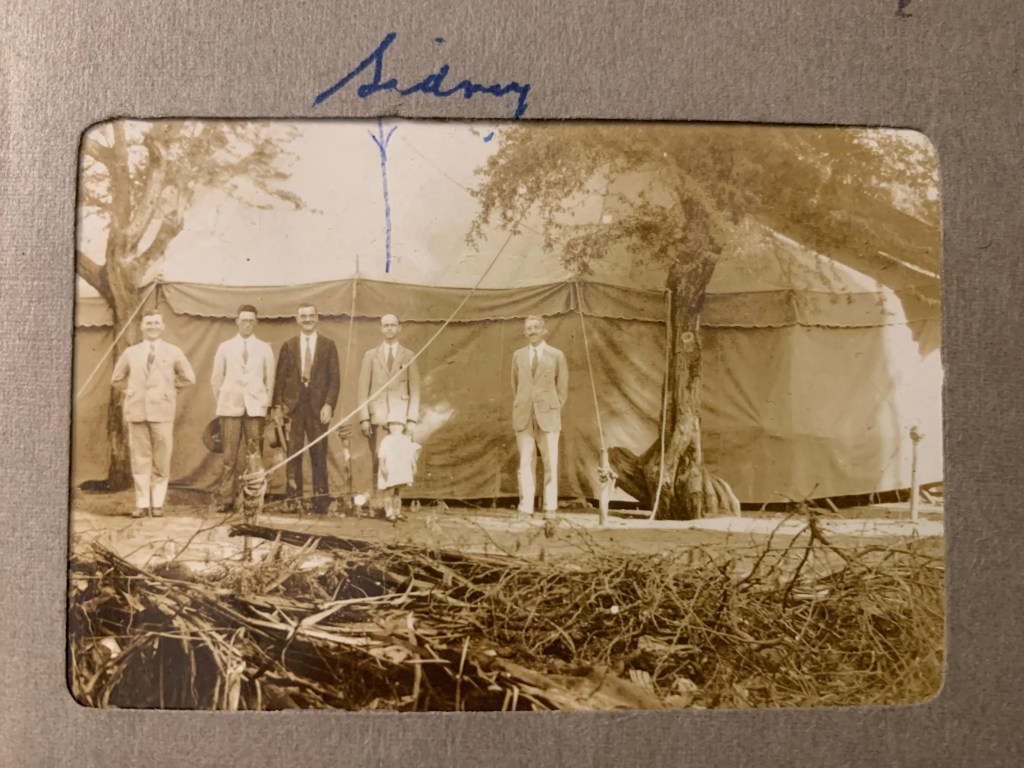


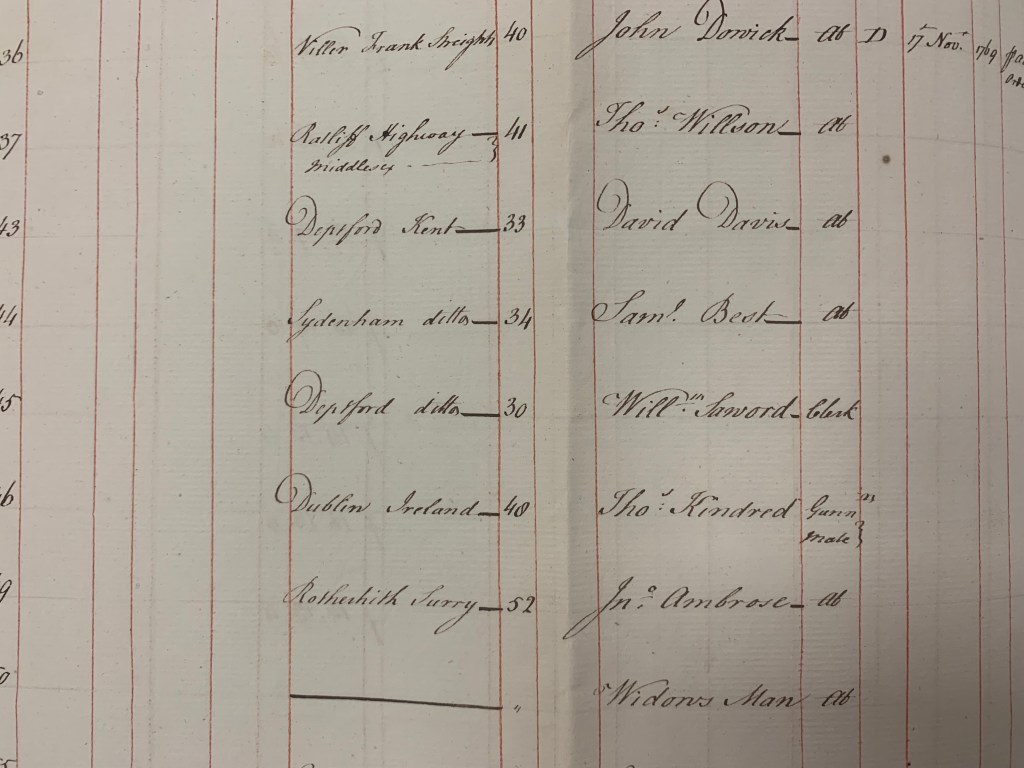
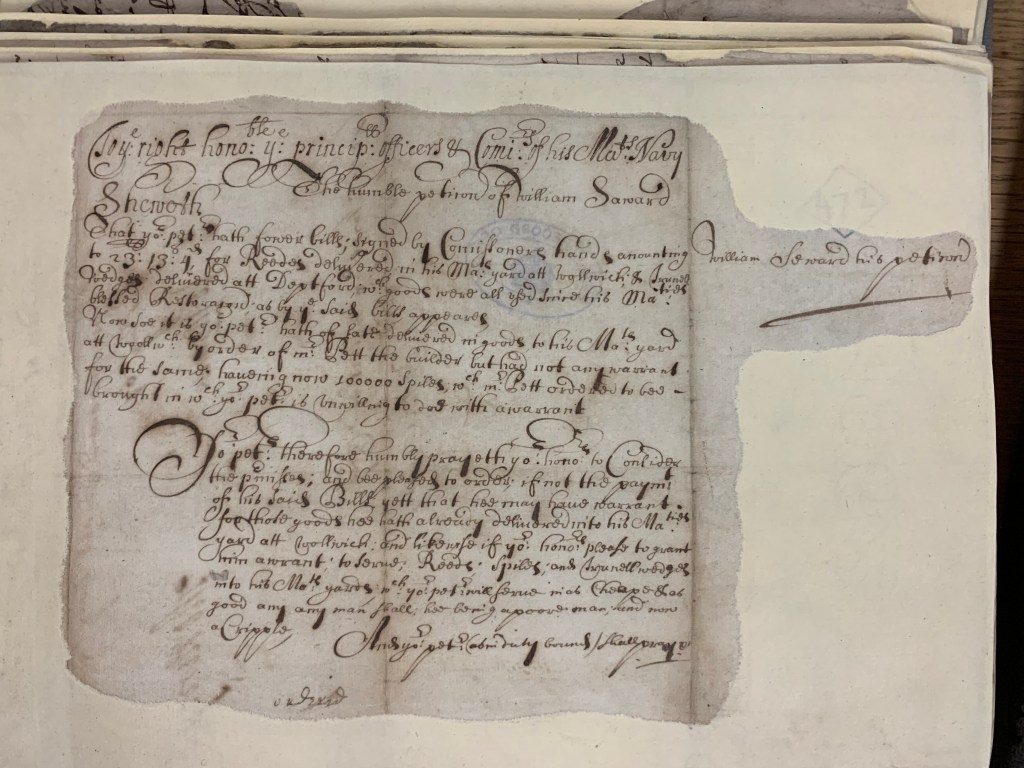
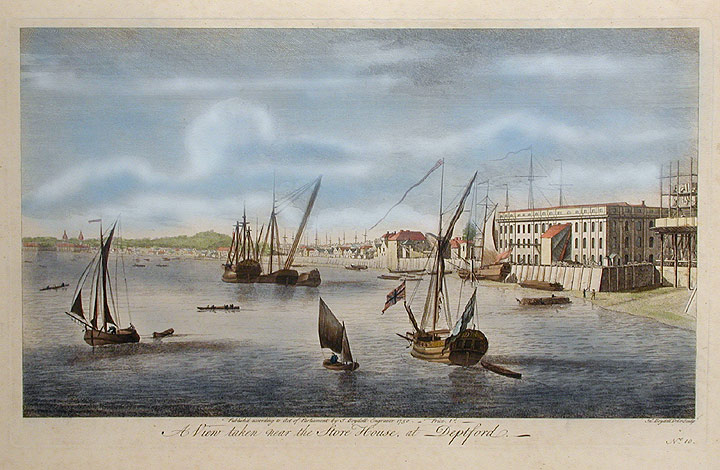

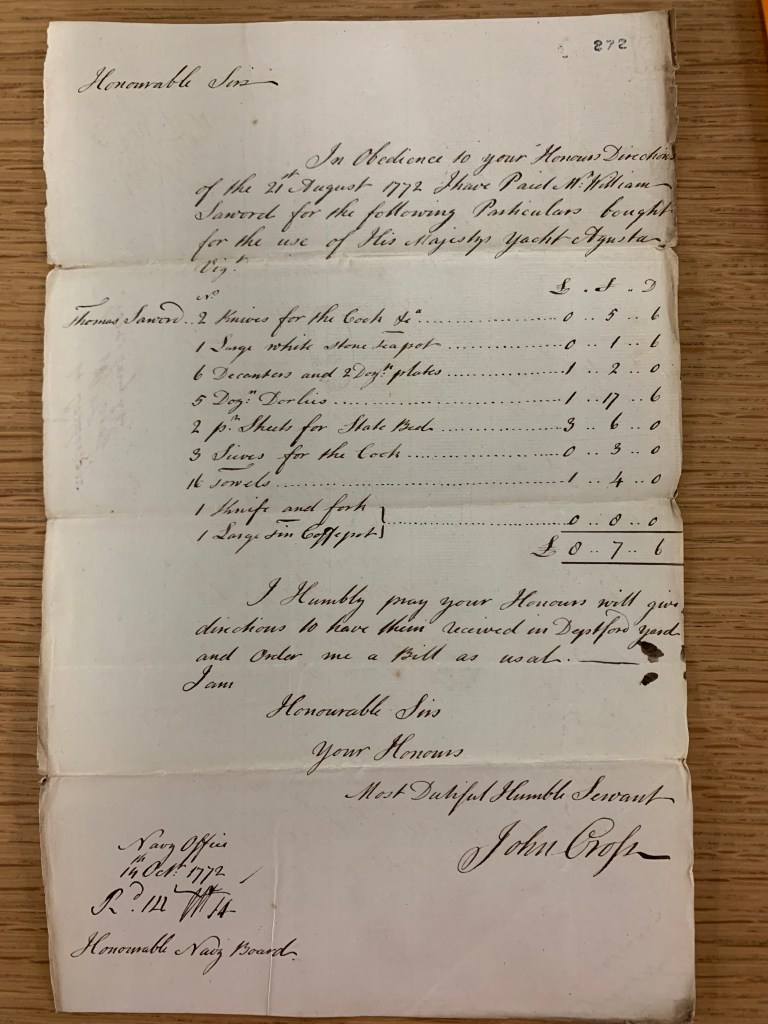


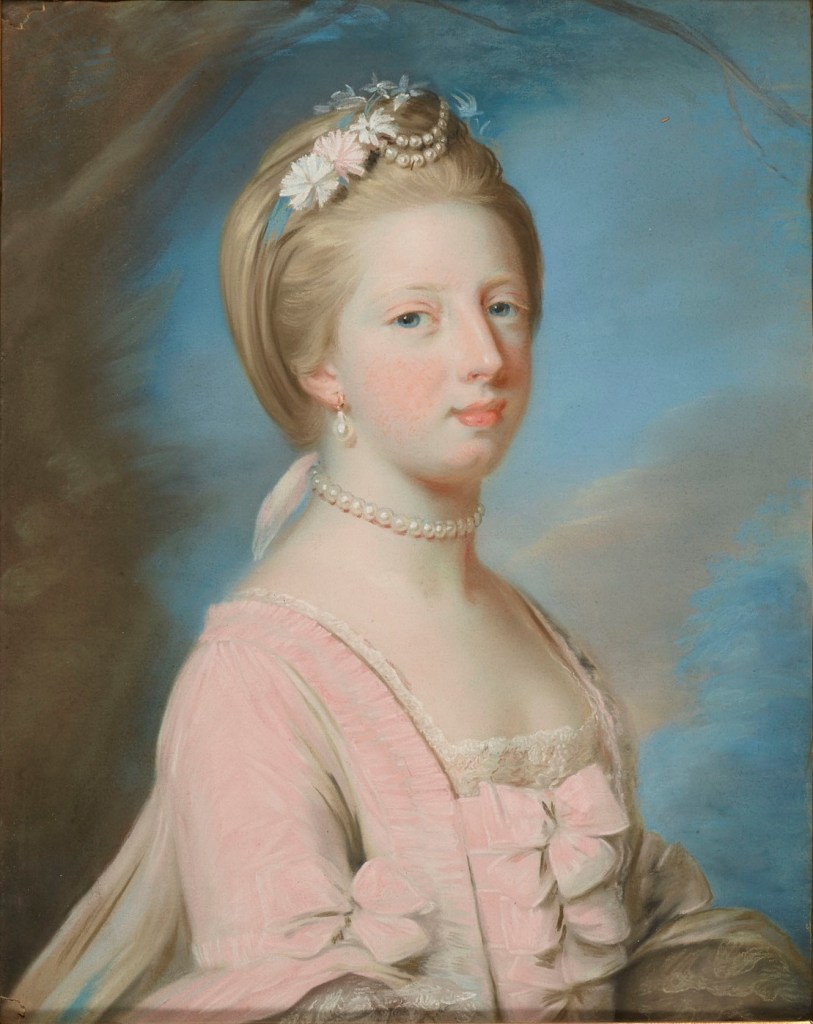
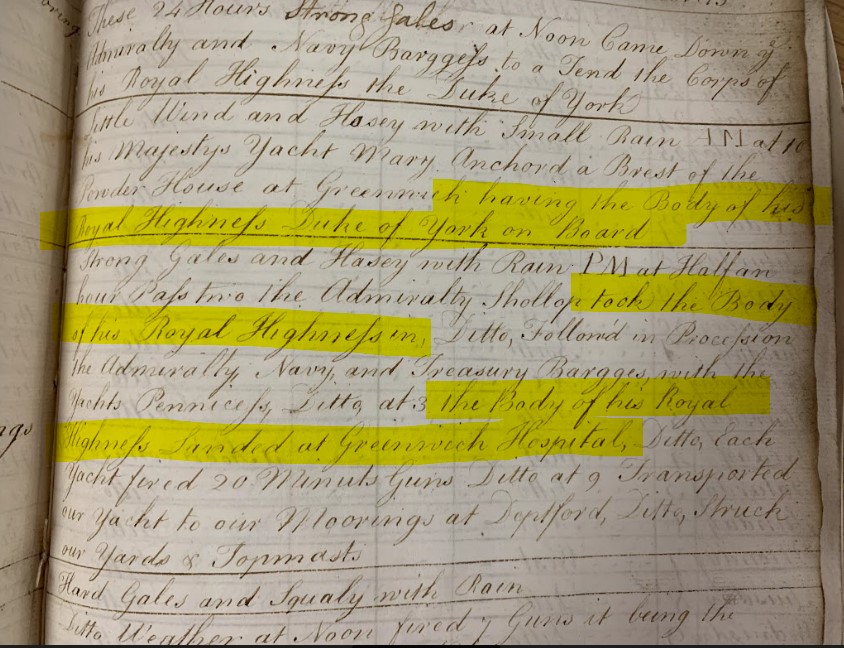
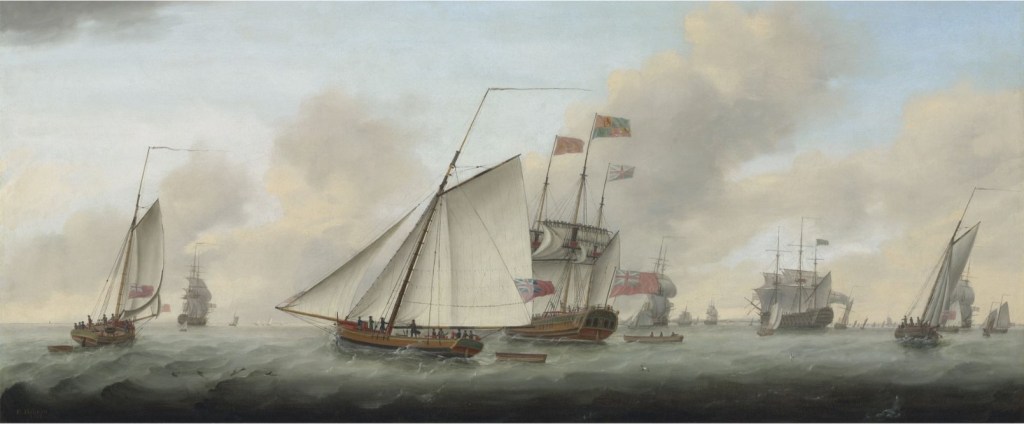

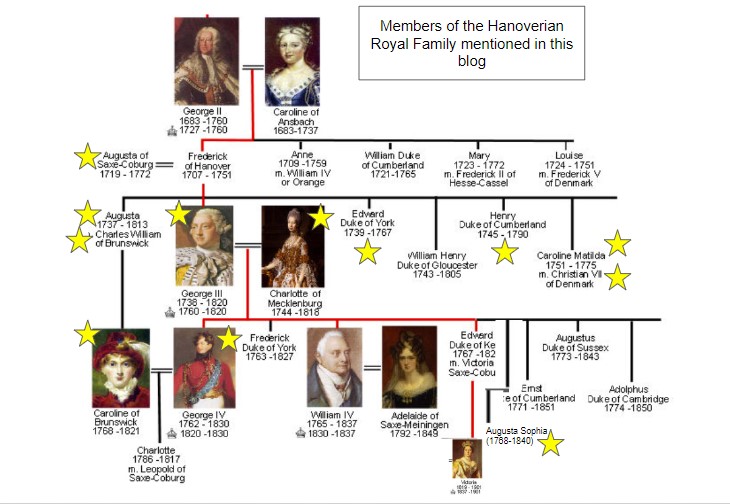


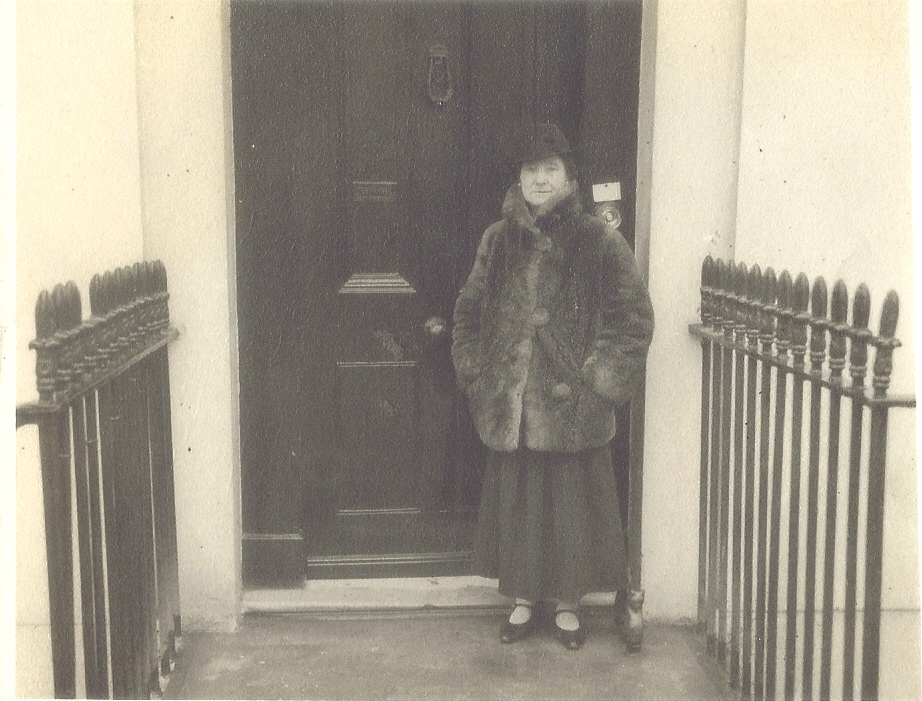
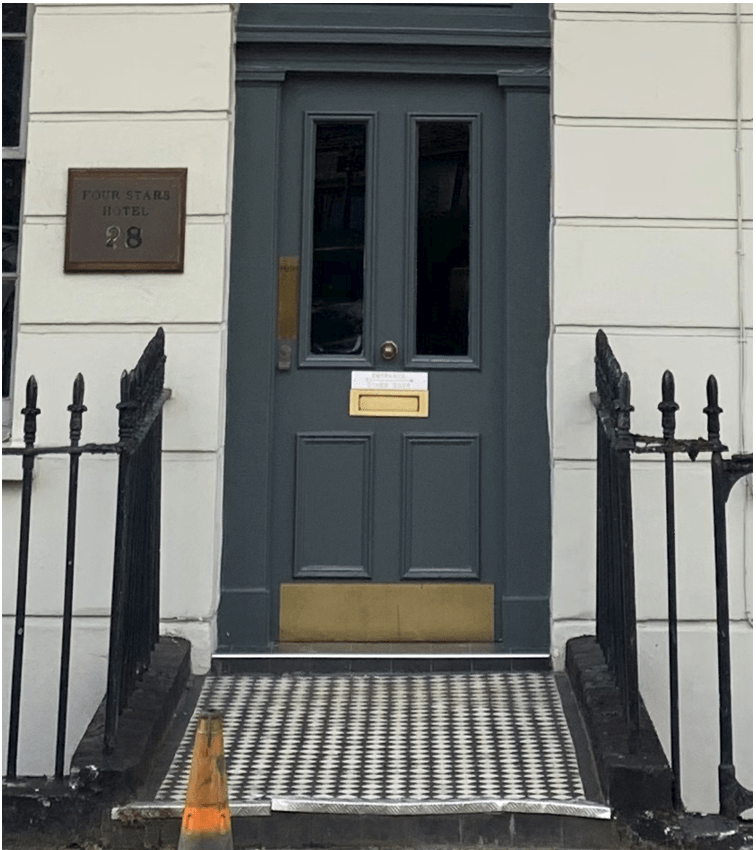
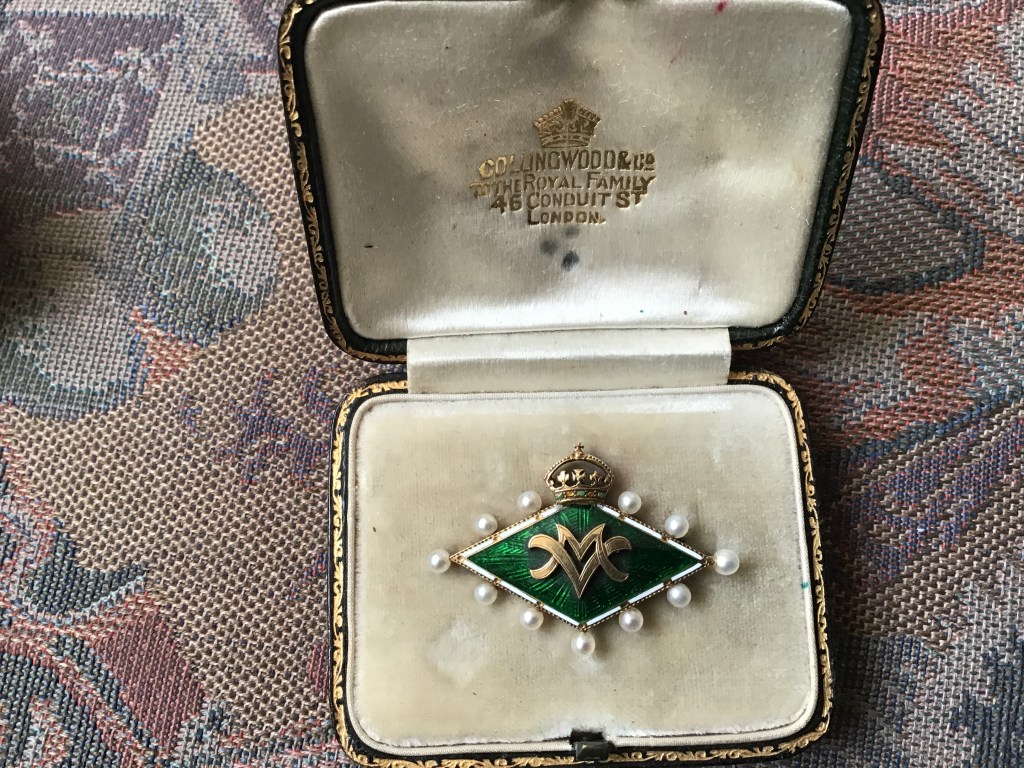
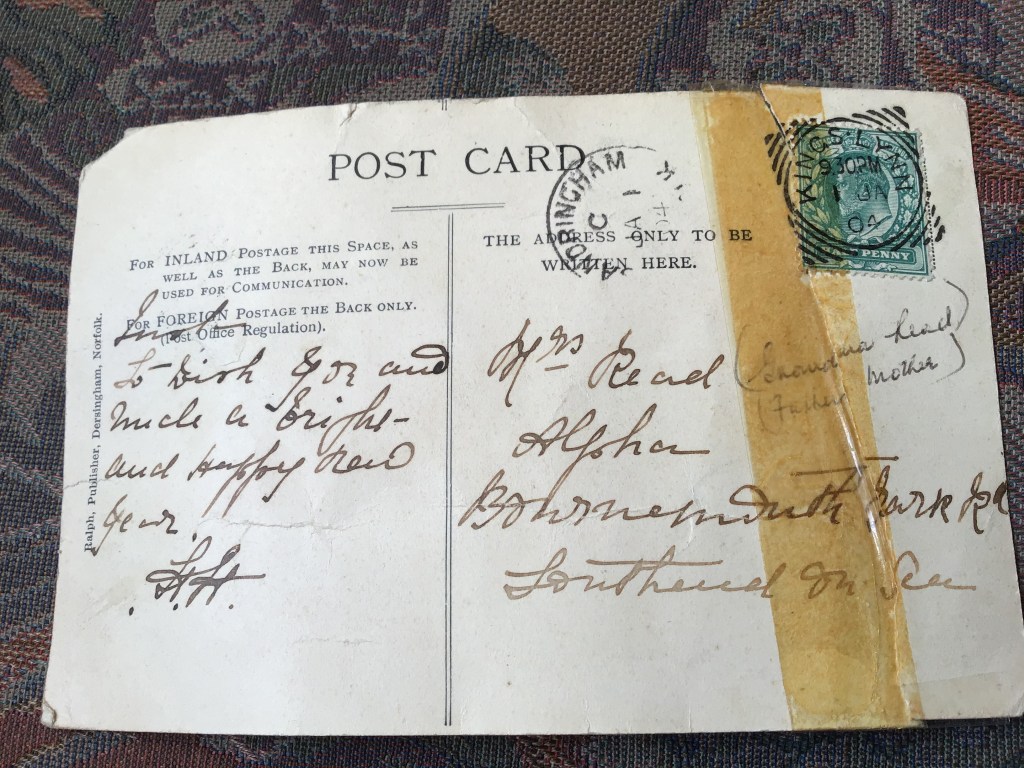
 Dig Up Your Ancestors